The annual budget invariably revives the familiar debate about Pakistan's low investment in education. This year's budget is no exception. Public expenditure on education, already at a meagre 0.8 per cent of GDP, has declined even further, reaching the lowest level in Pakistan's history. This should concern everyone who believes that education is the foundation of economic growth, social mobility and democratic development. Yet inadequate funding tells only part of the story. Equally important is how the limited resources are spent. In a country where financial resources are scarce, every rupee carries an opportunity cost. The central question, therefore, is not simply whether Pakistan spends enough on education. It is whether the little that it spends is invested in the country's most urgent educational needs.
Demographic Challenge and Shrinking School Network
Pakistan today faces an unprecedented demographic challenge. With one of the youngest populations in the world, millions of additional children require access to schools every year. The government also claims that enrolment has increased at almost every stage of education. If both these trends are true, the country's public-school system should be expanding rapidly. Yet the official figures reveal precisely the opposite. Between 2020–21 and 2024–25, the number of primary schools declined from 180,217 to 154,964, representing a reduction of more than 25,000 schools in just four years. Middle schools also declined from 47,182 to 43,931, while the overall number of educational institutions fell from 275.6 thousand to 268.3 thousand.
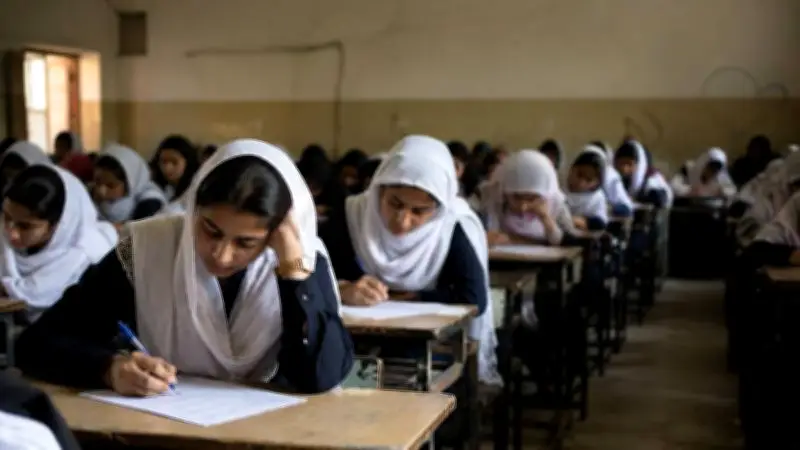
This contradiction raises an obvious question. If more children are entering school while the number of schools is shrinking, where are these additional students going? They are simply being accommodated in fewer schools, resulting in overcrowded classrooms, larger pupil–teacher ratios, greater pressure on teachers and declining learning conditions. Far from strengthening the education system, the shrinking school network is placing unprecedented strain on it.

Poor Condition of Remaining Schools
Unfortunately, the condition of the remaining schools is equally worrying. Educational quality depends not only on teachers and textbooks but also on the physical environment in which children learn. Electricity, clean drinking water, toilets and secure boundary walls are not optional amenities; they are basic requirements for children's health, safety and dignity. Yet the Pakistan Economic Survey reveals that only 65 per cent of public schools have electricity, 76 per cent have access to clean drinking water, 77 per cent have toilets and 75 per cent have boundary walls. The situation is even worse in primary schools, where only 59 per cent have electricity. Provincial disparities are even more alarming. While Punjab has made substantial progress in providing these facilities, provinces such as Balochistan continue to face severe shortages of electricity, drinking water and secure school infrastructure.
Budget Priorities Questioned
These realities should have dictated the government's development priorities. A country confronting a rapidly growing school-age population should first invest in expanding its public-school network, upgrading existing schools and ensuring that every child studies in a safe and functional learning environment. The budget, however, reflects a different set of priorities. In his Budget Speech delivered in the National Assembly on 12 June 2026, Finance Minister Senator Muhammad Aurangzeb announced that approximately Rs 22 billion had been allocated for Daanish Schools in the Federal Budget 2026–27. The government also continues to finance the Prime Minister's Laptop Scheme, under which 100,000 laptops have been sanctioned. By April 2026, 74,427 laptops had already been distributed among students in 156 public-sector Higher Education Institutions (HEIs). The scheme carries a total approved cost of Rs 16.801 billion, with Rs 500 million allocated in the current Public Sector Development Programme (PSDP) for its continuation.

It is important to be clear about the argument. The issue is not whether Daanish Schools or the Prime Minister's Laptop Scheme have educational value. Both may benefit their intended recipients. The issue is one of priority. In a country where the overwhelming majority of children attend ordinary public schools, where the school network is shrinking despite rising enrolment, and where thousands of schools still lack electricity, clean drinking water, toilets and boundary walls, should these initiatives receive precedence over strengthening the public education system?
Opportunity Cost of Flagship Programs
Public budgets are ultimately statements of priorities. Every rupee allocated to one programme is unavailable for another. The approximately Rs 22 billion allocated for Daanish Schools, together with the Rs 3.5 billion allocated for the Punjab Daanish Schools and Centres of Excellence and the continuing investment in the Prime Minister's Laptop Scheme, could instead have been invested in constructing new public schools, reducing overcrowding and providing essential facilities to thousands of existing schools. Such investments would have improved learning conditions for millions of children rather than benefiting a relatively small segment of the student population.
Conclusion: Crisis of Priorities
Pakistan's education crisis is therefore not merely a crisis of inadequate funding. It is equally a crisis of misplaced priorities. Increasing investment in education remains essential, but increased spending alone will not produce meaningful change unless public resources are allocated according to the needs of the majority. The first claim on every education budget should be the ordinary government schools attended by millions of Pakistani children. Until every child has access to a nearby school with adequate classrooms, electricity, clean drinking water, functional toilets and secure boundary walls, Pakistan cannot afford to treat flagship initiatives as substitutes for a strong public education system. The future of Pakistan will not be determined by the number of laptops it distributes or flagship schools it builds, but by the quality of education it provides to every child in every public school.