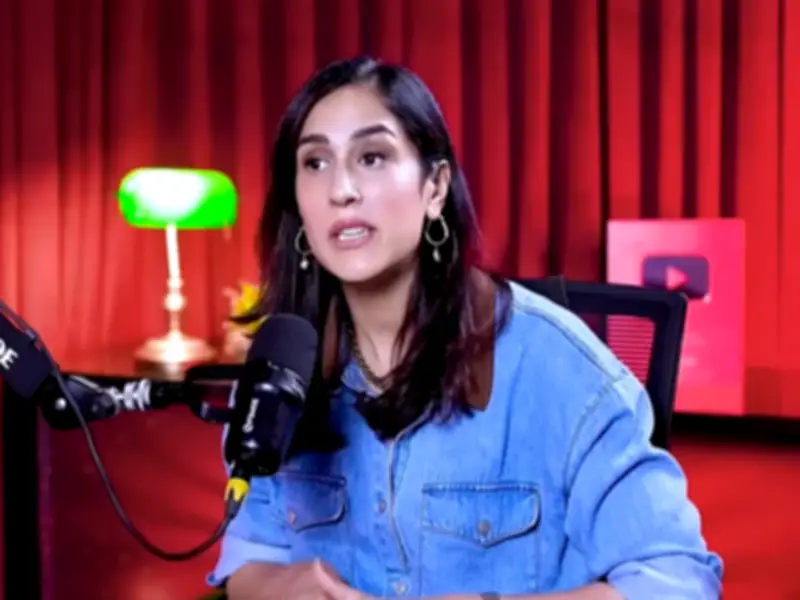
Mira Sethi, the actor and writer, recently appeared on a podcast where she reflected on the end of her marriage, taking full responsibility for the decision. She described entering the marriage as an adult full of idealism and emphasized that the choice was entirely hers. "It was completely my own decision, based on idealism and affection. I have no one to blame but myself," she said.
Societal Pressure and Divorce
Sethi also addressed the weight that divorced women in Pakistan often carry in the public eye, including the assumption that she had failed to "adjust." Rather than internalizing such judgment, she said she has learned to tune it out. "I had no societal pressure to get married. People often have objections when a woman doesn't adjust. They say, 'The girl cannot adjust,'" she said, adding that she avoids googling herself or dwelling on public opinion altogether.
Two Key Takeaways
When asked what she had walked away with, Sethi shared two foundational lessons. The first was to not override your instincts. She explained that women in particular tend to talk themselves out of what their gut may already be telling them, regarding a relationship or otherwise. The second lesson was to stop moulding yourself to please others. "Don't mould for anyone, whether it's a man, a boyfriend, a husband, or a boss," she said, adding, "People really like it when you mould for them, but it's not a good thing."

Reframing Divorce as Growth
Rather than seeing the end of her marriage as a failure, Sethi reframed it as something that left her more mature and more herself. "I had fun, I grew a lot, and I became more mature," she said. "It's good that I can say this now because it's been years since my divorce, and I've moved on," she added.
Childhood and Family Healing
Discussing her childhood, Sethi described herself as a "daydreamer" and revealed that real emotional closeness with her parents had only developed in the last five years. Moving back into her family home and having honest conversations with her parents, she said, had brought an unexpected kind of healing.
Writing and Creativity
Sethi's memoir-adjacent book, Are You Enjoying?, came up as a natural extension in the conversation. "I always sought comfort in stories because stories have a beginning, a middle, and an end," she said, explaining that the narrative structure was something that her real life didn't always offer her. Writing about loneliness, she said, turned out to be one of the more effective ways of working through it. "The nice thing about being a writer is that you can write books about being lost and then you are less lost," she noted.
Creative Risk-Taking
Sethi extended that same logic to how she thought about creative risk-taking in general, resisting the urge to overthink or self-censor mid-process. "The castle gets built much later, but when you are shovelling sand, then just shovel the sand. Don't second-guess yourself," she said.
Acting Career and Final Thoughts
Regarding her acting career, Sethi talked about playing a Punjabi character opposite Mooroo in Do Numbri, dubbing herself a comedic actor. The conversation concluded with Sethi offering a summary of everything she'd said about her marriage, divorce, and the years since. "Nobody is coming to rescue you, and you are entirely responsible for your choices, your mistakes, your successes," she said. "It's all on you, baby."