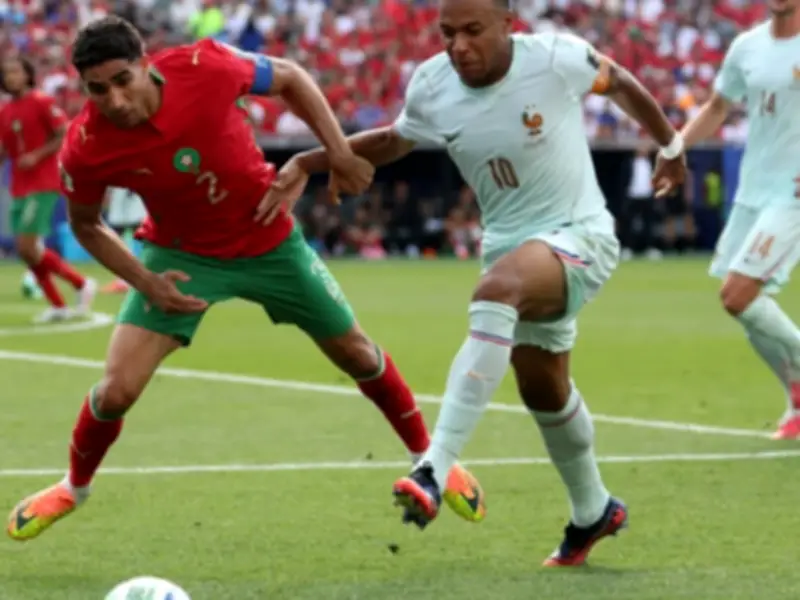
Africa Silences Critics with Strong World Cup Showing
When four-time World Cup winners Italy failed to qualify for the 2026 tournament, former head coach Gennaro Gattuso lamented that Africa had too many places at the global showcase. "Africa deserves fewer World Cup slots," he said, referring to the increase in automatic qualifying places from five to nine for the expanded 48-nation event. The number became ten when the Democratic Republic of Congo won an inter-continental play-off, returning to the World Cup after 52 years.
Gattuso, a midfielder in Italy's 2006 World Cup-winning team, questioned whether Africa was overrepresented in the tournament hosted by the United States, Canada, and Mexico. However, the performance of African teams proved otherwise. Apart from a disastrous showing by Tunisia—who sacked coach Sabri Lamouchi after their first group game and lost all three matches—the other nine African representatives reached the knockout stage, five as group runners-up and four among the eight best third-placed teams.
90% Success Rate Tops FIFA Regions
This achievement represents a 90% success rate, the highest among FIFA confederations, followed by South America (83.33%), Europe (81.25%), and Asia (22.22%). Europe surged in the knockout phase with six quarter-finalists, while Africa and South America had one each. African teams were less successful in the round of 32, with seven eliminated. Egypt made the round of 16, and Morocco became the first African team to reach the quarter-finals twice.

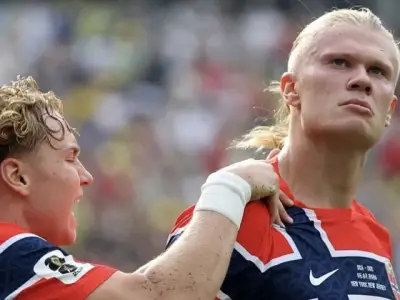
A worrying trend for African sides was conceding late goals, with star strikers Lionel Messi, Harry Kane, and Erling Haaland among those benefiting. Messi equalized as Argentina turned a two-goal deficit against Egypt into a 3-2 victory. Kane struck twice as England edged DR Congo, and Haaland netted the winner for Norway over Ivory Coast. A spectacular collapse saw Senegal surrender a two-goal lead with five minutes remaining against Belgium, eventually losing after extra time.
Senegal's Disappointment and Internal Strife
Many Africans believed Senegal would be the best performers among the ten qualifiers, but they flopped, losing three of four games and scraping into the round of 32 as the eighth best third-placed side. In the aftermath of the Teranga Lions' exit, there were hints of internal strife. Midfielder Pape Gueye said he would not represent his country again until coach Pape Thiaw was removed.
Egypt's dramatic turnaround against Argentina highlighted another issue. Egypt led 2-0, having had another goal controversially disallowed, with 12 minutes left. But a dramatic turnaround led to an Enzo Fernandez header giving the title-holders a 3-2 victory. Losing coach Hossam Hassan speculated that the officiating team, headed by French referee Francois Letexier, may have been subjected to "external pressure" to favor Argentina. FIFA referees chief Pierluigi Collina responded: "Match officials make honest decisions and, just like players and coaches, they always try to do their best."
Experts Cite Poor Game Management
TV analyst and former French star Thierry Henry said: "African sides relax too early. People talk about talent and passion, but when they go two goals up, the focus drops." Co-analyst and ex-Sweden striker Zlatan Ibrahimovic added: "Several African teams that were leading found a way to lose. In a World Cup, that is not bad luck, that is bad game management."
Morocco's loss to France in the quarter-finals demonstrated that while African football is progressing, a significant gap remains when facing the cream of Europe. The Atlas Lions took 83 minutes to have a shot on target, and France goalkeeper Michael Maignan comfortably pushed away the speculative effort from Azzedine Ounahi. Morocco coach Mohamed Ouahbi admitted: "France are a really great side... they have rarely had as much talent as they do now."

Cape Verde Captures Hearts
Morocco have already qualified for the 2030 World Cup along with fellow hosts Portugal and Spain, with a 115,000-seat stadium being built near Casablanca with an eye to staging the final. While Morocco went furthest, last-32 losers Cape Verde enthralled millions of spectators and TV viewers, despite not winning any of their four matches. The tiny archipelago off west Africa, with a population of just over half a million, defied Spain in their opening match to force a 0-0 draw. Goalkeeper Vozinha, aged 40, made a string of superb saves to foil one of the title favorites. His Instagram following soared from 50,000 to five million. Cape Verde equalized twice before losing 3-2 to Argentina in a last-32 tie, and their second goal—a looping cross-cum-shot from Sidny Lopes Cabral—should be a contender for the best of the tournament.