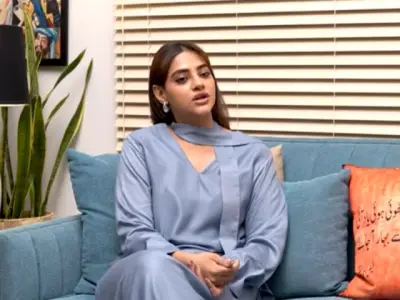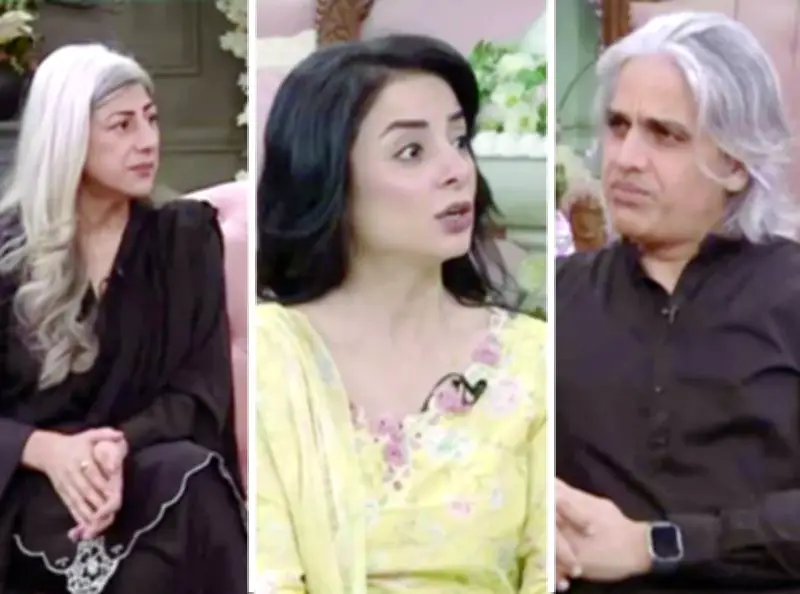
Pakistani actors Sarwat Gilani, Omair Rana, and Naveen Naqvi recently appeared on a morning show to discuss the profound impact of losing loved ones and how such losses can permanently alter a person. The conversation delved into various aspects of grief, including the use of humour as a coping mechanism and the intangible losses that cannot be mourned conventionally.
Gilani Reflects on Family Loss
Sarwat Gilani began by recounting the passing of her father-in-law. She noted that love provides strength in difficult times. “When Allah takes something, that love gives you strength. When my husband’s father died, I remember my mother-in-law was completely numb. We had cousins over and everyone was having tea the next day. I feel like those types of environments show you that you have to move on,” she said. Gilani added that her husband’s words at the graveyard offered solace: “When my husband was at the graveyard, he spoke on how his father was in a good place, waiting for us. That is how you deal with loss.”
Rana on Humour and Celebration
Omair Rana shared that his family employs humour as a coping strategy, particularly on his father’s side. “My family has different shades. My mom’s side is very traditional when dealing with loss while my father’s side uses comedy to cope,” he explained. He recalled childhood experiences where jokes provided catharsis, even if it made others uncomfortable. “I realised when I was a child that there was a feeling of catharsis with loss. We would be making jokes and people would be weirded out.” Rana also spoke about cultural differences in mourning, citing his visit to Mexico City during the Day of the Dead festivities. “It was just like Eid. We were admiring how they were embracing and celebrating death. It happens once a year and they have each person dedicated for a separate day: the pets, elderly, new-borns, and siblings. They also make their favourite foods,” he said. He emphasised the importance of verbal history in keeping memories alive.

Naqvi Discusses Religion and Storytelling
Naveen Naqvi agreed with Rana, noting that religious beliefs make dealing with death easier. “Compared to others, we embrace death rather than fear it. We know what is ahead and that there is better in the afterlife,” she stated. Naqvi also highlighted her family’s tradition of storytelling: “We have a tradition where all the aunts sit with the kids and share the history of who has come and gone. Everyone in the family is an excellent storyteller.”
Intangible Loss and Personal Grief
Gilani expanded the discussion to intangible losses, such as the end of relationships or lost connections. “There are some things that don’t die or which you don’t lose, such as falling in love or having a certain feeling. It is also a loss but we cannot bury it. It is just out in the universe,” she said. She gave an example of an aunt she lost touch with after a family separation: “When my aunt and uncle separated, I used to miss my aunt and her kids so much but I couldn’t talk to her because I didn’t want to break a family decision. I would always think about her and wonder if she watches my dramas.” Gilani also revealed that she still grieves her father’s death, which occurred 12 years ago. “A part of me has been lost and will never come back. And that’s not tangible. When I look inward and up, I remember it,” she shared.
Rana’s Final Message
Omair Rana concluded the discussion with a poignant message for viewers: “Think of the time you give your loved ones. We should respect time because life is nothing without it.” The conversation offered a deep exploration of grief, coping mechanisms, and the enduring impact of loss.