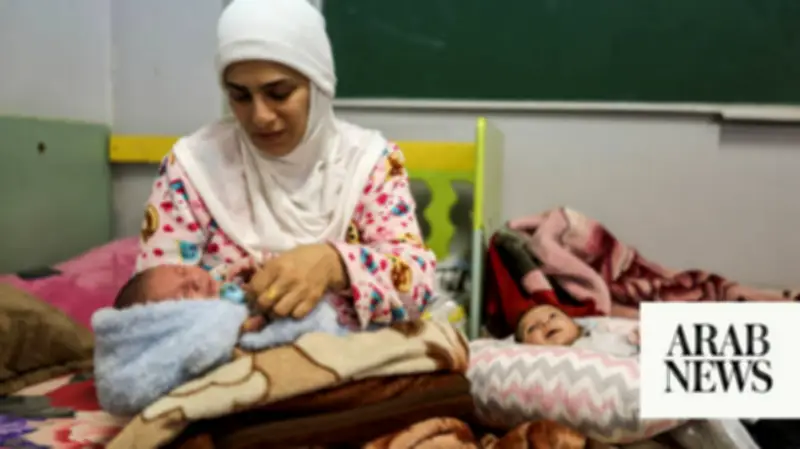
Since March 2, Israeli airstrikes and ground incursions have claimed over 3,400 lives in Lebanon, forcing more than one million people from their homes. Among the displaced are an estimated 390,000 women of reproductive age, of whom 16,000 are pregnant — up from 13,000 earlier this month. Another 1,500 pregnant women are in southern Lebanon, cut off from reliable access to skilled obstetric care, according to the UN Population Fund (UNFPA).
Displaced and Alone: A Mother's Story
Anandita Philipose, UNFPA’s representative in Lebanon, recounted meeting a heavily pregnant woman in a Beirut shelter early in the crisis. "She didn’t know who to go to," Philipose said. "She came up to me and said: ‘Is there a number I can call?’" Two weeks later, Philipose found the woman holding her newborn son, Ali, with his grandmother beaming beside them. "There was joy in that room despite the fact that they were still in a shelter, overcrowded, with all the factors we worry about around health and protection," she said.
Healthcare Under Attack
On May 31, airstrikes severely damaged a UNFPA-supported primary healthcare center and a women and girls’ safe space in Tyre, among the last facilities operating in the region. A public hospital with a maternity ward was also struck. Philipose warned that attacks deter women from seeking care. To compensate, UNFPA has deployed nine mobile clinics in Beirut, Mount Lebanon, and the south, offering prenatal consultations, basic scans, and referrals. The agency also works with the Lebanese Order of Midwives to send midwives and social workers into hard-to-reach areas.

Personal Stories of Struggle
Rima, 26, was seven months pregnant when she fled her home in the south. Her journey took over 16 hours by car. She now shares a small home in Sidon with 13 others. "I used to see my doctor regularly, but now I can’t," she told UNFPA. Dana, 19, from Rashaf near the Israeli border, fled to the Bekaa Valley when she was four months pregnant. "Our home was destroyed, and we have nowhere to go," she said. Sara, 20, reached a UNFPA-supported mobile clinic in Al-Ain. "The staff were kind and supportive," she said. "It helped me feel a little more secure, but the fear doesn’t go away. I want my baby to be born into peace."
Protection Risks and Funding Gap
UNFPA’s safety audit of collective shelters found no locks on doors, no gender-segregated bathrooms, lack of lighting, and severe overcrowding — factors increasing vulnerability to gender-based violence. Over 630 collective shelters in Lebanon are dangerously congested. UNFPA aims to operate at least 20 women and girls’ safe spaces but is well short of that target. The agency has launched a revised flash appeal seeking $25 million to cover operations to August 2026. So far, it has secured about $4 million, leaving a gap of $21 million. "If we have full funding and full access, we will be able to reach all 16,000 pregnant women with pre- and postnatal care," Philipose said. Funding also enables delivery of reproductive health kits and dignity kits containing hygiene products and menstrual pads.
Urgent Needs and International Response
Philipose emphasized three intertwined requirements: an end to hostilities and respect for international humanitarian law, full unrestricted humanitarian access, and critical funding for reproductive health and gender-based violence services. The recently announced US-Iran agreement, which includes a de-confliction cell for Lebanon, is watched closely but its impact remains uncertain. "What we are seeing is not just a displacement crisis. It is, increasingly, a health and protection crisis," Philipose said.