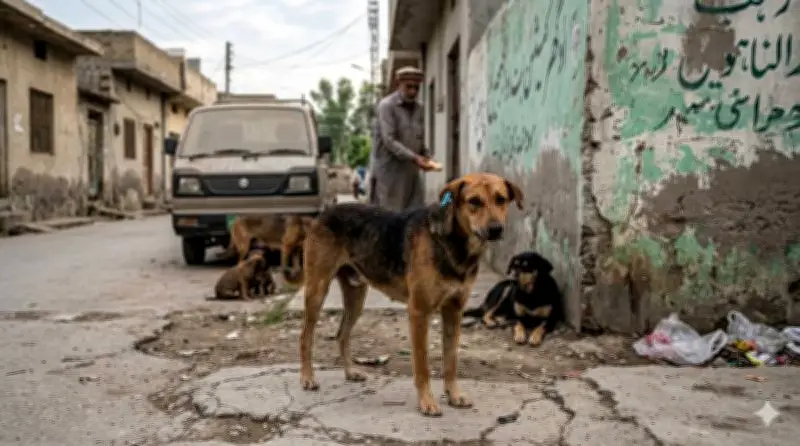
The Islamabad High Court’s directives, delivered by Justice Khadim Hussain Soomro on dog culling, constitute a pivotal intervention in a much-neglected crisis. Whereas the ruling offered institutional reassurance, especially to those involved in caring for these unfortunate souls, the ground reality continues to breed despair. How should the state humanely yet pragmatically manage stray dog populations? The prescribed model is Trap-Vaccinate-Neuter-Release (TVNR).
TVNR: A Middle Path Between Extremes
In principle, TVNR delineates a calibrated middle path between indiscriminate culling and unregulated proliferation. In practice, however, implementation confronts the chronic operational reality in Pakistan. Generally, government departments tasked with such public service jobs remain chronically underfunded, which induces bureaucratic inertia — files migrate between desks while implementation remains paralysed. TVNR is not a theoretical exercise. It is a logistical, financial, and ethical undertaking, executed one animal at a time.
Practical Steps for a Single Dog Under TVNR
Consider the practical steps for a single dog selected under the TVNR protocol: a vehicle and trained team are required to trap the animal. The dog, unable to comprehend what is happening, will instinctively resist and fight for its life. It may also have dependents — a family in the area, or pups if it is a nursing mother. This means each capture is not a line item, but a live encounter with fear, risk of injury, and collateral impact on a local pack. Vaccination takes its own time, but is doable once the animal is impounded. Next, and most importantly, comes the surgery called neutering, which requires proper veterinary intervention, including anaesthesia, sterile surgical conditions, and post-operative care for each dog. A compound with kennels, a clinic, and staff to look after the animals is therefore essential for recovery, monitoring for infection, and preventing immediate re-injury.

Western Model vs. Turkish Model
The Western paradigm of sanitising residential zones typically depends on impound-and-shelter systems predicated on public adoption; unadopted animals are ultimately euthanised. No-kill shelters, by contrast, are resource-prohibitive and exceedingly scarce. Here, the public is fixated on imported breeds, and there is severe contempt for indigenous dogs pejoratively labelled ‘desi’ or ‘aawara’, while these innocent souls are merely homeless beings requiring food and shelter. Consequently, the Western impound-and-adopt model is structurally untenable in the Pakistani context. The alternative is the Turkish model, premised on a humane ethic toward sentient beings: TVNR and tagging, with dogs reintroduced to their territories as community animals. Both paradigms presuppose a baseline of funding, institutional infrastructure, and public sensitisation that remains absent in Pakistan. In addition, the tag of ‘napaak’ attached to this creation of God further complicates matters. Given the prevailing social attitudes, dogs are frequently regarded with suspicion rooted in ignorance. A pervasive fallacy identifies rabies with all dogs, while it is an infection present only in afflicted animals. With such entrenched bias, even the Turkish TVNR model faces probable failure.
A Seesaw Situation: Inaction or Culling
Undoubtedly, the scenario looks dismal, even if there is greater awareness of the fact that we are dealing with sentient beings living amongst humans that have no voice and no rights. The realisation of this fact creates a responsibility that transcends merely endorsing TVNR, and makes it imperative that we take up this formidable task seriously and mobilise resources, employ trained personnel, and create a robust infrastructure that treats this issue as a critical environmental, public-health, and animal-welfare priority. While judicial directives now and then have reoriented the legal compass, ground realities and the prevailing social fabric impose constraints that seem insurmountable. This creates a seesaw situation where the story alternates between either complete inaction leading to a subsequent dog population explosion or sudden active culling of dogs.

Seeking International Expertise
Given the above, the best way to start would be to earnestly seek help from countries that have mastered coexistence with animals that live amongst us, and request them to develop a plan of action lest a plan is designed by ‘desi’ people for ‘desi’ homeless dogs that might be more cruel than culling.