India-China Capital Flow Easing Raises Eyebrows in Islamabad Amid Geopolitical Shifts
The recent decision by India to facilitate the inflow of Chinese capital into its economy should certainly draw attention and analysis from policymakers in Islamabad. This development occurs within a broader context of warming bilateral relations between New Delhi and Beijing, which have been gradually improving since the Indian Prime Minister's visit to China last year. Both nations have resumed direct flights, streamlined business visa processes, and now most significantly, lifted restrictions on capital flows.
China's Pragmatic Foreign Policy and Regional Dynamics
Throughout periods of friction following the Galwan crisis, China has maintained its dominant position in the balance of trade with India. These evolving dynamics are frequently characterized as components of Beijing's pragmatic foreign policy approach, particularly relevant as US protectionism creates uncertainties for major global economies. Similarly, Pakistan's recalibration of its relationship with the United States, especially following the May 2025 conflict with India, must be viewed through the same lens of strategic pragmatism.
After the May 2025 confrontation, Islamabad executed its diplomatic and strategic maneuvers with careful precision. Pakistan's military successes during the conflict not only demonstrated the effectiveness of Chinese military equipment but also facilitated closer ties with the US administration under President Donald Trump. Subsequent cooperation between Pakistan and the United States in the minerals and cryptocurrency sectors signaled a return to warmer bilateral relations after several years of relative distance.

Navigating Binary Perceptions in Foreign Policy
The discourse surrounding Pakistan's foreign policy choices in recent years has often been framed in simplistic binaries, particularly since the country's participation in China's Belt and Road Initiative. There persists a perception that any advancement in relations with one global power inherently constitutes opposition to the other. This sentiment gained traction in October 2025 when China expanded its critical minerals export controls, sparking speculation that this move was a response to Pakistan's September joint minerals cooperation agreement with the United States.
Although the Chinese Ministry of Foreign Affairs subsequently dispelled these rumors, it reiterated Islamabad's assurances to Beijing, noting that "Pakistan stressed that its interactions with the US will never harm China's interests or its cooperation with China." Interestingly, one month later, Beijing lifted critical mineral export bans following a meeting between Xi Jinping and Donald Trump, yet this time no public assurances were communicated to Pakistan.
Pakistan's Strategic Balancing Act
Foreign policy should not be approached as a turn-based chess game but rather as a complex card table where each decision must be made judiciously based on prevailing circumstances and available options. Therefore, interpreting China's normalization with India in August and the October export controls as direct responses to Pakistan's improving US relations would be as misguided as viewing Islamabad's $500 million deal with US Strategic Metals as intentionally detrimental to Chinese interests.
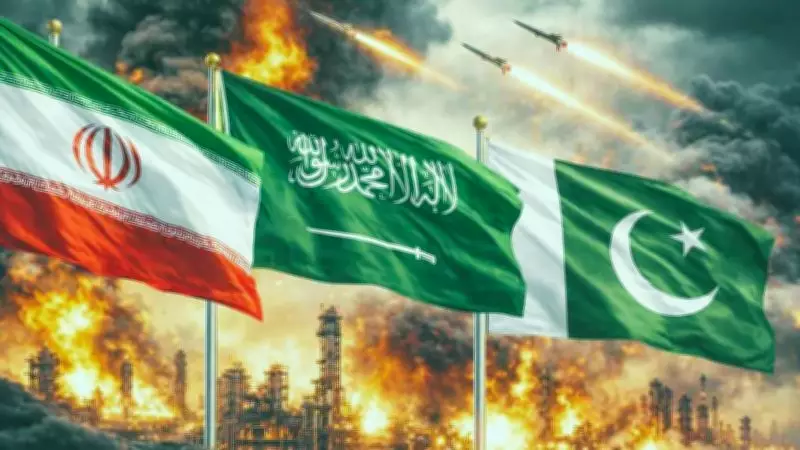
Recent Iranian attacks in Riyadh have brought the Pakistan-Saudi defense agreement back into focus, especially after the Saudi Foreign Minister indicated a right to retaliate against Iran. Despite various analytical perspectives, Pakistan has consistently maintained equilibrium in its relationships with both the United States and China, its two largest trading partners and strategic allies. The nation cannot afford to be caught in conflicts between major powers.

Maintaining Multiple Strategic Partnerships
For this reason, Islamabad has steadfastly continued its commitment to the China-Pakistan Economic Corridor (CPEC) despite previous US characterizations of the project as a "debt trap." Simultaneously, Pakistan has engaged in extensive counter-terrorism cooperation with the United States while refraining from public criticism of China's counter-terrorism policies in Xinjiang. Likewise, Pakistan has pursued mineral sector cooperation with the United States under the Special Investment Facilitation Council framework, notwithstanding China's implementation of minerals control policies elsewhere.
Beyond mineral resources and the India-Pakistan equation, Islamabad's recent diplomatic initiatives in the Middle East have strengthened its alignment with Western allies. The Strategic Mutual Defense Agreement with Saudi Arabia in September 2025, followed by entry into the Gaza Board of Peace in January 2026, solidified Pakistan's position alongside Western partners. Nevertheless, following US-Israeli strikes on Iran, Pakistan adopted a balanced stance, unequivocally condemning aggression against Iran and its Gulf allies while immediately mediating Iran's position regarding Saudi Arabia by highlighting the mutual defense pact.
Diplomatic Recognition and Future Challenges
Pakistan was among only four countries in the United Nations Security Council, alongside China, Russia, and Somalia, to support Russia's resolution condemning Middle East conflict. The Iranian Foreign Minister publicly acknowledged Pakistan's diplomatic efforts during the crisis. As global uncertainty intensifies due to ongoing Middle East tensions, Pakistan's foreign policy choices face renewed testing. Iran's increasing belligerence toward regional energy security threatens to inflate global fuel prices, while recent attacks in Riyadh keep the Pakistan-Saudi defense agreement under international scrutiny.
Ultimately, as the adage goes, there are no free lunches in international relations. Pakistan has been navigating a diplomatic tightrope for several months, attempting to balance multiple complex equations: US-China relations, Saudi-Iran dynamics, and potentially now the China-India relationship as well. Moving forward, expectations of simplistic either/or foreign policy decisions remain unrealistic as Pakistan continues its pragmatic navigation of multipolar global realities.