Iranian President Challenges Trump's Stance on Nuclear Rights
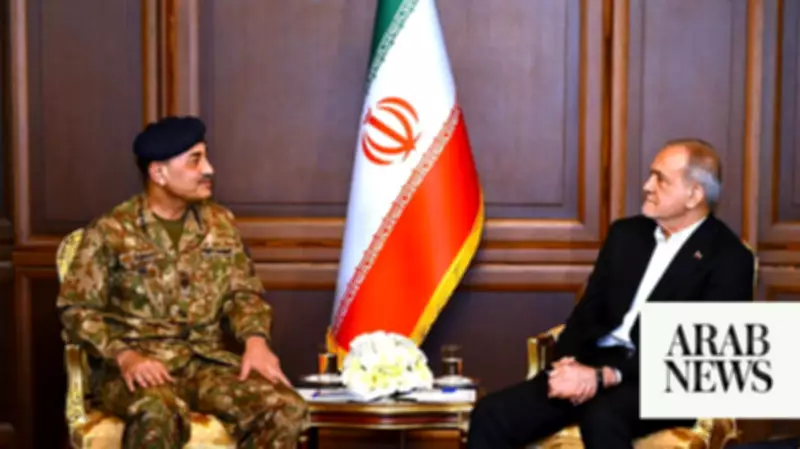
In a recent statement, Iranian President Masoud Pezeshkian has openly criticized US President Donald Trump, asserting that Trump lacks any legitimate justification to deprive Iran of its nuclear rights. This declaration was made during a meeting with Pakistan's army chief, Field Marshal Asim Munir, in Tehran, highlighting the ongoing tensions between Washington and Tehran over nuclear issues.
Pezeshkian Questions Trump's Authority
According to reports from the Iranian Student News Agency, President Pezeshkian was quoted as saying, "Trump says Iran cannot make use of its nuclear rights but doesn't say for what crime. Who is he to deprive a nation of its rights?" This strong rhetoric underscores the deep-seated disagreements that continue to plague US-Iran relations, particularly regarding Iran's nuclear program and its rights under international agreements.
Background of the Meeting and Regional Implications
The meeting between President Pezeshkian and Field Marshal Asim Munir took place on April 16, 2026, in Tehran, as confirmed by The Inter-Services Public Relations via Reuters. This diplomatic engagement comes at a critical time when both Iran and the United States are navigating complex geopolitical landscapes. The discussions likely touched upon broader regional security issues, including nuclear non-proliferation and bilateral cooperation between Iran and Pakistan.

Ongoing Nuclear Disputes: The core of the conflict revolves around Iran's insistence on its right to develop nuclear technology for peaceful purposes, as outlined in international treaties such as the Joint Comprehensive Plan of Action (JCPOA). However, the United States, under Trump's administration, has historically taken a hardline stance, imposing sanctions and challenging Iran's compliance with nuclear agreements.
International Reactions: Pezeshkian's comments are expected to resonate across global diplomatic circles, potentially influencing negotiations and alliances. As Iran continues to assert its sovereignty, the international community watches closely, with many countries advocating for dialogue to resolve the nuclear impasse peacefully.
Future Prospects for US-Iran Relations
With both leaders holding firm positions, the path forward remains uncertain. Pezeshkian's vocal defense of Iran's nuclear rights signals a continued commitment to resisting external pressures, while Trump's policies have consistently aimed at curbing Iran's nuclear ambitions. This standoff could lead to further escalations or, alternatively, open doors for renewed diplomatic efforts to address mutual concerns.
As the situation evolves, stakeholders from around the world are urged to monitor developments closely, recognizing the significant impact that US-Iran relations have on global stability and security in the Middle East and beyond.