Iran's Security Chief Firmly Rejects Any Negotiations with the United States
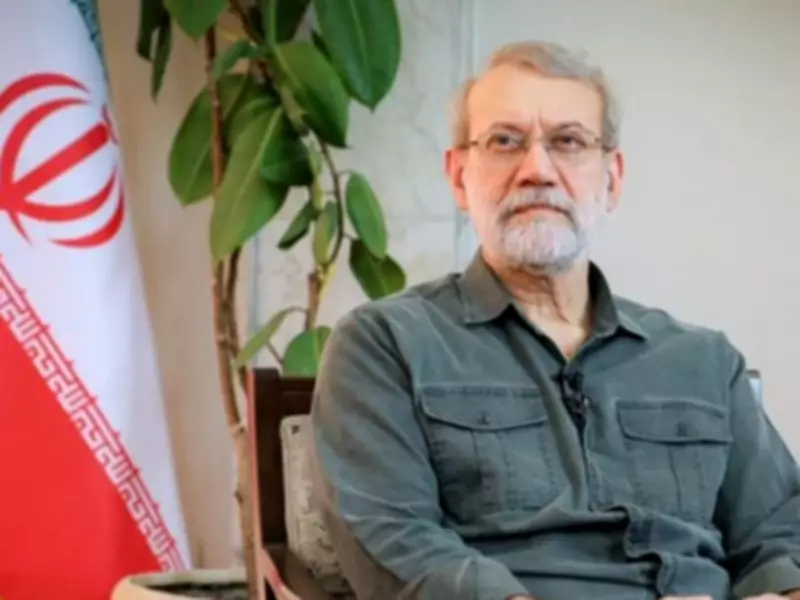
In a definitive statement posted on social media platform X on Monday, Iran's prominent security official Ali Larijani declared that Tehran will not engage in negotiations with the United States. This announcement directly countered a report from the Wall Street Journal, which had suggested through intermediaries that Larijani was initiating efforts to resume diplomatic talks with Washington.
Response to Media Reports on Alleged Diplomatic Initiative
Larijani's post was specifically crafted as a rebuttal to a breaking news update from Al Jazeera. The media outlet had referenced a Wall Street Journal article detailing an alleged initiative by Larijani to restart discussions with the United States, with communications reportedly facilitated through intermediaries from the Sultanate of Oman. The Iranian official's unequivocal denial underscores the current frosty state of relations between the two nations.
Sharp Criticism of Former US President Trump's Policies
In his extended commentary, Larijani launched a scathing critique of former US President Donald Trump, holding him responsible for destabilizing the Middle East. Larijani accused Trump of acting on "delusional fantasies" that plunged the region into chaos. He further argued that Trump's much-publicized "America First" slogan was, in practice, transformed into "Israel First," alleging that American soldiers were sacrificed to advance Israel's geopolitical ambitions.

"Today, the Iranian nation is defending itself," Larijani asserted in his post. "The armed forces of Iran did not initiate the aggression." This statement reinforces Iran's position as a defensive actor in the ongoing regional conflicts, rather than an instigator.
Broader Context of Escalating US-Israel Conflict with Iran
Larijani's remarks occur against a backdrop of significantly heightened tensions. The conflict escalated following the assassination of Iran's former Supreme Leader, Ayatollah Ali Khamenei, in what Iranian authorities describe as a joint US-Israeli air strike on Tehran. In response, Iran has vowed retaliation, with President Masoud Pezeshkian labeling the avenging of Khamenei's death as both a national duty and a right.
The Iranian leadership has moved swiftly to ensure governmental continuity, establishing an interim council comprising the president, the head of the judiciary, and a representative from the Guardian Council. Cleric Ayatollah Alireza Arafi was appointed to this body, which will govern until the Assembly of Experts selects a permanent supreme leader. The government has also declared a 40-day mourning period and seven days of public holidays.
Widening Regional Conflict and Economic Implications
The conflict has expanded rapidly, with fresh Israeli strikes reported on Tehran and Iranian missile attacks launched across the region. Civilian casualties have been reported, including nine deaths in Beit Shemesh according to Israel's ambulance service. Authorities in Gulf states have also reported casualties and significant infrastructure damage.
The strategic Strait of Hormuz has seen disruptions to commercial shipping following attacks on vessels, prompting major shipping operators to suspend some regional activities. These developments have raised serious concerns about a potential broader regional and economic crisis, affecting global energy markets and international trade routes. The situation remains fluid, with diplomatic channels appearing firmly closed according to Larijani's latest pronouncements.