Israel Officially Joins Trump's Board of Peace Initiative
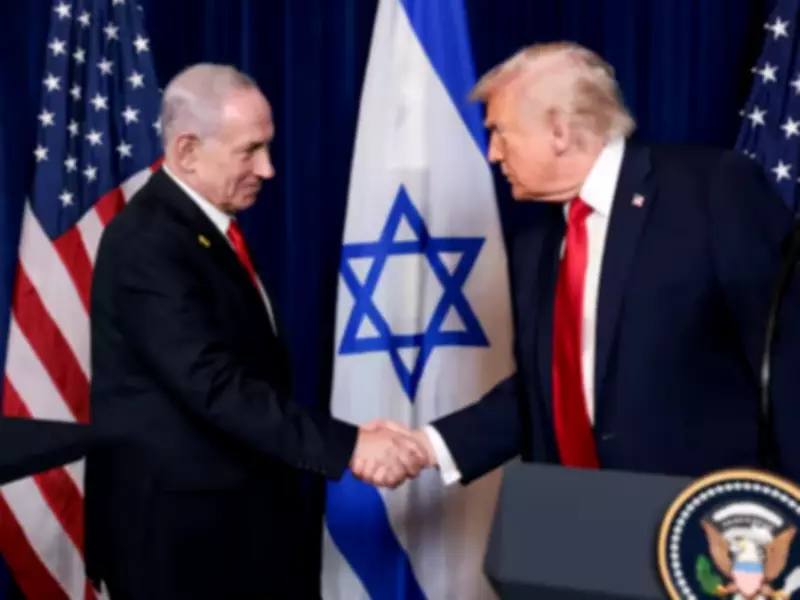
Prime Minister Benjamin Netanyahu confirmed on Wednesday that Israel has formally joined US President Donald Trump's "Board of Peace" initiative. The announcement came during Netanyahu's official visit to Washington, where he held meetings with both President Trump and Secretary of State Marco Rubio.
Documentation and Diplomatic Meetings
Visual evidence released earlier on Wednesday captured the moment following the Netanyahu-Rubio meeting, showing both leaders holding a document bearing Netanyahu's signature that officially confirms Israel's membership in the board. Netanyahu later took to social media platform X to publicly announce the development, stating: "Ahead of my meeting at the White House with President Trump, I signed Israel's accession as a member of the 'Board of Peace.'"
The Israeli leader emphasized that this move would "continue strengthening the unbreakable alliance between Israel and the United States." During his subsequent meeting with President Trump, discussions reportedly centered on regional security matters, particularly concerning Iran's activities in the Middle East.

Origins and Mandate of the Board
The Board of Peace derives its authority from a United Nations Security Council resolution adopted in mid-November. This resolution authorizes the board and cooperating nations to establish an international stabilization force in Gaza, where a fragile ceasefire has been in effect since October under a Trump-mediated agreement endorsed by both Israel and Hamas.
According to Trump's original Gaza plan, the board was designed to oversee temporary governance arrangements in the territory. The US president later expanded the board's mandate, announcing it would address global conflicts with himself serving as chairperson. The board's inaugural meeting is scheduled for February 19 in Washington, where participants will primarily discuss reconstruction efforts in Gaza.
International Reactions and Criticism
The board has generated significant controversy since its launch in late January. Numerous human rights experts have expressed concern that Trump overseeing a board responsible for foreign territory governance resembles colonial-era structures. Israel's inclusion has drawn particular criticism given the absence of Palestinian representation on the board.
International response to Trump's invitation for countries to join has been notably cautious. While several of Washington's Middle Eastern allies have participated, many traditional Western allies have declined involvement. Experts warn that the board could potentially undermine the authority and effectiveness of established United Nations mechanisms.
Gaza Context and Ongoing Challenges
The ceasefire in Gaza has proven increasingly fragile, with repeated violations reported since its implementation in October. Palestinian authorities document at least 580 civilian fatalities, while Israeli officials report four soldier deaths during this period. The Gaza Health Ministry reports over 72,000 fatalities since the conflict's escalation, with numerous rights experts, scholars, and a UN inquiry characterizing Israel's actions as genocidal.
Israel defends its military operations as necessary self-defense following Hamas's October 2023 assault on Israeli-occupied territories, which resulted in approximately 1,200 fatalities and the capture of over 250 hostages. Critics point to Israel's Hannibal Directive and the creation of a humanitarian crisis through aid restrictions and mass displacement of Gaza's population.
The next phase of Trump's Gaza plan involves addressing particularly complex issues including Hamas's disarmament—which the group has consistently rejected—further Israeli withdrawal from Gaza territories, and deployment of international peacekeeping forces. These developments occur against a backdrop of escalating regional tensions and humanitarian concerns in the conflict-affected areas.