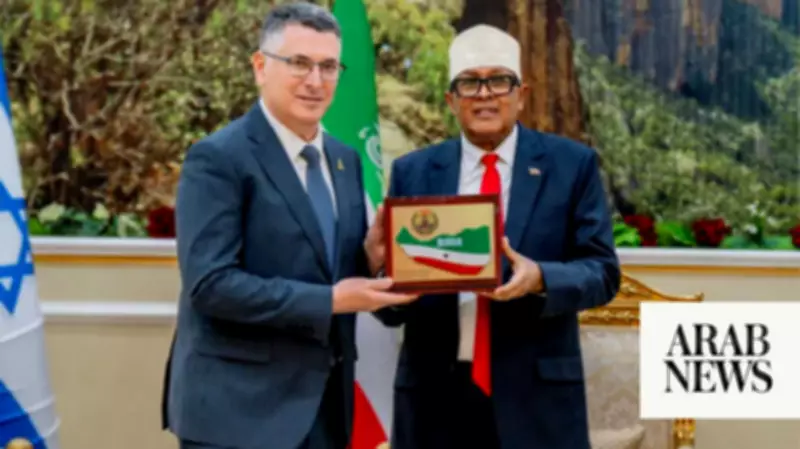
Pakistan Leads International Condemnation of Israel's Somaliland Diplomatic Move
In a significant diplomatic development, Pakistan has joined forces with eleven other nations to strongly condemn Israel's recent appointment of a diplomatic representative to the self-declared region of Somaliland. The collective statement, issued on Saturday, characterizes this action as a direct violation of Somalia's sovereignty and a serious threat to regional stability across the Horn of Africa.
Unified International Response
The foreign ministers of Pakistan, Saudi Arabia, Egypt, Türkiye, and several other Muslim-majority countries have issued a powerful joint declaration reaffirming their unwavering support for Somalia's unity and territorial integrity. This coordinated response represents a significant international rejection of what these nations describe as unilateral measures that deliberately undermine state sovereignty and established international norms.
The ministers' statement explicitly declares: "Such actions constitute a blatant violation of the principles of international law, the United Nation's Charter, and the Constitutive Act of the African Union. This sets a dangerous precedent that risks undermining stability in the Horn of Africa, which reflects negatively on regional peace and security as a whole."

Background of the Diplomatic Controversy
This diplomatic confrontation follows Israel's decision last year to extend recognition to Somaliland, a region that declared independence from Somalia in 1991 but has never received diplomatic recognition from any United Nations member state. The appointment of Israel's diplomatic representative to Somaliland earlier this week has been characterized by the condemning nations as a "flagrant violation" of Somalia's sovereignty.
The joint statement emphasizes that Somalia's internationally recognized government remains the sole legitimate authority representing its people and territory. This position aligns with longstanding international consensus regarding Somalia's territorial integrity.
Regional and Historical Context
The controversy occurs against a backdrop of complex regional dynamics. In March of last year, international media reports indicated that both Israel and the United States had approached several East African states, including Somaliland, regarding the potential resettlement of Palestinians from Gaza. This outreach coincided with Israel's military campaign in the Palestinian enclave, which has faced widespread international criticism and accusations of genocide against Prime Minister Benjamin Netanyahu's government.
Pakistan has maintained a consistent position on this matter, stating in December 2025: "Pakistan reiterates its unequivocal rejection of any steps aimed at the forced displacement of Palestinians from their land under any circumstances." Islamabad has repeatedly reaffirmed its support for the Palestinian people's right to self-determination and for the establishment of an independent Palestinian state based on pre-1967 borders, with East Jerusalem as its capital.
Broader International Implications
Somalia has categorically rejected Israel's diplomatic position regarding Somaliland, while the African Union has consistently opposed any unilateral recognition of secessionist regions across the African continent. This collective condemnation by twelve nations represents a significant diplomatic challenge to Israel's foreign policy initiatives in the region and underscores the complex geopolitical tensions surrounding recognition of breakaway territories.
The development highlights the ongoing sensitivity surrounding territorial sovereignty issues in Africa and the Middle East, particularly when intertwined with the longstanding Israeli-Palestinian conflict. The coordinated response from Pakistan and its partner nations demonstrates the continuing importance of multilateral diplomacy in addressing what these countries perceive as violations of international law and threats to regional stability.