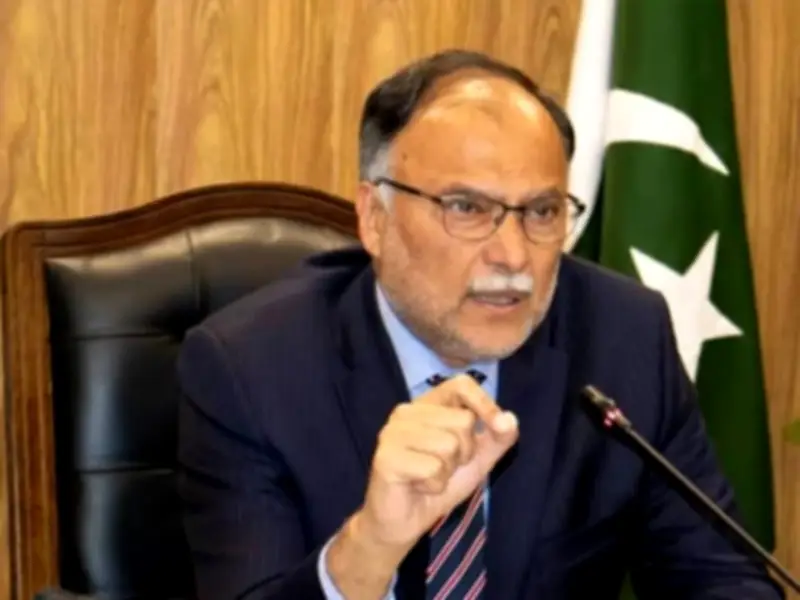
Planning Minister Ahsan Iqbal declared on Monday that unchecked population growth remains Pakistan's most critical structural challenge, eroding economic gains and hindering human development. Speaking at the launch of a book on 'Impact of Population Growth on Human Security in Pakistan'—a study by the Islamabad Policy Research Institute (IPRI)—he called for urgent national-level reforms.
Economic Growth Diluted by High Population Rate
Iqbal noted that while Pakistan's economic indicators approach those of middle-income countries, its social indicators lag behind least developed nations. 'This contradiction in our development model must be resolved if we are to move forward,' he said, attributing the imbalance to rapid population growth. He highlighted that the population growth rate, which dropped from 3.4% in 1990 to 2.4% by 2017, has reversed to 2.55% according to the latest census.
'No country in history has achieved sustained progress with such a high population growth rate,' Iqbal remarked, stressing that successful nations reduced their rates to 1–1.5% or lower. He explained that high population growth dilutes economic gains: 'If the economy grows at three per cent while the population increases by 2.5 per cent, the real progress is only half a per cent.'

Structural Flaws in Resource Distribution
The minister pointed out structural flaws linking population size to resource allocation and political representation. He observed that the current system discourages provinces from implementing population control measures, as reducing population could decrease their share of resources and representation. This perverse incentive must be reformed to align provincial interests with national population goals, he argued.
Iqbal emphasized that sustainable development and improved living standards are unattainable without controlling population growth. The book launch event was attended by policymakers, academics, and development experts who discussed the study's findings and recommendations for integrating population dynamics into national planning.