The European Union on Sunday condemned the terrorist attacks in junta-ruled Mali and reaffirmed its commitment to security and stability in the Sahel region. In a statement, an EU spokesperson said the bloc strongly condemns the attacks perpetrated on April 25, extending condolences to the families of the victims and the Malian authorities.
Mali Defense Minister Killed in Attack
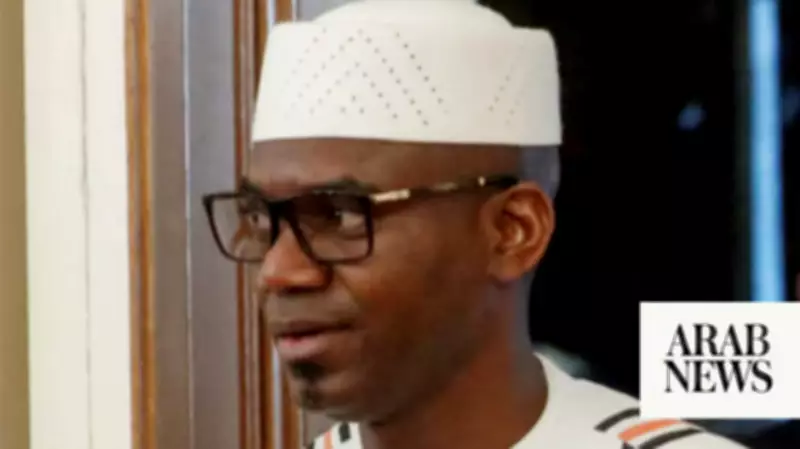
Mali's Defense Minister Sadio Camara was killed in an attack by an Al-Qaeda affiliate on his residence near the main army base outside Bamako, according to France's RFI radio and two relatives. The assault in Kati, 15 kilometers north of Bamako, was part of a larger coordinated operation by Jama'at Nusrat Al-Islam wal-Muslimin (JNIM), which collaborated with a Tuareg-dominated terrorist group. Analysts and diplomats described it as one of the largest coordinated attacks in the country in recent years.
A relative confirmed Camara's death, and a Malian journalist, known to be the defense minister's brother-in-law, posted about his death on Facebook. The armed forces stated that operations were ongoing in various parts of the country to repel the insurgents.

UN Calls for International Response
The United Nations called for an international response to violence and terrorism in West Africa's Sahel region following the assault. A UN spokesperson expressed deep concern over reports of attacks in multiple locations across Mali and strongly condemned the acts of violence.
If confirmed, Camara's death would be a major shock for Mali's military leaders, said Djenabou Cisse, associate fellow at the Foundation for Strategic Research. The current government, led by Assimi Goita, took power after coups in 2020 and 2021 and has pursued closer ties with Russia while rejecting Western military cooperation—a strategy Camara promoted. Cisse noted that as a key figure within the junta and a central architect of the Mali-Russia rapprochement, his removal underscores JNIM's capacity to strike at the core of state power.
Coordinated Attacks Across Mali
In addition to Kati, Saturday's strikes hit near Bamako airport and localities further north, including Mopti, Sevare, and Gao. The fate of the strategic city of Kidal, a former stronghold for the Azawad Liberation Front (FLA), which partnered with JNIM, remained unclear. The FLA claimed Kidal had fallen, and a spokesperson said a deal was struck to allow Russian mercenaries to leave a besieged camp outside the city where Malian forces were entrenched. However, Mali's armed forces stated that operations to repel insurgents were still underway in Kidal and elsewhere.
Ulf Laessing, head of the Sahel program at the Konrad Adenauer Foundation, said the attack was a setback for Russia, which backed the military-led government after it expelled French, US, and other Western forces. He described the attack as a disaster for Russia, noting their inability to prevent the fall of the highly symbolic Tuareg stronghold of Kidal and their forced departure from the northern city.