What is Hezbollah?
Hezbollah is a Lebanese militant group and political party backed by Iran. Founded in 1982 by Iran's Revolutionary Guards during Lebanon's civil war, it was part of Tehran's effort to export its Islamic Revolution and fight Israeli forces that had invaded Lebanon. The group runs social services like schools and hospitals and enjoys strong support among Lebanon's Shiite Muslims. Alongside its ally Amal Movement, Hezbollah dominates Shiite representation in Lebanon's sectarian political system.
How Did Hezbollah Become So Powerful?
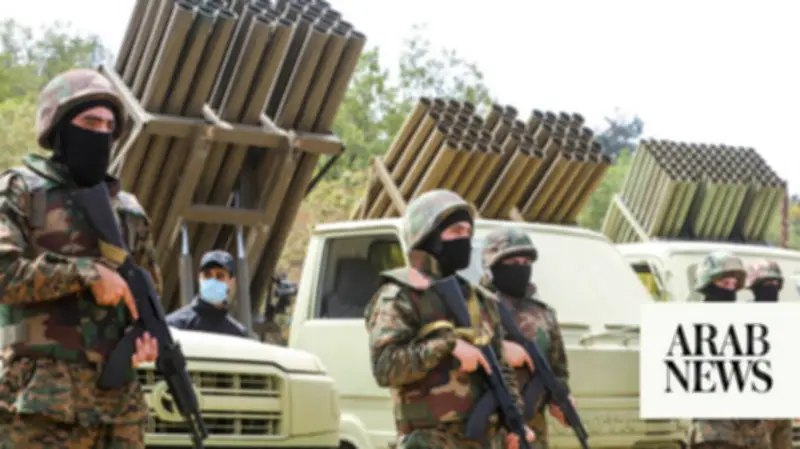
While other groups disarmed after Lebanon's civil war, Hezbollah kept its weapons to fight Israeli forces occupying the south. It retained its arsenal even after Israel withdrew in 2000. During a five-week war in 2006, it fired thousands of rockets into Israel after crossing the border and kidnapping two soldiers. Its arsenal grew significantly after 2006. The CIA World Factbook estimated it had up to 150,000 rockets and missiles in 2020 and around 45,000 fighters in 2022. Former leader Hassan Nasrallah, killed by Israel in 2024, claimed the group had 100,000 fighters.
How Did Hezbollah Get Involved in the Latest War?
After the 2006 war, Hezbollah became the spearhead of Iran's Axis of Resistance, sending fighters to Syria to support President Bashar Assad, aiding Shiite militias in Iraq, backing Yemen's Houthis, and deepening ties with Hamas. Following Hamas's attack on Israel on October 7, 2023, Hezbollah opened fire on Israeli positions in solidarity with Palestinians. They exchanged fire until September 2024, when Israel detonated booby-trapped pagers used by Hezbollah, killed its leaders, and sent troops into south Lebanon. A ceasefire in 2024 aimed to halt attacks and disarm Hezbollah, but both sides accused each other of breaches. After Israel and the US attacked Iran on February 28, killing Iran's Supreme Leader, Hezbollah fired at northern Israel, prompting a major Israeli campaign. Israel seized territory in south Lebanon, razing villages and displacing civilians. Hezbollah has retaliated with drones and rockets.

How Badly Hit Has Hezbollah Been?
In the 2024 fighting, Israel killed much of Hezbollah's command, thousands of fighters, and destroyed much of its arsenal. The fall of Assad in Syria in December 2024 choked Hezbollah's supply route from Iran. However, Iran's Revolutionary Guards rebuilt much of Hezbollah's military command. Since warfare resumed on March 2, Hezbollah has suffered thousands of fighter deaths, according to internal estimates.
What is Hezbollah's Role in Lebanon?
Hezbollah long had a decisive say in state affairs but failed to influence the formation of the 2025 post-war government, which adopted a policy of establishing a monopoly on arms. Lebanese are divided over Hezbollah's weapons: opponents accuse it of dragging the country into wars, while supporters see its weapons as essential for defense. After the 2024 conflict, pressure to disarm grew, and the government began confiscating weapons in the south. Hezbollah rejected full disarmament, warning it could lead to civil war. In 2008, Hezbollah fighters took over parts of Beirut after the government targeted its military communications network. After the 2026 war, Lebanon outlawed Hezbollah's military activities but could do little to halt the fighting.
Terrorism Designations
The US holds Hezbollah responsible for the 1983 suicide bombings that destroyed the US Marine headquarters in Beirut (killing 241) and a French barracks (killing 58), as well as a 1983 attack on the US Embassy. Lebanese officials and Western intelligence agencies link Hezbollah to the kidnapping of Westerners in the 1980s. Nasrallah denied involvement in a 2022 interview. Western governments, including the US and Gulf Arab states, designate Hezbollah a terrorist group. The EU lists its military wing as terrorist. Argentina blames Hezbollah and Iran for the 1994 bombing of a Jewish community center (85 killed) and the 1992 attack on the Israeli Embassy (29 killed). Hezbollah and Iran deny responsibility. A UN-backed court convicted three Hezbollah members in absentia for the 2005 assassination of former Prime Minister Rafik Al-Hariri, which Hezbollah denies.