The just-concluded Middle East war now belongs firmly to the category of strategically pointless conflicts, distinguished not by territorial change but by the sheer futility of its outcomes. Despite over 1,500 missiles, an estimated $80 billion in military expenditure, and weeks of diplomatic upheaval, the region has reverted to the status quo ante. The core issues—the two-state solution, the spectre of a nuclear Iran, proxy wars involving the Houthis, Hamas and Hezbollah, and the fragile Arab détente, with UAE-Israel trade dropping by forty per cent—persist as intractable as ever.
War Objectives and Reality
The conflict opened with audacious goals. Planners believed a swift, three-day campaign could degrade Iran's nuclear infrastructure, destabilise its regime, seize its enriched uranium, and dismantle its missile programme. For the United States, the operation was framed as punishment for Iran's 'misdemeanours' since 1979. Beneath that public rationale, however, lurked a broader objective: to entrench Israel as the region's sole hegemon and institutionalise that order through reviving the Abraham Accords, stalled since 2023. Nothing happened.
Besides benefiting the West's defence industry, the war also pressured GCC states to 'do more and pay more' for their own security, a convenient policy following the disappointing end to President Trump's Board of Peace. The Gulf's next homework is to collect $300 billion for Iran's reconstruction plan.

Diplomatic Irony and the Islamabad MoU
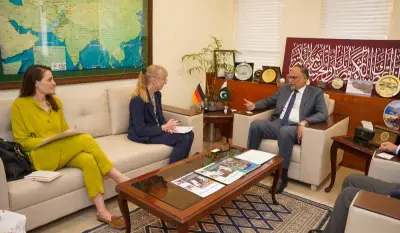
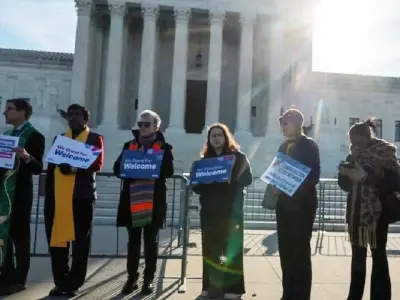
Unsurprisingly, the US was forced back to the negotiating table within three weeks, rediscovering the value of diplomacy. Islamabad, leveraging its unique ties to both Riyadh and Tehran, followed by Türkiye and Qatar, helped broker a face-saving exit and revive the same Geneva talks on JCPOA II that had been underway just forty-eight hours before the first strike. The irony was stark: President Trump retraced the diplomatic path set by Barack Obama in 2015, made more awkward by a domestic constitutional crisis as the Supreme Court ruled presidential war powers unconstitutional.
Enter the Islamabad Memorandum of Understanding, a fourteen-point agenda favouring Iran disproportionately. How could the US gain in talks that it could not after waging a full-fledged war?
Israel's Shattered Invincibility
Israel, for the first time, directly manoeuvred the US into attacking Iran; a reversal of the usual patron-client dynamic, by convincing Washington of an 'imminent threat'. Does this narrative absolve the aggressor of responsibility for devastation, human casualties, billions in damage, global fallout, or ensuing inflation? Unfortunately, even in the 21st century, power seldom answers for itself.
The conflict confirmed several facts previously dismissed as unfathomable: Israel's invincibility was shattered when Iranian hypersonic missiles struck Holon, Haifa, and Tel Aviv, the first direct hits on Israel's commercial heartland since 1991. Iron Dome intercepted only 78 per cent, down from its historical 90 per cent average.
Global and Regional Shifts
US superpower status was openly challenged, not by a rival superpower, but by a middle power, whose combined cyber-kinetic campaign disabled 40 per cent of US drone operations for 72 hours, a feat previously attributed only to Russia or China. China's stature rose by default, signing a $25 billion trade deal with Iran mid-conflict without firing a single shot. The Strait of Hormuz re-emerged as the ultimate chokepoint, with Iran's seizure of two tankers causing shipping insurance to triple overnight.
The Abraham Accords had a quiet end. UAE-Israel normalisation cooled, with Abu Dhabi halting port investments in Haifa. The UAE exited OPEC, a move that could reshape oil governance by 2027. Other GCC states are reviewing US bases on their territories, with Qatar reportedly seeking Chinese docking rights. Conversely, Pakistan emerged as a credible facilitator, leveraging its military diplomacy and ties to both Saudi Arabia and Iran. Its successful brokering of the MoU reasserted its geopolitical relevance despite meagre foreign reserves.

Lessons and Unanswered Questions
This conflict also served as a chilling rehearsal for great-power war. Two messages resonated: missiles have become a nation's ambassadors, and even close allies follow their own interests. Jordan closed its airspace to both sides, while Saudi Arabia quietly shared intelligence with Iran to de-conflict routes. Iran's economy contracted by 5.2 per cent. Allies kept their distance but endorsed the MoU.
China and Russia remain default beneficiaries, their influence growing without direct expenditure. Israel, despite territorial gains in Gaza and southern Lebanon, appears to have ceded regional prestige to Iran, whose defiance has made it a symbol of resistance. The belief that a single decisive victory can restructure the Middle East has been proven hollow. The fundamental questions remain unanswered: Al-Quds Al-Sharif, the right of return, Iran's nuclear programme, and the future of US military presence in the Gulf. These are merely papered over by diplomatic niceties and ceremonial handshakes. Neither this MoU nor any internationally endorsed document can guarantee lasting peace; the region's history is written in broken treaties.
The region is back to square one, but no one is ready to learn. Future negotiations under the MoU are likely to stall quickly or take an unending route of futility, mirroring the 22-year stagnation of the Six-Party Talks on North Korea and their subsequent derailment. The war settled nothing; it only confirmed what we already knew: that military prowess cannot always purchase submission; that victory in this region is an illusion; and that peace remains a word we have not yet earned the right to use.