The Lunch That Changed the Frame
In Islamabad, diplomacy does not always turn on summits or speeches. Sometimes, direction changes around a table, quietly, without headlines, and without the urgency of a crisis. The lunch that brought Pakistan’s most powerful military figure face to face with the American president was one such moment. It was not new when it happened. What is new is what followed. That lunch did not announce a breakthrough. It confirmed a trajectory.
For much of the past decade, Pakistan’s relationship with Washington was defined by fatigue, mutual suspicion, conditional engagement, and an assumption in many Western capitals that Islamabad had limited diplomatic value outside narrow security contexts. By 2020, the discomfort had become structural. The United States was winding down its military role in Afghanistan, while Pakistan faced economic pressure, financial scrutiny, and diminishing strategic bandwidth.
Sequencing of Signals
What changed was not rhetoric, but sequencing. The first clear signal came with Pakistan’s cooperation in a high-profile terrorism case involving American casualties. Islamabad did not frame it as a favour or a gesture. It treated it as a transaction rooted in shared interests. In Washington, that distinction mattered.

Then came May 2025. A short but dangerous military confrontation between Pakistan and India jolted South Asia. Aircraft were lost, escalation risks climbed, and the region briefly returned to the vocabulary of crisis. At that moment, President Donald Trump stepped forward, publicly claiming a mediating role. Pakistan endorsed that intervention. India chose silence. The ceasefire nonetheless held. That endorsement was not incidental. It placed Pakistan at the centre of a stabilising narrative, not as a problem to be managed, but as an actor capable of restraint and coordination. Trump gained political credit. Islamabad gained diplomatic leverage.
The Unpublicized Lunch
It was against this backdrop that the lunch took place. Field Marshal Asim Munir met Trump in Washington in a setting that was deliberately informal but strategically loaded. This was an unpublicized lunch, a confidential interaction where no joint communiqués were issued, and none were needed. While the meeting remained strictly under wraps with no official press release, Trump later alluded to this conversation, noting that it touched upon crisis management and the strategic dynamics of India-Pakistan relations. The core context of this meeting remained private, focusing intensely on regional security cooperation.
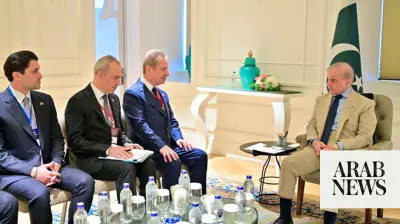
Separately, a broader high-profile engagement took place involving Prime Minister Shehbaz Sharif, Field Marshal Asim Munir, and the American leadership, including Trump and JD Vance. What circulated from this interaction was a powerful image: the Field Marshal presenting samples of Pakistani minerals to the American president. It was not symbolism for domestic consumption. It was signalling aimed at a system acutely aware of supply chains, rare earth dependencies, and competition with China. Pakistan was presenting itself not merely as a security partner, but as an economic and strategic variable.
Economic and Tech Openness
Alongside minerals, another layer quietly gained traction: crypto and financial technology engagement. Pakistan’s willingness to explore regulated digital finance frameworks, and to position itself within emerging global tech conversations, resonated in Washington’s policy and business circles. It suggested a country thinking forward, not merely reacting. This combination—security cooperation, crisis management, economic signalling, and technological openness—altered how Pakistan was being read.
The effects are now visible beyond Washington. Last week’s Track 1.5 interaction between Pakistani and Indian participants in Colombo should be seen through this lens. It was an exploratory contact, timed carefully, where water disputes and airspace restrictions were among the practical problems raised.

Hydro-Political Brinkmanship
This recognition is unfolding against a backdrop of renewed hydro-political brinkmanship. New Delhi’s recent posturing, marked by explicit threats to alter water flows and construct restrictive upstream infrastructure, has met with a sharp, unified institutional response from Islamabad. From Prime Minister Shehbaz Sharif and Foreign Minister Ishaq Dar to the former foreign minister Bilawal Bhutto Zardari, the rhetoric has shifted from legalistic grievance to existential defense. More critically, the military leadership’s standing posture makes it clear that any attempt to choke Pakistan’s lifeline will be treated as a direct challenge to national sovereignty—one that invites kinetic deterrence. By framing water security as an absolute red line, Islamabad has signaled that the cost of unilateral hydrologic manipulation will be prohibitively high.
The strategic calculus is further complicated by Beijing’s quiet but firm alignment on regional stability. Speaking recently at a conference in Islamabad, prominent Chinese strategist Victor Gao pointedly reminded New Delhi that China commands the upper riparian heights of the Himalayas, a statement that triggered sharp anxiety in Indian policy circles. This hydro-strategic reality presents India with a severe dilemma: it cannot aggressively squeeze Pakistan’s water supply without risking a dangerous escalation with a heavily armed neighbor, while simultaneously threatening its fragile relationship with China. In a landscape governed by the balance of power, New Delhi can ill afford a dual-front hydro-confrontation.
Washington's Stake
Should these hydro-tensions approach a flashpoint, the crisis will not unravel in a vacuum. With Pakistan having successfully repositioned itself as a crucial variable in Washington’s regional calculus, the Trump administration is unlikely to remain a passive bystander. Given Trump’s documented preference for active mediation and his administration's direct stakes in South Asian stability, Washington's weight would lean heavily toward maintaining status quo deterrence rather than permitting unilateral regional disruption. Pakistan’s sovereign right to its waters is no longer just a bilateral argument; it is a critical component of a broader, minutely balanced regional architecture that both Washington and Beijing have a vested interest in preserving.
A New Frame
If official talks eventually resume, they will do so in a regional environment that has shifted. Pakistan has already demonstrated that Washington has stakes in South Asian stability. Trump, having invested political capital in mediation, will not be a detached observer. Any future facilitation will carry assumptions shaped by recent history and by the margins Islamabad has quietly built. None of this suggests a transformation of alliances or the disappearance of old tensions. But the frame has changed. Pakistan is no longer seeking relevance. It is exercising it. The lunch did not create this moment. It revealed it. What matters now is whether Pakistan turns this visibility into durable strategic advantage, or allows it to remain another fleeting opening in a familiar cycle.