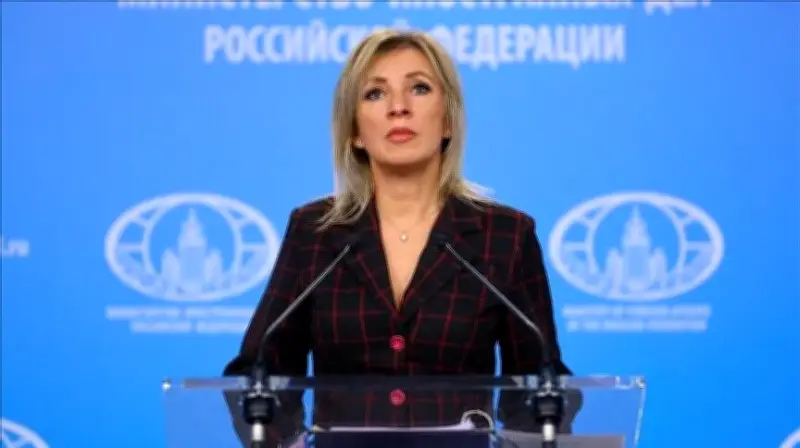
Russia on Wednesday stated that NATO remains focused on confrontation with Moscow and continues its support for Ukraine following the alliance’s summit in Ankara, Türkiye. Russian Foreign Ministry spokeswoman Maria Zakharova asserted on Telegram that the July 7-8 summit did not become the “historic” event NATO Secretary General Mark Rutte had portrayed.
Zakharova Dismisses Summit as Unremarkable
“As much as NATO Secretary General Mark Rutte tried to present it as ‘historic’ in the alliance’s history, nothing of the sort happened,” Zakharova said. She emphasized that NATO again identified Russia as a long-term threat to Euro-Atlantic security, adding that confrontation with Moscow had become “existential and systemic” for the alliance.
NATO’s Continued Military Focus and Ukraine Support
Zakharova highlighted that NATO remains committed to strengthening its military capabilities and supporting Ukraine. “The general line remains unchanged – the militarization of the European continent, concentration on building up defense potential, preparation for armed conflict with Russia and, of course, assistance to Ukraine,” she stated. She noted that NATO members had pledged €70 billion ($82 billion) in military assistance to Ukraine for this year and intend to maintain similar support levels through 2027.

Military Spending at Domestic Expense
Zakharova argued that the alliance is increasing military spending at the expense of domestic priorities. “Allies are ready to spend billions of dollars supporting the regime in Kyiv while reducing spending on growing socio-economic problems and causing irreparable damage to the well-being of Europe’s population,” she said. She also pointed out that combined defense spending among NATO countries is expected to reach about $1.8 trillion in 2026, citing Rutte’s remarks that industry cannot keep pace with the funding level.
US-Europe Disagreements Persist
Despite efforts to project unity during the summit, Zakharova said disagreements between the US and its European allies persist. She warned that NATO’s decisions could lead to catastrophe. “If NATO strategists had stopped to reflect, perhaps they would not have made such irresponsible decisions that could lead to catastrophe not only for the alliance but for the entire world,” she concluded.