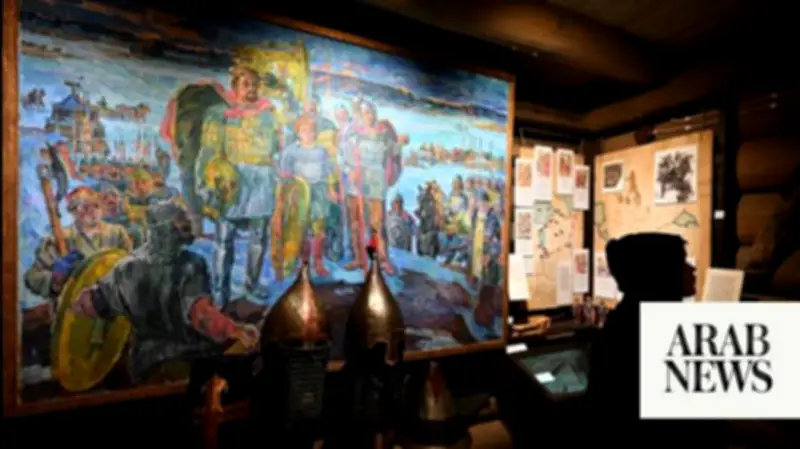
In the village of Samolva, historian Vladimir Potresov, aged 80, watched with delight as a class of schoolchildren entered his museum dedicated to Prince Alexander Nevsky's 13th-century victory over Western crusaders. His "Battle on the Ice" exposition, though modest in size, has seen a surge in visitors since being included on a list of "patriotic" tourist routes published by local authorities. This initiative is part of a broader effort by Russia to promote pride in its history and military conquests since launching its Ukraine offensive in 2022.
Surge in Patriotic Tourism
Authorities have launched more than 140 "patriotic" tourist routes since 2023, many highlighting historic victories by the Russian empire and Soviet Union. "Our museum is small, but recently we’ve been welcoming around 5,500 visitors a year," said Potresov, who moved from Moscow to Samolva over a decade ago to found the museum. He added, "The Battle on the Ice brought to a close what was history’s first clash between Russia and the collective West," using a term the Kremlin employs to describe NATO and European adversaries.
The museum features exhibits such as maps and replica helmets that schoolchildren are encouraged to try on. A teacher accompanying the class told AFP that the visit was part of a "patriotic education" assignment set by her school, tasks that have become increasingly common since the Ukraine offensive began. "Next we’re going to see the monument to Alexander Nevsky on the shores of Lake Peipus," she said, referring to a 15-meter-tall statue of the battle’s victor, inaugurated by President Vladimir Putin in 2021. "The children love it."

Historical Context of the Battle on the Ice
Fought in 1242 on a frozen lake straddling what is now Russia and Estonia, the Battle on the Ice resulted in a decisive victory for Prince Alexander Nevsky of Novgorod, halting the eastward expansion of the Catholic Teutonic order. The battle was immortalized in film director Sergei Eisenstein’s 1938 classic "Alexander Nevsky." Since the Ukraine offensive, the Kremlin has channeled funds into art exhibits glorifying the Russian army and adopted a school curriculum focusing on Russian military prowess.
The 140 or so patriotic routes, created following a 2023 order from Putin, often follow sites of battles won by the Russian army, from the conquests of Peter the Great to World War II. These routes will eventually form part of a "patriotic ring" of tourist sites stretching across Russia and annexed areas of eastern Ukraine. "Patriotic education plays a major role in our lives today," said Kristina Kobyz, chair of the Pskov Tourism Committee. "Alexander Nevsky is a figure who is inextricably linked to the history of not just the Pskov region, but the entire Russian Federation."
Domestic Travel on the Rise
For many Russians, traveling within the country is their only option. Western countries blocked direct flights from Russia after the Ukraine war, and many EU nations have curbed tourist visas for Russians. In 2025, the number of tourist trips within Russia reached nearly 174 million, an increase of over 40 percent compared to 2021, according to analysts at state lender Sberbank.
Dmitry Zhukov, a 37-year-old cyclist, has ridden thousands of kilometers across the country and is starting a new 10,000-kilometer (about 6,200-mile) journey from Pskov near the Estonian border to Vladivostok in the Far East. "I tend to focus more on nature. But there’s plenty to see in the cities too," he told AFP. Among the monuments he has visited is The Motherland Calls, a giant statue overlooking Volgograd, site of a crucial WWII victory. "When I visited the Motherland Calls memorial, the music and the whole atmosphere, it really gets to you, your voice starts to tremble, and it brings tears to your eyes," he said.
Irina, a 59-year-old doctor from Krasnodar, echoed this sentiment during a visit to a 14th-century fortress in Izborsk. "Why go anywhere else when you can find everything right here?" she asked. "I’ve never been to Europe, but I don’t think there’s any need to go anywhere else."