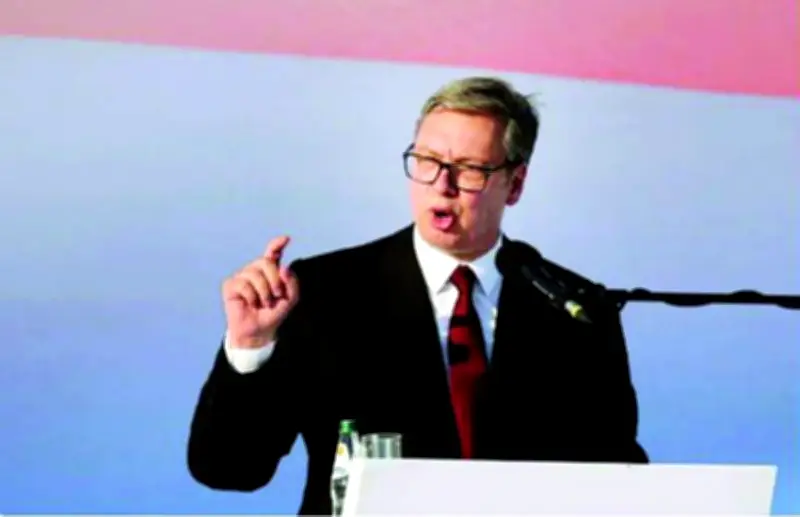
Serbian President Aleksandar Vucic declared on Saturday that he will resign within weeks, paving the way for early presidential and parliamentary elections. The announcement came after 18 months of persistent anti-government protests, largely driven by students, following the November 2024 collapse of an awning at a railway station in Novi Sad that killed 16 people.
Vucic's Announcement and Political Context
“I will be president for only a couple more weeks, and then I will resign,” Vucic told a crowd of supporters at a pro-government rally in Belgrade. His second and final term was originally set to expire in mid-2027. Vucic, who has held power as either president or prime minister for 12 years, said he would help his Serbian Progressive Party (SNS) win the upcoming elections. He proposed that the party's list be named “United Serbia.” However, he did not specify the exact date of his resignation or when he would dissolve parliament, a necessary step for early parliamentary elections.
Protests and Allegations of Corruption
The protests, which began after the Novi Sad disaster, have been fueled by allegations that the collapse was a symptom of broader government mismanagement and corruption in construction projects. Protesters, opposition groups, and rights organizations have accused the government of negligence. The demonstrations are considered the largest since the overthrow of Slobodan Milosevic in 2000. In recent days, students commemorated the victims in Novi Sad and demanded snap elections. Another student rally is planned for Sunday in Kraljevo.

Analysts: Vucic's Resignation May Be a Strategic Move
Analysts suggest that Vucic's resignation may not signal his departure from politics. Instead, it could allow him to become prime minister if his party wins the parliamentary elections. “This is not at all the end of Vucic,” said Radivoje Grujic, a Warsaw-based analyst. “He already has a plan, one that definitely does not mean he’s going to go into political retirement — quite the opposite.” Vucic is expected to try to install an ally as his presidential successor to maintain control. The presidency in Serbia is largely ceremonial, but Vucic has wielded significant influence over his party and government.
Opposition and Student Reactions
Student-led movements and opposition groups have welcomed the elections but remain skeptical. Savo Manojlovic, head of the student opposition Move-Change movement, stated: “By resigning and with early presidential and parliamentary elections, Vucic is trying to preempt his inevitable fall, because of protests and because of the student movement, which has more support than he does.” Activists have expressed their intent to challenge Vucic and the SNS in the elections.
Vucic's Future Plans
In a February interview with Reuters, Vucic said he was unsure about his plans after his term but did not rule out returning to party politics or seeking the prime minister position. “I would like to be less engaged in politics or not at all, but taking care of my legacy might require some sort of engagement; we’ll see,” he said. The timing of his resignation announcement suggests that the ongoing protests have played a significant role in his decision.