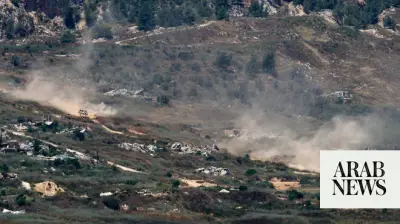
Ukraine confirmed on Tuesday that it struck one of Russia's largest satellite communication centers for the second time in just over a week, as Kyiv intensifies long-range drone attacks to pressure the Kremlin into ending the four-year-old war.
Details of the Strike
President Volodymyr Zelensky stated that the Dubna Satellite Communications Centre, located north of Moscow approximately 500 kilometers (310 miles) from the Ukrainian border, is used for intelligence gathering and coordinating Russian armed forces fighting in Ukraine. Russia has not confirmed the strike on the Dubna center, but Andrey Vorobyov, governor of the Moscow region, reported that a drone hit an "administrative building" in the town with no casualties.
Civilian Casualties and Drone Defense
Vorobyov also reported that a six-month-old baby died on Tuesday after a drone crashed into a home in Yegoryevsk, southeast of Moscow, trapping people under rubble. Rescue workers extracted two adults and two children, but the infant died en route to the hospital, Vorobyov said on his Telegram channel. In Russia's western Tver region, a 61-year-old woman was killed when an "enemy drone" that had been shot down hit a residential summer home, according to regional authorities. Moscow Mayor Sergey Sobyanin said Russian air defenses shot down more than 60 drones after multiple waves were launched toward the capital starting Monday night. Overall, the Russian Ministry of Defense claimed to have intercepted or destroyed 419 drones.

Ukraine's Strategic Pressure
Ukraine has been increasing pressure on the Kremlin with deeper strikes into Russian territory, primarily targeting oil refineries but also conducting large-scale drone strikes on Moscow and St. Petersburg. Growing discontent among Russians has emerged as the war creeps closer to their homes. Last week, Zelensky announced a 40-day operation aimed at "compelling" Russia to end the war. The Ukrainian military said Tuesday that strikes on Moscow and St. Petersburg have been possible due to "an open corridor in the enemy's dense air defense system." Ukrainian military operators are "systematically destroying" radars in the Russian border region of Bryansk that monitor airspace toward the capital, it added.
Previous Attack and Russian Response
This is the second time Kyiv has claimed a hit on the Dubna satellite communications center, following a strike on June 22. Russian state news agency TASS reported a "massive drone attack" during that incident but said communications and television broadcasts were not impacted, and no staff were injured. Kremlin spokesman Dmitry Peskov condemned the attack, telling journalists on Tuesday that "civilians are suffering, children are dying." Zelensky called the attacks a response to Russia's relentless nightly bombardment, which on Monday included Kyiv's oldest and holiest church complex.
International Context and Prospects for Peace
Zelensky appears emboldened by the G7 meeting in Evian, where President Trump expressed both indifference to and support for Ukraine's plight. Zelensky has dialed down his expectations from Trump to zero but emerged with a key suggestion: that Ukraine might mass-produce under license air defense systems and missiles that the US and Europe make but are running out of and slow to replace. This suggests a transactional relationship where Kyiv might build weapons NATO factories cannot produce quickly or cheaply. It is unclear from Trump's vacillating mood whether he still pursues peace, as the Kremlin has so far snubbed efforts. European leaders hope an envoy from a "middle power," as Italy's Prime Minister Giorgia Meloni suggested, might restart talks. The UK, France, and Germany released a statement 11 days ago reiterating their starting point for a deal, including a unilateral ceasefire that Moscow rejects.

Putin's Stance and Future Outlook
Hope persists that Putin might seek an off-ramp given his dire stalemate on the battlefield and struggles defending Russian airspace. He has made opaque utterances suggesting a rethink: that a deal and capturing all of Donbas are not "mutually exclusive," that the war will end soon, and that he might welcome former German Chancellor Gerhard Schroeder as a mediator. However, even when Putin acknowledged the economic damage of Ukrainian strikes last week, his response was to suggest more retaliation. As videos emerge of blackened rain falling on Moscow's cars, the decision on the war's direction falls again to its progenitor: Putin. It is optimistic to think he will choose diplomacy and winding down a conflict that western intelligence says has killed half a million of his countrymen, to seize a part of Ukraine equivalent to about 0.7% of Russia's size. Putin's choices have been poor throughout the war: from believing it would take weeks to grab Kyiv, to trusting supply lines that collapsed in late 2022, to wasting manpower in the 2023-24 "meatgrinder" assaults in Donbas causing recruitment issues, to believing Donald Trump could deliver useful concessions through flattery and cajoling.