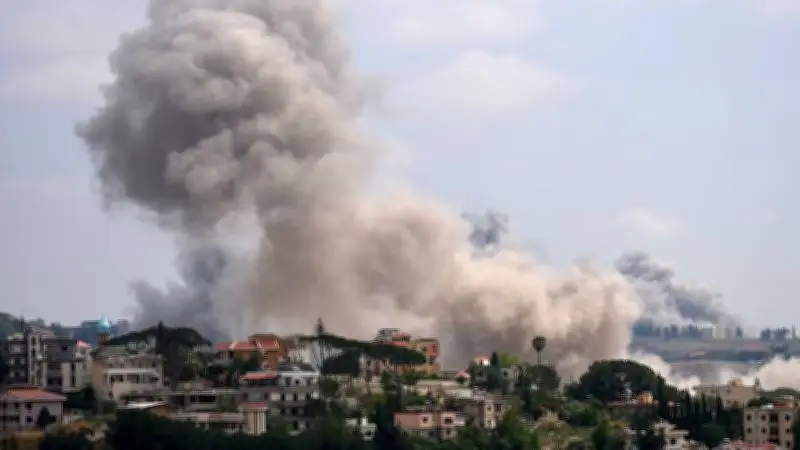
Just when a US-Iran agreement appeared within reach, the Middle East witnessed another dangerous round of escalation. Iran fired multiple missile salvos against Israel following Israeli strikes on Beirut. The Houthis joined the pressure campaign with attacks of their own. Israel then expanded its military response with strikes reportedly targeting locations in Tehran, Tabriz and Isfahan, directly contradicting President Donald Trump's public call for restraint. For a brief moment, it appeared that the region might once again slide towards a wider war. Yet the most important development was not the exchange of fire itself. It was Trump's reaction. Rather than support immediate escalation, he publicly urged Prime Minister Netanyahu to avoid a broader military response, insisted that negotiations remained close to conclusion, and continued arguing that a deal with Iran was within reach.
Shifting Dynamics in Regional Conflict
The latest events reinforce an important reality: the struggle is no longer simply between Iran and Israel. It is increasingly between those who still see strategic value in escalation and those who believe the costs of another regional war have become too high. Despite continuing military exchanges, the diplomatic track remains alive because most major stakeholders, including the United States, China, Saudi Arabia, Qatar, the Gulf states and much of the wider international community, have concluded that the economic and security costs of renewed conflict are no longer bearable. The proposed US-Iran memorandum of understanding remains unsigned, yet neither side has walked away. Trump continues to insist that an agreement is close, Iranian officials remain engaged through multiple diplomatic channels, and regional actors continue working to preserve momentum towards a settlement. The question, therefore, is no longer whether diplomacy exists. The question is whether the remaining obstacles can be overcome before spoilers succeed in changing the political environment.
Israel's Role as a Spoiler
Among the principal spoilers is Israel's current government. Prime Minister Netanyahu has never hidden his preference for maximum pressure on Iran. From his perspective, diplomacy carries risks because a successful agreement could reduce international support for future military action against Iran and strengthen those arguing for long-term political management rather than confrontation. This helps explain why periods of diplomatic momentum are often accompanied by renewed tensions on one regional front or another. Recent events illustrate this dynamic clearly. Netanyahu appears determined to preserve military pressure at precisely the moment diplomacy is gaining momentum. Tehran increasingly appears determined that any future settlement address not only nuclear issues but also the regional balance of power and the future of its partners.

Iranian Hardliners and Hezbollah's Calculus
At the same time, Israel is not alone in viewing diplomacy with caution. Within Iran, powerful hard-line elements, particularly within the IRGC, remain deeply suspicious of compromise with the United States. They understand that a successful agreement could gradually shift Iran's strategic priorities away from permanent confrontation and towards economic recovery and regional reintegration. Such a transition would inevitably reduce the influence of actors whose political relevance has long depended upon regional tensions and resistance narratives. The same logic applies to Hezbollah. The organisation emerged over decades as Iran's most important regional partner, but the regional landscape is changing rapidly. Syria is no longer the strategic platform it once was. The new political order in Damascus is increasingly aligned with Türkiye and key Arab states. Across the region, governments are placing greater emphasis on state institutions rather than armed non-state actors. Lebanon itself faces mounting pressure to strengthen the authority of the central government and the Lebanese Armed Forces.

Lebanon at the Center of Diplomacy
This broader transformation helps explain why Lebanon has suddenly moved to the centre of the diplomatic process. At first glance, the Beirut strikes and the subsequent Iranian missile response appeared disconnected from the US-Iran negotiations. In reality, they are closely linked. Iran has made it clear that Lebanon remains a strategic interest and that it will not simply watch developments there from the sidelines. The recent missile strikes were intended as a signal that attacks on Beirut can no longer be treated as entirely separate from the wider regional equation. Some Iranian voices argue that the response was also intended to pressure Washington to move more quickly towards an agreement and to ensure that Lebanon is included in any broader regional understanding. Whether or not that was the primary objective, the practical effect has been to make Lebanon impossible to ignore. Tehran increasingly appears determined that any future settlement address not only nuclear issues but also the regional balance of power and the future of its partners.
US Shift on Lebanon
At the same time, Washington has gradually moved towards the view that no durable settlement is possible while the Lebanon front remains unstable. This helps explain the growing American effort to secure understandings between Israel and Lebanon and to prevent military incidents from spiralling into a wider confrontation. Trump's intervention after the latest exchange reflected this logic. He is attempting to keep the diplomatic track alive while simultaneously preventing events in Lebanon from pulling the region back towards war. The economic consequences of prolonged instability, disruptions to energy markets and continued uncertainty in the Gulf are unacceptable not only to regional states but also to major global powers.
Pakistan's Mediating Role
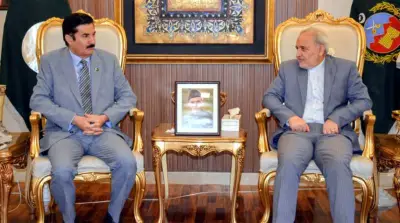
The arrival of the Lebanese Armed Forces Commander, General Rudolph Haykal, in Islamabad at precisely this moment is therefore highly significant. The visit was not simply a routine military engagement. It reflected growing international attention to the future role of the Lebanese state and army. The Lebanese Armed Forces are increasingly viewed by regional and international actors as the institution through which Lebanon's sovereignty can be strengthened and long-term stability gradually restored. Pakistan's role in this process should not be underestimated. Islamabad is one of the few capitals maintaining productive relations simultaneously with Iran, Saudi Arabia, the Gulf states, Türkiye and the United States. Pakistan also possesses extensive experience in dealing with militant organisations while strengthening state institutions and conducting political dialogue. These factors help explain why both diplomatic and security discussions have increasingly involved Pakistan.
Diplomatic Efforts Intensify
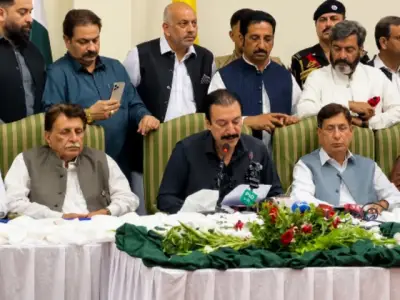
Interior Minister Mohsin Naqvi's fourth visit to Tehran in less than a month illustrates the intensity of these efforts. Carrying messages from Prime Minister Shehbaz Sharif and Field Marshal Asim Munir, Naqvi's mission was not to restart negotiations but to prevent remaining disagreements from undermining a process that has already achieved its most important objective: stopping a wider war. At the same time, reports suggest that Pakistan's military leadership has continued encouraging Tehran to seize the current diplomatic opportunity while Washington applies similar pressure on Israel to avoid actions that could derail the negotiations.
Remaining Obstacles
The remaining obstacles are significant but increasingly manageable. The first concerns highly enriched nuclear material and future enrichment arrangements. Trump needs a visible achievement demonstrating that Iran's pathway to a nuclear weapon has been blocked. This is not only a strategic requirement but also a political one, particularly as he looks ahead to domestic political battles and seeks to demonstrate that his approach has succeeded where previous efforts failed. The second obstacle concerns frozen Iranian assets. Tehran wants tangible economic benefits that can be presented domestically as evidence that diplomacy has produced results. Trump, meanwhile, does not want to be accused of repeating the approach of previous administrations by offering economic concessions without obtaining meaningful nuclear commitments. This explains the emerging carrot-and-stick approach. Washington continues applying pressure through sanctions, maritime leverage and the assets issue while simultaneously leaving the door open for economic benefits through carefully structured arrangements involving third parties such as Qatar and potentially Gulf partners. Neither side appears fully satisfied, yet neither side appears willing to abandon the process.
Diplomatic Turning Point
That is why the latest escalation may ultimately be remembered not as the beginning of a new war but as evidence that the region is approaching a diplomatic turning point. Trump's behaviour is particularly revealing. He is pressing Iran to compromise on nuclear issues while simultaneously restraining Israel from actions that could destroy the negotiations. In effect, he is managing pressures from both sides. The objective is clear: secure an agreement that can be presented domestically as preventing an Iranian nuclear weapon while avoiding another costly Middle Eastern war.
International Support for Diplomacy
The broader international environment also favours this outcome. The economic consequences of prolonged instability, disruptions to energy markets and continued uncertainty in the Gulf are unacceptable not only to regional states but also to major global powers. Few actors outside the immediate conflict benefit from another prolonged confrontation. This explains why China, Saudi Arabia, Qatar and other regional actors continue supporting diplomatic efforts despite periodic military incidents. None of this guarantees success. Israel retains the ability to raise tensions. Hezbollah can complicate the ceasefire arrangements. Hard-line factions within the IRGC remain wary of compromise. Each side still possesses tools capable of disrupting diplomacy. Yet the strategic picture has changed fundamentally. Only a few months ago, the region was discussing war. Today, despite missile exchanges, retaliatory strikes and continuing ceasefire violations, the conversation is increasingly about the terms of a settlement.
Future Prospects
The coming days may determine whether the proposed US-Iran framework finally moves from negotiation to signature. If it does, the region will not suddenly become peaceful. The real negotiations will only begin. Yet an agreement would establish an important foundation for addressing the issues that have fuelled instability for decades. For now, the race continues between diplomacy and the spoilers, but for the first time in a long while, diplomacy appears to have the momentum.