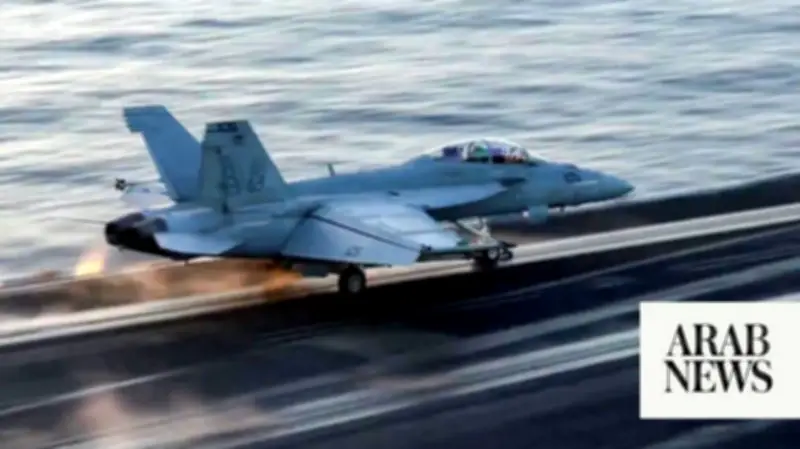
The United States launched fresh military strikes in southern Iran on Monday, targeting missile launch sites and boats attempting to lay mines, according to the US military. The strikes were described as defensive actions and came as Iranian officials, including the foreign minister and top negotiator, were in Doha for talks with Qatar's prime minister aimed at ending the three-month-old war.
Diplomatic Efforts Continue
US Secretary of State Marco Rubio stated in New Delhi that diplomacy would be given every chance before considering alternative approaches. He mentioned a substantial proposal on the table regarding the Strait of Hormuz and nuclear negotiations. Meanwhile, Chinese foreign ministry spokeswoman Mao Ning urged all parties to uphold the fragile ceasefire and resolve disputes peacefully.
Trump's Warning and Social Media Post
President Donald Trump posted on Truth Social that talks with Iran were progressing well but warned of renewed attacks if a deal is not reached. He emphasized that any agreement must be advantageous for all sides. Hours later, US Central Command confirmed additional strikes to protect US troops from Iranian threats.

Iran claimed to have downed a hostile stealth drone using a new air defense system, signaling its capability to defend its airspace. Separately, Israeli Prime Minister Benjamin Netanyahu announced intensified strikes against Hezbollah in Lebanon, despite a ceasefire agreement in April.
Sticking Points in Negotiations
Discussions in Doha focused on the Strait of Hormuz and Iran's enriched uranium stockpile. Iran's central bank governor also participated to discuss the release of frozen funds as part of a potential deal. Iranian spokesperson Esmaeil Baghaei stated that nuclear issues would be addressed only after a framework accord is reached.
Trump's primary objective is to prevent Iran from developing nuclear weapons, a goal Tehran denies pursuing. The standoff has disrupted oil shipments through the Strait of Hormuz, causing price spikes. However, oil prices fell over 4 percent on Monday amid optimism about a possible agreement.
Abraham Accords Expansion
Trump also called for more Arab and Muslim states to join the Abraham Accords, including Saudi Arabia, Qatar, Pakistan, Egypt, Jordan, and Turkiye. A Pakistani source indicated that the two issues are not linked, while analysts suggest Trump is trying to sell an Iran deal as a sequel to the accords.
Iran stated that no tolls would be charged for ships passing through the Strait of Hormuz, but fees for navigation and environmental services would be implemented under a protocol with Oman. A Japanese report suggested a 30-day timeline for reopening the strait after a deal, with Iran clearing mines during that period.