Finance Minister Muhammad Aurangzeb presented Pakistan's federal budget in the National Assembly on June 12, announcing tax cuts across four salaried income slabs, the abolition of the surcharge, and a 7 percent pay raise for government employees. On paper, the budget appears to offer long-awaited relief for the middle class. However, on the ground, the picture is different.
Tax Cuts Limited to High Earners
The slab revisions, notified under the Finance Bill 2026, apply only to individuals earning above Rs2.2 million per year — a respectable income but well above what most salaried Pakistanis earn. Anyone earning less than roughly Rs183,000 per month saw no change in their tax rate. For a large share of the middle class — including schoolteachers, junior bank staff, mid-level government employees, and small shopkeepers — the headline relief simply does not reach them.
Pakistan has no single official threshold for the middle class; estimates range from roughly Rs50,000 to Rs400,000 per month depending on the survey. The households most affected sit closer to the lower end of that range — salaried earners well above subsistence but far short of comfort.

Timing Undermines Relief
Even where the tax cuts do reach someone, timing works against them. The same season the budget was finalized, petrol prices — as set by the Petroleum Division's own price notifications — climbed to an all-time high of over Rs458 per litre in April, before a Rs74 cut in late June brought them down to around Rs300. This brief relief came after months of record-high prices had already squeezed household budgets.
Electricity tariffs have followed a similar trajectory for two years running, pushed up by capacity payments and circular debt that NEPRA keeps passing on to consumers. Inflation, as recorded by the Pakistan Bureau of Statistics, touched 10.9 percent in April — the first double-digit reading in nearly two years, well above the 7 percent raise government employees received, meaning the increase still amounts to a real-term pay cut after inflation.
A household that gains a few thousand rupees per month from a lower tax slab can lose that same amount, and more, to a single electricity bill or a tank of petrol.
Gap Between Tax Cut and Cost of Living
This gap rarely appears in press releases. Many salaried families describe the same arithmetic: a modest raise on the pay slip, followed almost immediately by a higher school voucher, a steeper grocery bill, or a fare hike on the van that takes their children to school. The number on the pay slip moves up, but the number left over at the end of the month does not.
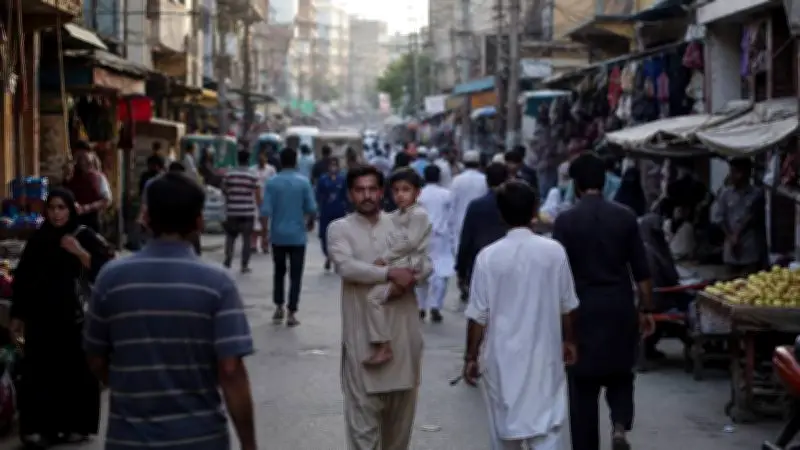
For many salaried households in Karachi, this budget is unlikely to feel like meaningful relief. Private education captures this squeeze particularly well. With public schools under-resourced in most cities, middle-class families have little choice but to pay private fees that rise every year regardless of what the budget allows. The same holds for healthcare — when public hospitals cannot absorb demand, a private clinic visit becomes a recurring, unbudgeted cost. Families end up taxed twice: once by the state, and again by the gap the state leaves behind.
Fiscal Constraints Limit Broader Relief
The relief is real but too narrow to matter for most of the middle class. Removing the surcharge and lowering rates for the Rs2.2 million to Rs7 million bracket helps upper-middle earners and stops there. However, the government's own fiscal room is tight: the budget sits inside an IMF program that requires a primary surplus and an FBR revenue target of over Rs15 trillion, which limits how far relief can go without being recovered elsewhere — through fuel levies, withholding taxes, or utility pricing.
That recovery is already visible: the government's own Budget in Brief 2026-27 raises the petroleum levy collection target from Rs1.468 trillion to Rs1.727 trillion — an increase of Rs259 billion. This means that even as global oil prices fall, the government's own levy claws back part of the room for cheaper fuel.

Path Forward for Meaningful Relief
If the next budget is meant to strengthen the middle class rather than gesture at it, two changes would matter more than another slab adjustment. First, the income threshold for relief needs to move down, not just sideways — the households most squeezed by inflation are often those earning below Rs2.2 million who got nothing this year. Second, fuel and electricity pricing needs a mechanism that shields ordinary consumers from single-month shocks like the one Pakistan saw in April, instead of passing the full volatility straight through to the bill.
Call it relief if you like. For most of Pakistan's middle class, it will not feel like one — not this year, and not until a budget is written around the cost of living, rather than around the IMF's spreadsheet.