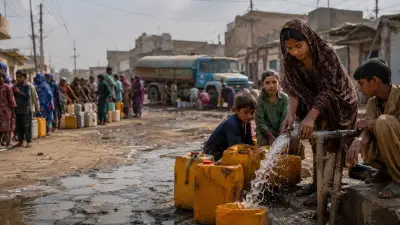
In the twentieth century, nations secured their borders. In the twenty-first century, they must also secure their rivers, glaciers, food systems, energy supplies, and ecological foundations. When India announced in May 2025 that it was placing the Indus Waters Treaty (IWT) framework in abeyance following the tragic killing of civilians in Pahalgam, and subsequently launched military operations under Operation Sindoor, Pakistan's immediate attention understandably focused on the unfolding military confrontation. Pakistan's armed forces gave a strong account of themselves during the ensuing conflict, demonstrating professional competence and reinforcing conventional and strategic deterrence. Yet while the military phase of the crisis gradually subsided, another and potentially more enduring challenge remained: the growing spectre of water insecurity.
Enduring Treaty Under Strain
For more than six decades, the Indus Waters Treaty had survived wars, military crises, diplomatic breakdowns, and prolonged political hostility. It endured because leaders on both sides of the border recognised a simple but profound reality: water was too vital to be weaponised. The Indus Basin sustains hundreds of millions of people, supports one of the largest irrigated agricultural systems in the world, and constitutes the ecological lifeline of Pakistan. The events of 2025, therefore, represented more than a diplomatic dispute. They served as a strategic wake-up call.
Vulnerability and National Security
The lesson emerging from the post-2025 environment is not merely about India, water, or the Indus Basin. It is about vulnerability. A nation whose agriculture, economy, energy production, and food security depend upon a single river system must recognise that water security is inseparable from national security. Climate change, glacial retreat, population growth, environmental degradation, groundwater depletion, and inefficient resource management are simultaneously increasing that vulnerability.

Redefining National Security Doctrine
This realisation demands a fundamental rethinking of Pakistan's national security doctrine. For decades, national security has rested upon three principal pillars: military security to defend territorial sovereignty, economic security to sustain national development, and diplomatic security to manage external relations and strategic partnerships. The emerging realities of the twenty-first century require the addition of a fourth pillar: climate security. Climate change, water scarcity, glacial retreat, food insecurity, environmental degradation, energy vulnerability, and ecological stress now possess the capacity to affect national stability as profoundly as conventional military threats. A disruption in water supplies can undermine agriculture. Climate disasters can inflict economic damage comparable to war. Ecological stress can weaken social cohesion and erode national resilience. Climate security must, therefore, be recognised not as an environmental concern alone but as an integral component of Pakistan's national security architecture.
Evolution of Security Concepts
The concept of national security has evolved continuously in response to changing realities. For centuries, security was understood primarily in territorial terms. The principal responsibility of the state was to defend its borders against invasion and external aggression. Military power, therefore, became the primary instrument of national security. The nuclear age introduced a second dimension. Security was no longer measured solely by armies and geography but by the capacity to deter aggression through strategic capabilities. Nuclear deterrence became an essential element of state survival. Globalisation introduced a third dimension. Economic resilience, industrial capacity, technological innovation, energy security, and integration into global markets emerged as critical components of national power. Economic weakness increasingly translated into strategic vulnerability. The twenty-first century is now ushering in a fourth dimension of security: climate security. Climate change, water scarcity, food insecurity, biodiversity loss, environmental degradation, and ecological stress increasingly possess the capacity to destabilise societies, weaken economies, and undermine national resilience.

Climate as a Threat Multiplier
Climate change rarely acts alone. Rather, it magnifies existing vulnerabilities. Water shortages affect agriculture. Agricultural decline contributes to food insecurity. Food insecurity fuels inflation and social stress. Environmental degradation accelerates migration from rural areas into already overcrowded cities. Urban infrastructure becomes strained. Economic vulnerabilities deepen. Political tensions intensify. Climate change, therefore, acts as a threat multiplier capable of magnifying pre-existing challenges. The devastating floods of 2022 demonstrated the scale of this threat. Millions were displaced, critical infrastructure suffered immense damage, agricultural production was disrupted, and economic losses reached unprecedented levels. The floods were not merely an environmental disaster. They represented a national security event with profound economic, social, and political consequences.
Policy Recommendations
Pakistan can no longer afford to treat climate policy as a peripheral environmental issue. It must become a central component of national planning. Pakistan's National Security Policy should explicitly recognise this evolution. Military security, economic security, diplomatic security, and climate security must together constitute the four pillars of a comprehensive national security doctrine. The writer is a former ambassador and Director Global and Regional Studies Center at IOBM University Karachi.