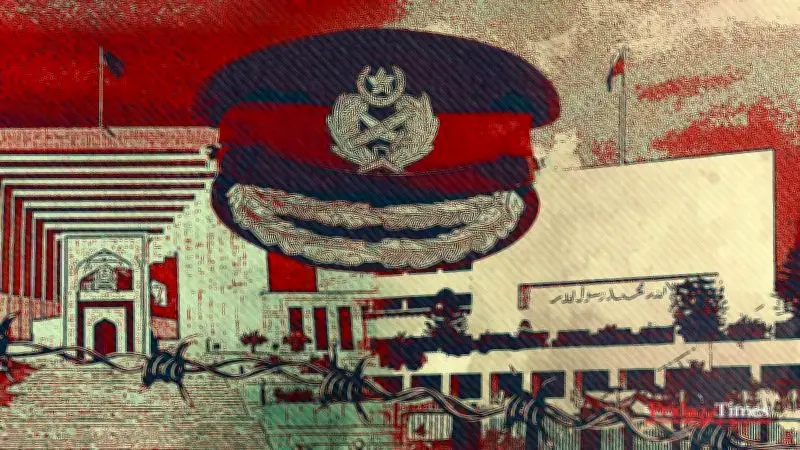
Across the world, democratic systems are under stress. From Europe and the United States to India and Turkey, democracies have witnessed varying degrees of democratic backsliding, political polarisation, and declining public trust in representative institutions. Pakistan is no exception. Yet Pakistan's experience differs in important ways from other democracies because its political evolution has been shaped not only by electoral competition and civilian politics but also by the continuing role of the military in constructing, deconstructing, and reconstructing democratic institutions.
Global Trends and Their Influence on Pakistan
Three broad trends are reshaping democratic politics worldwide and are simultaneously transforming the character of democracy in Pakistan.
Democratic Backsliding
Across many societies, social groups dissatisfied with the outcomes of globalisation and the neoliberal economic order have mobilised behind populist and conservative political movements. These movements often display hostility toward pluralism, independent media, minority rights, and liberal democratic values. Political discourse increasingly revolves around grievance, identity, and exclusion rather than compromise and consensus. Consequently, democratic institutions remain formally intact while democratic norms and practices dwindle. Pakistan reflects many of these tendencies. Rising inequality, religious polarisation, weak governance, and declining trust in public institutions have contributed to an increasingly authoritarian political culture. Citizens continue to support democratic rule in principle, yet confidence in elected representatives and parliamentary institutions remains low. Political opportunism, shifting loyalties, and the absence of programmatic politics have further eroded the credibility of democratic governance.

Technological Innovation
The second trend is the transformative impact of technological innovation, particularly Artificial Intelligence, digital surveillance, and social media. These technologies have democratized access to information but have simultaneously intensified polarisation, misinformation, and ideological conflict. Legislatures across the world face the challenge of balancing technological innovation, state security, and civil liberties. In Pakistan, parliament has yet to demonstrate the capacity to understand, regulate, and respond effectively to these profound technological changes. Instead of serving as a forum for informed debate and policy innovation, it often reacts to developments after they have already reshaped public discourse.
Security and Geopolitics
The third trend concerns security and geopolitics. Pakistan's long rendezvous with terrorism, counterinsurgency operations, tensions with India, developments in Kashmir, and instability in Afghanistan have enhanced the strategic importance of the military. The return of the Taliban to power in Afghanistan in 2021 and the resurgence of Tehrik-i-Taliban Pakistan (TTP) have further elevated security concerns. As a result, the military's institutional capacity, organisational coherence, and influence over strategic decision-making have expanded significantly. These developments have reinforced a political order in which the military remains the principal guarantor of stability. While elections continue to be held and civilian governments regularly assume office, authority over strategic policy domains remains concentrated elsewhere. The result is neither direct military rule nor a fully functioning parliamentary democracy. Rather, Pakistan has evolved into a distinctive political arrangement that combines electoral politics with military predominance.

Military Hegemony: The Pivotal Institution
To understand this system, it is necessary to move beyond the widely used concept of "hybrid regimes." The concept inadequately captures the historical and institutional realities of Pakistan. More than two decades ago, I proposed the concept of military hegemony to explain Pakistan's political trajectory. Military hegemony refers to a system in which the military exercises dominant influence over strategic policy issues and key decision-making institutions while permitting varying degrees of civilian participation in governance. Such a system derives legitimacy from two sources. First, the military historically enjoyed greater public confidence than political parties and civilian institutions. Second, major external powers frequently treated the military as the principal strategic pillar of the Pakistani state, thereby reinforcing its domestic standing. Although these foundations have weakened in recent years, particularly after the events of May 9, 2023, the institutional structure of military hegemony remains largely intact.
Parliamentary Weakness
Pakistan's political history since 1958 can be understood as a recurring cycle of democratic deconstruction, construction, and reconstruction. Military governments introduced new political elites through mechanisms such as the Electoral Bodies Disqualification Order (EBDO), Basic Democracies, and the Legal Framework Order (LFO). Even during periods of civilian rule, the military retained substantial influence over strategic decision-making and elite formation. The passage of the 27th Constitutional Amendment has further strengthened this framework by providing constitutional protection to arrangements that reinforce military predominance. Consequently, Pakistan's political order increasingly reflects procedural rather than substantive democracy. Elections occur regularly, governments change, and constitutional processes continue, yet effective parliamentary oversight, institutional accountability, and citizen-centred governance remain inadequate. The challenge, therefore, is not simply the restoration of democracy but the transformation of procedural democracy into substantive democracy. This requires strengthening representative institutions, improving parliamentary capacity, enhancing bureaucratic competence, protecting civil liberties, and creating mechanisms through which elected institutions can gradually acquire greater credibility and effectiveness.
Eight Characteristics of Democracy with Pakistani Characteristics
Pakistan's political order cannot be understood through conventional democratic or authoritarian categories. Since 2008, electoral competition has become regularised, civilian governments have completed terms, transfers of power have occurred through constitutional means, and representative institutions continue to function. Yet these developments have not produced democratic consolidation in the classical sense. Pakistan's experience points toward the emergence of what I would term "Democracy with Pakistani Characteristics": a political order characterised by the coexistence of electoral legitimacy, military predominance, weak institutionalisation, fragmented political parties, and an increasingly restive citizenry. The system demonstrates continuity and adaptability, but its democratic content remains limited.
- Regularisation of electoral politics without institutionalisation: Since 2008, elections have been held with reasonable regularity, but institutionalisation has lagged behind. Political actors view elections as mechanisms for acquiring power rather than strengthening democratic governance.
- Constrained effectiveness of electoral management: The Election Commission of Pakistan (ECP) faces questions regarding autonomy, neutrality, and enforcement capacity. Recurring contestation of electoral outcomes weakens institutional legitimacy.
- Personalised and dynastic political parties: Parties remain highly centralised, with leadership succession rarely following institutional procedures. This limits internal democracy and broader social representation.
- Elite institutional accommodation: The military, judiciary, bureaucracy, and political leadership compete but avoid systemic breakdown. Constitutional reforms codify existing relationships rather than fundamentally altering power distribution.
- Paradoxical political awareness: Citizens are highly political, but political awareness does not automatically translate into democratic commitment. Respect for opposition, tolerance, and compromise remain unevenly developed.
- External influences: Diaspora communities and transnational networks shape domestic political discourse, transmitting competing values from Western democracies and conservative Gulf states.
- Expanding yet constrained role of women: Quotas have increased numerical representation, but candidate selection remains controlled by party leadership. Women parliamentarians have contributed to social welfare legislation.
- Military hegemony: The military retains superior organisational coherence, coercive power, and strategic capacity. Civilian institutions adapt to this reality rather than challenge it directly.
Why the System Endures
Democracy with Pakistani Characteristics endures due to the interaction among military hegemony, elite institutional accommodation, and parliamentary underperformance. Since 2008, parliament has enjoyed a historic opportunity to establish itself as the principal arena for law-making and oversight. The Eighteenth Constitutional Amendment in 2010 was a landmark achievement, restoring parliamentary supremacy and enhancing provincial autonomy. Yet momentum was not sustained. Parliamentary committees remained underutilised, legislative scrutiny weakened, and debate on long-term challenges such as climate change, education, and technology became rare. Politics increasingly became a continuation of electoral competition by other means, with leaders prioritising tactical advantage over institutional strengthening. This decline in deliberative politics created space for non-elected institutions to assume greater prominence.
A Realistic Reform Agenda
To transform procedural democracy into substantive democracy, a realistic reform agenda must focus on institutions rather than personalities.
- Reconstruction of state capacity: Reform the Federal Public Service Commission and Provincial Public Service Commissions to ensure merit-based, transparent recruitment and modernised training in public policy, digital governance, and climate adaptation.
- Strengthening parliament: Empower parliamentary committees with enhanced research capacity, professional staffing, and mandatory review of major legislation to reduce reliance on executive ordinances.
- Consolidation of federalism: Strengthen the Ministry of Inter-Provincial Coordination to facilitate cooperation among provinces and federal institutions, including policy harmonisation and conflict resolution.
- Institutionalisation of the Council of Common Interests (CCI): Ensure regular meetings, systematic agenda-setting, and a strengthened secretariat to manage intergovernmental relations effectively.
- Democratisation of political parties: Encourage internal party elections, transparent financing, merit-based candidate selection, and leadership renewal through a National Political Reform Forum.
- Knowledge-based governance: Evolve the Pakistan Institute for Parliamentary Services (PIPS) into a premier research institution providing rigorous policy analysis and legislative drafting support.
- Local government: Empower local institutions through meaningful devolution, improving service delivery, accountability, and opportunities for new leadership.
Conclusion
The central paradox of democracy with Pakistani characteristics is clear: the system has proven sufficiently stable to survive, but insufficiently democratic to transform itself. Until parliament, political parties, and civilian institutions acquire greater organisational capacity, credibility, and public trust, military hegemony is likely to remain the defining feature of Pakistan's political order. The future of democracy depends on institutional development—stronger bureaucracies, effective legislatures, empowered provinces, functional local governments, democratic parties, and knowledge-based policy making. Democracy flourishes when institutions cultivate trust, encourage participation, protect dissent, promote accountability, and deliver public goods effectively.