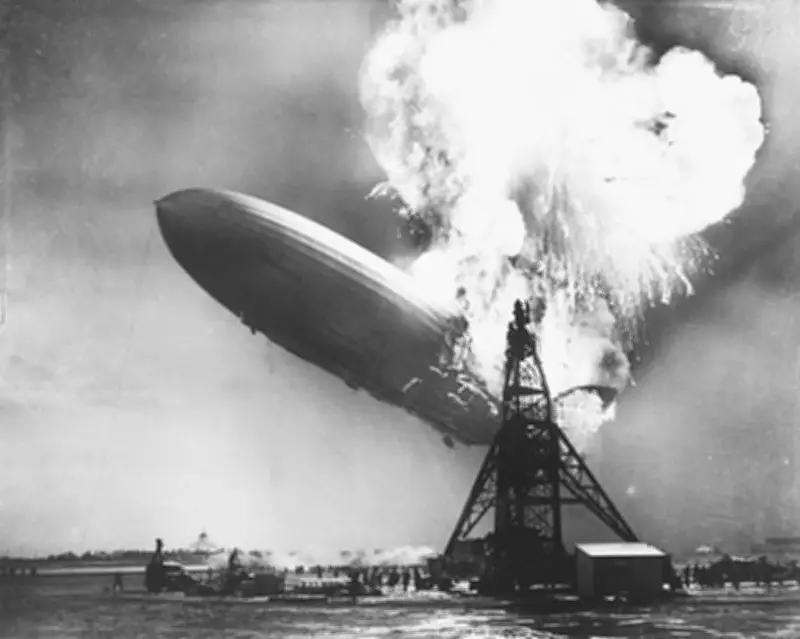
The Hindenburg disaster, which occurred on May 6, 1937, remains one of the most iconic aviation tragedies in history. The German passenger airship LZ 129 Hindenburg caught fire while attempting to land at the Naval Air Station in Lakehurst, New Jersey, resulting in a catastrophic inferno that claimed 37 lives. Of the 97 people on board, 36 perished, along with one ground crew worker. The disaster was witnessed by hundreds and captured on film, creating a lasting image of the flaming airship.
Cause of the Fire
Investigators attributed the fire to a combination of static electricity and the highly flammable hydrogen gas used to lift the airship. The Hindenburg was originally designed to use helium, but due to U.S. export restrictions on helium, the Germans were forced to use hydrogen. This decision proved fatal. According to historical records, a spark from static electricity ignited the hydrogen, causing the airship to burst into flames within seconds.
Impact on Airship Travel
The Hindenburg disaster marked the abrupt end of the era of luxurious airship travel. Before the incident, airships like the Hindenburg offered a glamorous and comfortable way to cross the Atlantic. The disaster shattered public confidence in airship safety, leading to a rapid decline in their use. The aviation industry shifted focus to safer technologies, such as fixed-wing aircraft, which eventually dominated long-distance travel.

Witnesses described the scene as horrifying. One survivor recalled, "The whole thing was over in less than a minute. The flames just consumed everything." The disaster was extensively covered by media, and the footage of the Hindenburg burning remains a powerful symbol of technological failure.
Legacy and Lessons
The Hindenburg disaster prompted significant changes in aviation safety standards. It highlighted the dangers of using hydrogen in airships and led to the development of more rigorous safety protocols. Today, the event serves as a cautionary tale about the risks of cutting corners in technology. The Hindenburg's wreckage was studied for years, and the lessons learned contributed to the advancement of aeronautical engineering.
In a separate development, Pakistan has floated another tender for procuring a liquefied natural gas (LNG) cargo from the spot market, as the country seeks to meet its energy demands. This move underscores ongoing efforts to secure energy resources, though it is unrelated to the historical disaster.