US House of Representatives Size Debate: 435 Seats Frozen as Population Triples
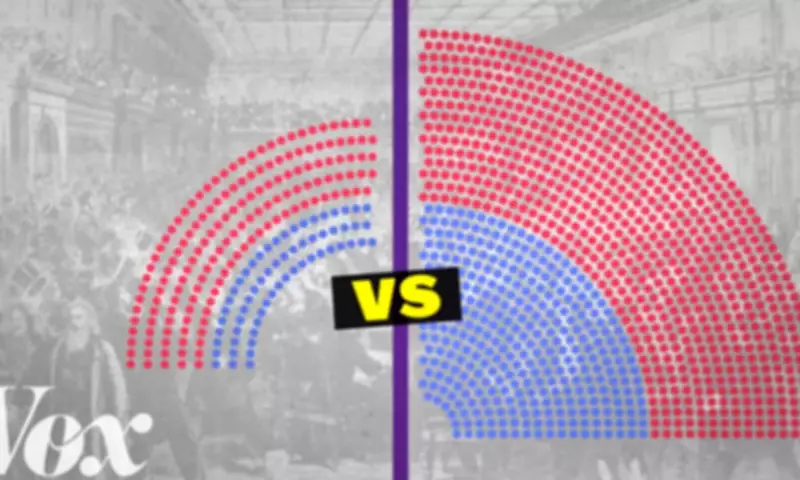
For more than a century, the size of the United States House of Representatives has been locked at 435 seats, a number established in the early 20th century. During this same period, the US population has dramatically increased, effectively tripling in size. This stark contrast means that today, the average representative is responsible for representing more than 750,000 constituents, a significant burden that many argue dilutes individual voter influence.
Scholars and Politicians Highlight Disconnect
Numerous scholars and political figures have pointed to this growing imbalance as a primary reason why many Americans feel that Congress is increasingly disconnected from their everyday lives and concerns. The large constituency size makes it challenging for representatives to maintain close contact with voters, potentially undermining the democratic principle of responsive governance.
Proposal to Expand the House
In response to this issue, Representative Sean Casten, a Democrat from Illinois, has introduced a new bill aimed at expanding the House of Representatives. Casten argues that increasing the number of seats would bring the legislature closer to the original vision of the country's founders, who intended for the House to grow with the population to ensure fair representation.

Expanding Congress could reduce the ratio of voters to representatives, making each member more accessible and accountable to a smaller group of constituents. This change might help bridge the perceived gap between lawmakers and the public, fostering a more engaged and representative democracy.
Challenges of a Larger Legislature
However, the proposal also raises complex questions about governance. A larger, more crowded legislature could face difficulties in efficiency and decision-making. Critics wonder if adding more voices might exacerbate existing gridlock in Congress, making it harder to pass legislation and address national issues promptly.
Can a larger legislature actually govern effectively, or would it simply add to the political stalemate? This debate touches on the core of how American democracy functions and evolves.
Historical and Future Implications
The discussion around expanding the House is rooted in both historical context and future projections. The Permanent Apportionment Act of 1929 fixed the seat count, but since then, the US population has continued to grow, leading to calls for reform. Analysis from sources like Vox delves into the math and history behind this issue, exploring what a "bigger" American democracy might look like.
Key points from related research include:
- The US population keeps growing, but the House size remains unchanged since the Taft era, as noted by Pew Research Center.
- Reports from institutions like the American Academy of Arts and Sciences advocate for enlarging the House to improve representation.
- Initiatives from organizations such as Protect Democracy explain the potential benefits and challenges of expansion.
This ongoing debate highlights a critical juncture in US politics, where the balance between representation and governance efficiency is being reevaluated. As the population continues to increase, the question of whether to expand the House of Representatives remains a pivotal issue for the future of American democracy.