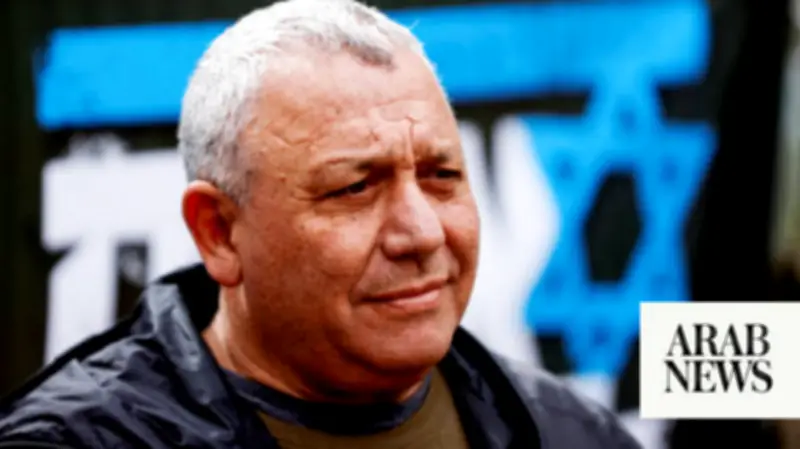
Eisenkot Launches Election Campaign as Netanyahu's Fiercest Rival
On Tuesday, Israeli centrist political party 'Yashar!' (meaning 'Straight!') formally launched its election season campaign, led by former military chief and Knesset Member Gadi Eisenkot. The 66-year-old ex-general, who resigned from Prime Minister Benjamin Netanyahu's war Cabinet in 2024 over strategic failures in Gaza, now poses one of the most serious challenges to Netanyahu's 15-year grip on power in elections scheduled for fall 2026.
Strategic Failures and Oct. 7 Aftermath
Eisenkot has broadly supported Israeli military operations in Gaza, Lebanon, and Iran but accuses Netanyahu of lacking a coherent strategy following the Hamas-led attacks on October 7, 2023. In a blistering resignation letter to Cabinet members, he warned that incremental battlefield gains were being mistaken for decisions that could neutralize Hamas and enhance Israel's security. Netanyahu has fired back, claiming that if he had heeded Eisenkot's opposition to certain Gaza operations, 'all of Hamas' would still control the territory.
A Contrast in Background and Style
The son of Jewish Moroccan immigrants from a working-class family, Eisenkot stands in stark contrast to the US-educated, corruption-trial-defying Netanyahu. His unpolished English and four-decade military career resonate with Israelis weary of war. His 25-year-old son, Gal Meir Eisenkot, was killed in Gaza combat, and two nephews also died in the conflict, granting him credibility as a leader who has paid the ultimate price. 'People trust him to be a real person and a patriot. They expect him to take care of the country and not himself,' said Gideon Rahat, senior fellow at the Israel Democracy Institute.

Platform: Security, Service, and Settlements
Eisenkot's platform pledges to strengthen national security through regional cooperation, supports Jewish settlements 'in line with Israel's interests' in the occupied West Bank, and mandates military service for ultra-Orthodox communities under the slogan 'Service for All.' He is credited with formulating the 'Dahiyeh Doctrine,' named after a Hezbollah stronghold in Beirut, which advocates disproportionate force against villages from which shots are fired at Israel. In a 2008 interview, he stated, 'We will wield disproportionate power against every village from which shots are fired on Israel, and cause immense damage and destruction.'
Challenges in Forming a Coalition
Despite anti-Netanyahu sentiment, unseating the prime minister remains difficult in Israel's fractured multi-party system. Eisenkot's party must win more seats than Likud and form alliances with other parties to achieve a majority. He has refused to compromise on ultra-Orthodox military service, a politically sensitive issue, and must decide whether to include Arab-led parties—a move Netanyahu's far-right allies have already attacked. Columnist Joshua Leifer of Haaretz described Eisenkot as 'an everyman, a reflection of the ordinary Israeli' and 'a kind of antipolitician.'