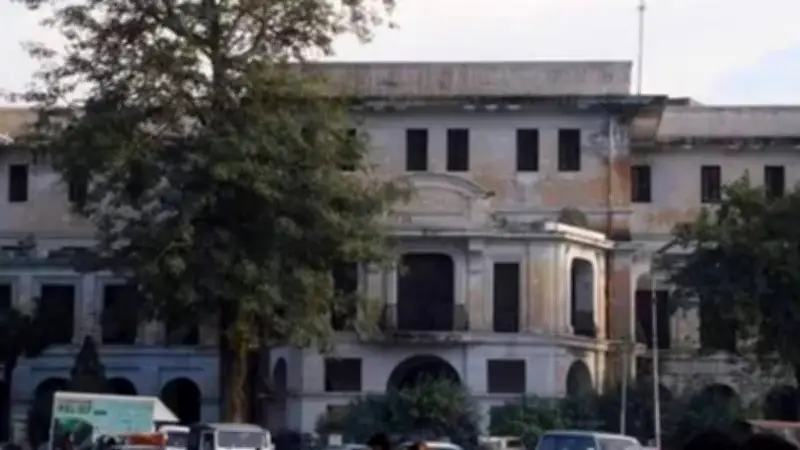
Two parcels of state land on the same colonial avenue in Lahore are being treated as opposites by the government. The Lahore Gymkhana holds about 112 acres for Rs 5,000 per year, or Rs 417 per month (just over one US dollar), and the Punjab Assembly cannot even force a review of its lease. In contrast, Ewing Hall, a 1916 heritage building on less than two acres, was taken from Forman Christian College over a rent demand that is both exorbitant and largely the state's own doing, with much of it billed for years when the government had nationalised the college and ran it itself.
Gymkhana Lease Review Stalled
The question of the Gymkhana's rent has been raised in the Punjab Assembly, denounced across party lines, and referred to a committee for review within two months. However, 21 months later, the committee has yet to submit even a report to the Assembly. Meanwhile, Ewing Hall was seized from its Christian college on 24 hours' notice.
Takeover of Ewing Hall
On Thursday, June 11, the Punjab Board of Revenue took possession of Ewing Hall. A day earlier, the university administration received a telephone call informing them that the lease was cancelled and that officials would arrive the next day. After the building changed hands, the administration was given 24 hours to remove generators, furniture, and historical artefacts or have them treated as government property. Rector Dr Jonathan Addleton, who heads Forman Christian College University (FCCU), called it a "forcible takeover" in a video filmed outside the locked gates and posted on June 12, which drew over 233,000 views within days. "Given its historical connections to Forman," he said, "the past two days have involved considerable grief and more than a few tears."

The timing raised alarm as the takeover occurred on a Thursday evening, with Friday, Saturday, and Sunday not being ordinary court days, leaving no guarantee of an immediate stay on Monday. Over the decades, the government has taken away much of Forman's original property, so staff feared the hall could be demolished and folded into the ongoing beautification of the congested Neela Gumbad quarter before a court could intervene.
Forman's Legacy and National Reaction
For over 150 years, Forman has produced presidents, prime ministers, chief justices, scientists, and diplomats, including former military ruler General Pervez Musharraf, former prime minister Yousaf Raza Gilani, India's former prime minister I. K. Gujral, former chief justice Tassaduq Hussain Jillani, and the late diplomat Jamsheed Marker. The college's reach is one reason the takeover became a national story rather than a minority grievance; without it, the case might have drawn little attention beyond the affected community.
Conservationists also joined the protest. The Lahore Conservation Society Collective urged the government to abandon any plan to acquire, demolish, or irreversibly alter the building, noting that it is a protected heritage structure under the Punjab Special Premises (Preservation) Ordinance, 1985. They argued that revitalisation should mean restoration and adaptive reuse, not demolition. Architect Raza Ali Dada told Voicepk that the government's beautification of Neela Gumbad would be enriched, not undermined, by conserving and integrating Ewing Hall.
Government's Stance
The government tells a different story. Punjab Information Minister Azma Bokhari told Dawn on June 14 that the lease had expired and gone unrenewed for years, that no rent had been paid since 1975, and that the property was reclaimed under the Lahore Heritage Area Revival Project to restore historic buildings. Officials say the land was leased strictly for education but had not served that purpose since 2015. According to a Board of Revenue document issued on April 27 and handed to the college only on June 10, the outstanding lease liability totals about Rs 107.79 million (roughly $387,000), with Rs 29.19 million accrued between 1975 and 2018, and an additional Rs 78.59 million calculated for 2018 to 2026.

The Lahore Heritage Areas Revival Board has since denied that Ewing Hall will be demolished, stating that the structure will be preserved and restored. "We deeply respect Forman Christian College and its long history of service to Pakistan," one government statement said, adding respect for "the minority communities who hold this institution close to their hearts."
College's Rebuttal
Forman's account undercuts almost every premise of the government's case. Far from abandoning the building, the university says it was in the middle of saving it. Concerned about the structure's age, the college spent over Rs 4.6 million engaging consultants Ali Consultants and Building Standards Limited for a full structural assessment involving non-destructive and partially destructive testing and geotechnical investigation. The report, completed in March 2026 and shared with the government's heritage team, did not recommend demolition; it found the building could be repaired and reused, and the college had begun planning the work in phases, starting with the staff quarters. As early as April 1, 2025, a signboard had gone up at the gate reading "Ewing Hall (Boys Hostel), Forman Christian College — Renovation Work in Progress," noting the college's commitment to student housing "since 1916." A building whose owner has publicly flagged it for renovation is hard to call abandoned.
Nor was the takeover sudden—only its final act was. Pressure had built for fifteen months. In March 2025, revenue officials arrived believing the hall was empty and tried to enter; staff turned them away. The next day, a revenue delegation came to the registrar's office with papers describing Ewing Hall as government property; the college produced its own Board of Revenue lease and handed over copies. Through late 2025 and early 2026, teams from the Walled City of Lahore Authority sought permission to work on the external façade, and the college repeatedly asked for drawings, a scope of work, and a bill of quantities before granting access to a protected building. A lease-hearing notice landed in April 2026. Then, on June 10, came the phone call.
The college also rejects the heart of the money claim. It says it was unfairly asked to pay rent for the years from 1975 to 2003, when Forman had been nationalised and was under government control, a period for which the state, not the mission, was responsible. And if the site is reserved for education, the university asks, why is it being charged what looks like commercial rent? As for the charge that the hall sat unused since 2015, the college says it served as a student hostel well past that date until structural safety concerns—the very concerns the government had raised—led to its vacation around 2018, on the eve of the COVID-19 pandemic, after which the pandemic and a change of leadership slowed renovation planning.
Historical Context of Forman and Ewing Hall
To understand what Ewing Hall means, one must start with Forman. Dr Charles William Forman, an American Presbyterian missionary, reached Lahore in 1849, soon after Punjab came under British rule. He gathered a handful of boys in the Rang Mahal quarter of the walled city and taught them under a banyan tree. Within a year, eighty pupils were enrolled—55 Hindus, 22 Muslims, and three Sikhs—at a school open to all children of Punjab, regardless of faith. It grew into the Rang Mahal Mission School; in 1864, a college was added, Christian Mission College, and since Punjab University did not yet exist, it was affiliated to the distant University of Calcutta. It became one of the earliest centres of modern higher education in North India.
In 1888, Dr James Caruthers Rhea Ewing became principal, and the following year the college moved to the Neela Gumbad area on Mall Road, the grand avenue the British were lining with Lahore's most imposing buildings; the Viceroy of India himself came to inaugurate the new premises. When Forman died in 1894, his body was brought to the school for the funeral service; the city gates were thrown open, and at least three thousand mourners of every faith joined his funeral procession. The college was renamed in his honour: Forman Christian College. Ewing, who also served as vice-chancellor of Punjab University from 1910 to 1917, and after whom the hall is named, kept the college at the centre of Lahore's intellectual life.
The main campus moved to its present grounds on Ferozepur Road in 1940, but Ewing Hall remained on the original Mall Road land, serving generation after generation of students as a hostel. That is why the dispute stings: for Forman, Ewing Hall is not just thirteen kanals and an old roof, but a piece of Punjab's educational history and Lahore's civic memory.
The Tangled Lease
The legal thread begins in 1915, when the land beneath Ewing Hall was leased for thirty years at Rs 1,200 per year, then renewed for another thirty years, running to 1975. In 1972, the Pakistan Peoples Party government of Zulfiqar Ali Bhutto nationalised Christian educational institutions across the country—Rang Mahal School, Forman Christian College, and Forman Girls' High School among them—and the lease on Ewing Hall went unrenewed while the state ran these institutions. When it expired in 1975, the institution was in government hands. That is the knot at the centre of the money dispute: if Forman had been nationalised, whose responsibility was it to renew the lease and pay the rent between 1975 and 2003—the mission that had been stripped of the college, or the government that was running it?
When General Pervez Musharraf's administration denationalised Forman in 2003, the college received a university charter from the Punjab Assembly the following year, but not everything came back. By the college's account, the historic Rang Mahal School and the nearby Forman Girls' High School were never returned, and part of the Ferozepur Road campus was sold to a government laboratory; these and many other Christian institutions remain under state control to this day. The lease, meanwhile, curdled into a billing dispute. In 2009, the then rector, Dr James Tebbe, asked the government to review it; the state did, but treated the unpaid rent since 1975 as an irregularity to be cleared, offering only a short renewal in the meantime. By 2015, the government was seeking some Rs 35 million in back rent up to 2018, even as it extended the lease into the 2040s. The college sought to settle on the basis that it should not be charged at commercial rates, nor for the decades when the state itself controlled the institution. This year, the demand climbed to roughly Rs 108 million, and then the building was simply taken.
The Club That Pays Rs 417 a Month
Now set that against the Gymkhana. Founded in 1887, the Lahore Gymkhana Club occupies roughly 112 acres over 1,100 kanals of prime state land bounded by The Mall, Jail Road, and Zafar Ali Road, plus some three acres in Bagh-e-Jinnah that the lease does not even mention. Its colonial-era lease was extended in 1921, 1960, and again in 1996, five years before it was due to expire, to run from 2000 to 2050. The rent for all of it is Rs 5,000 per year—Rs 417 per month, a little over one US dollar.
On May 15, 2024, PML-N MPA Amjad Ali Javed moved an adjournment motion in the Punjab Assembly over the arrangement. Speaker Malik Muhammad Ahmad Khan said he was astonished, refused to take Gymkhana membership himself, and warned that the club owed the government enormous sums. Lawmakers from both benches put the land's market value in the hundreds of billions of rupees. One recent estimate is about Rs 218 billion, against that token rent. In September 2024, the Speaker formed a special committee to reassess the lease and report within two months. Twenty-one months on, the committee has met exactly once and produced nothing.
There is a final, awkward symmetry. That committee was placed under PML-N MPA Samiullah Khan, the husband of Azma Bokhari, the same information minister who has defended the Ewing Hall takeover on grounds of unpaid rent and heritage. One spouse explains why a Christian college must surrender a heritage building over a rent bill; the other chairs the committee that cannot make the elite club pay a single rupee more.
Double Standards in Heritage Policy
The contrast is not really about two leases. It is about whom the state treats gently and whom it treats as a problem to be cleared. Punjab has a genuinely good record on parts of its heritage. The provincial government and its partners have restored Sikh, Hindu, Buddhist, and Muslim sites, gurdwaras and temples, Sufi shrines, Mughal gateways and forts, and rightly present this as a success. Lahore's heritage belongs to no single faith or era. But the same principle must extend to Christian heritage. If a gurdwara, a temple, a stupa, and a shrine can be protected through partnership, a missionary college's hall deserves the same respect and the same seat at the table.
That is what makes the manner of the takeover, not just the fact of it, so troubling. Restoration, if that is truly the aim, should build trust, not fear; it should open a conversation, not seize a building; it should keep a community attached to its heritage, not evict it. Forman was not refusing to preserve Ewing Hall—it was paying to do so and had asked to do it alongside the government. For Punjab's Christians, already keenly aware that the province's largest religious minority holds not a single seat in its cabinet, an afternoon eviction reads less like conservation than like one more thing taken.