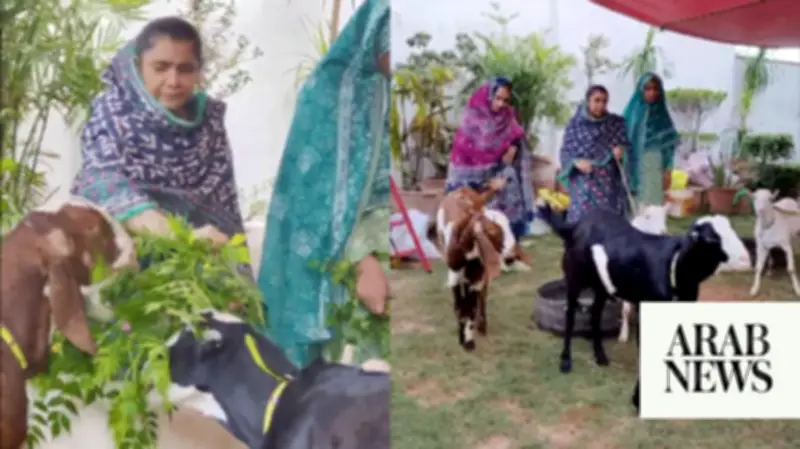
Eid Al-Adha in Pakistan is traditionally a time of family gatherings, shared meals, and communal sacrifice. However, at the Bint-e-Fatima Old Age Home on the outskirts of Islamabad, dozens of elderly women are celebrating the holiday far from their children, siblings, and relatives. They strive to recreate the warmth of Eid together in a country where parents are expected to spend old age at home with family.
A Changing Society
Old age homes remain relatively uncommon in Pakistan, where the joint family system has historically ensured that elderly parents are cared for by children and extended relatives. Yet social workers and researchers note that urbanization, migration, and financial pressures are gradually reshaping family structures, leaving a growing number of older Pakistanis living alone or in institutional care. Pakistan's elderly population is steadily increasing, with over 16 million people now above the age of 60, according to aging and development studies.
Celebrating Together
At Bint-e-Fatima Old Age Home, staff members strive to preserve the rituals and rhythms of Eid for residents who still deeply feel the absence of family during the holiday. Bushra Hasan, who runs the facility, said, "It's totally a home-like environment. There are more than 25 mothers and we all celebrate Eid together. For Eid Al-Adha, we have especially brought sacrificial animals so that they don't feel alone."

The shelter is part of the Bint-e-Fatima Foundation, which operates similar homes in Lahore and Karachi. Founded in 2008 by Farzana Shoaib as a small charitable initiative, the organization now houses around 100 women across Pakistan. Inside the Islamabad home, residents wear new dresses, apply henna to one another's hands, and help prepare meals much like families do across the country during Eid.
"The way we celebrate Eid here is just like at home," Hasan said. "On the first day, goats are sacrificed and on the next day, bulls and cows." She added that residents gather to cook mutton pulao on the first evening while barbecue meals are prepared on the second day. "We celebrate all three days of Eid," she added.
Stories of Estrangement
Behind the celebrations, many women carry stories of estrangement, abandonment, or years of silence from loved ones. Asifa Haroon, 65, said, "I miss my brothers and sisters as my parents have already passed away. I miss how we used to celebrate Eid, doing barbecue, wearing bangles and new clothes. We do a lot here, too. Sister Bushra takes good care of us." Haroon noted that her siblings live in nearby Rawalpindi but her brothers no longer remain in contact. "My sisters do," she continued. "My brothers said they were helpless and couldn't keep me with them so they left me here."
For Khadija Bibi, a 60-year-old divorced former schoolteacher, the distance from family has stretched across years. "I have only one married daughter and three grandchildren," she said. "I have no contact with her since I got divorced and my daughter was raised and educated by my in-laws." She said her daughter, Nudrat Fatima, lives in Karachi's Malir Cantonment area and that she still hopes to see her one day. Asked about the rest of her family, she said her brother, a doctor, usually visits her on Eid.
Others speak quietly about children studying elsewhere or relatives unable, or unwilling, to care for them. Misma Umme-e-Ahmad, 58, said, "We have a very good Eid here, but obviously we miss our families. I miss my son a lot. He is studying."
Care and Memories
Hasan said the facility admits women over the age of 50 and employs eight caregivers who provide round-the-clock support. Among the residents is 75-year-old Kausar Jahan, who once dreamed of becoming a singer before her family stopped her from joining Pakistan Television Corporation. Sitting among fellow residents during Eid celebrations, she softly sang an old Noor Jehan song before laughing at a childhood memory. "My most mischievous act used to remove the collar from a goat's neck and wear it myself," she recalled with a smile. "My family would joke, 'Let's leave the goat and sacrifice her instead.' Everyone would laugh," she added.