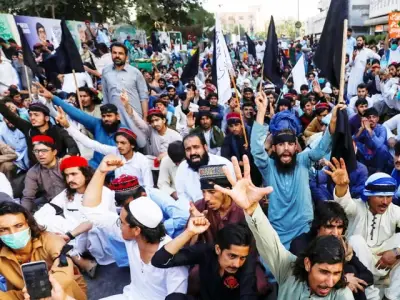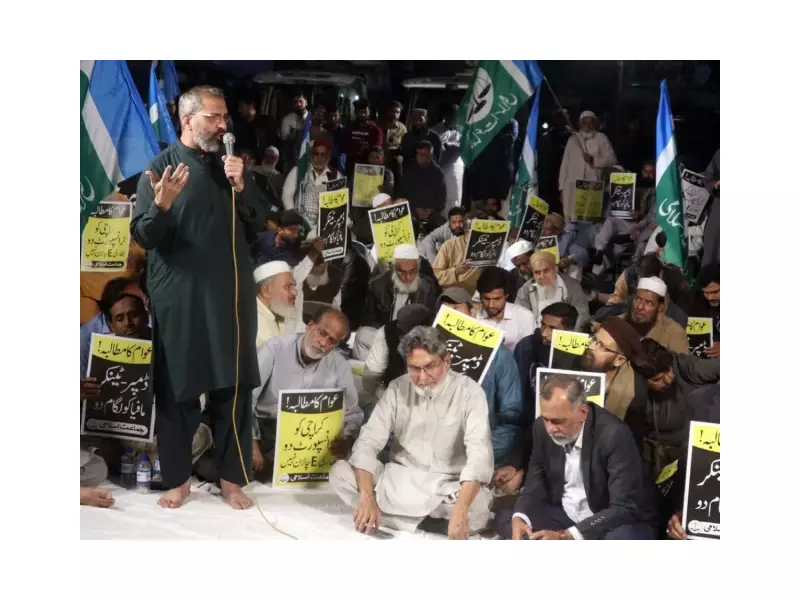
In a major show of public discontent, the Jamaat-e-Islami (JI) staged simultaneous sit-in protests at thirteen critical locations across Karachi on Sunday. The demonstrations were a direct response to the worsening civic conditions plaguing the city's residents.
Widespread Protests Target Civic Failures
The party's activists and local citizens gathered at key intersections including Numaish Chowrangi, Orangi Town No. 10, Malir Halt, and Quaidabad. The primary grievances fueling the protests were the severe shortage of clean drinking water, the chronic issue of uncollected garbage piling up on streets, and the relentless inflation squeezing household budgets. A central demand was also directed at K-Electric to put an immediate end to prolonged and unscheduled power outages.
JI Karachi chief, Hafiz Naeemur Rehman, led the protest at Numaish Chowrangi. He delivered a stern message to the Sindh government, accusing it of complete negligence towards the city's basic infrastructure and the plight of its people. Rehman warned that if the authorities failed to address these urgent issues promptly, the JI would escalate its protest movement across the entire province of Sindh.

Leaders Highlight Specific Grievances
Other senior JI leaders echoed these sentiments at different protest sites. At Orangi Town, speakers condemned the Sindh government and the city's municipal bodies for their failure to provide fundamental services. They pointed to the stark contrast between the taxes collected from citizens and the abysmal state of civic amenities.
The protest at Quaidabad saw leaders lambast the water board and K-Electric specifically. They highlighted the misery caused by dry water taps and frequent power cuts, which disrupt daily life and business. The protesters issued a clear ultimatum: resolve the water and electricity crises or face a massive and intensified agitation.
A City United in Frustration
The choice of thirteen separate locations for the sit-ins underscored the widespread nature of the grievances. From North Karachi to Malir, the message was uniform—citizens are exhausted by poor governance. The JI framed the protests not merely as a political activity but as a representation of the collective public anger against administrative failure.
The party's strategy of decentralised yet coordinated sit-ins effectively brought traffic and public attention to a standstill at multiple city points, amplifying their demand for accountability. The demonstrations concluded with a firm resolution to continue pressuring the provincial government until tangible improvements are seen in Karachi's crumbling civic infrastructure.