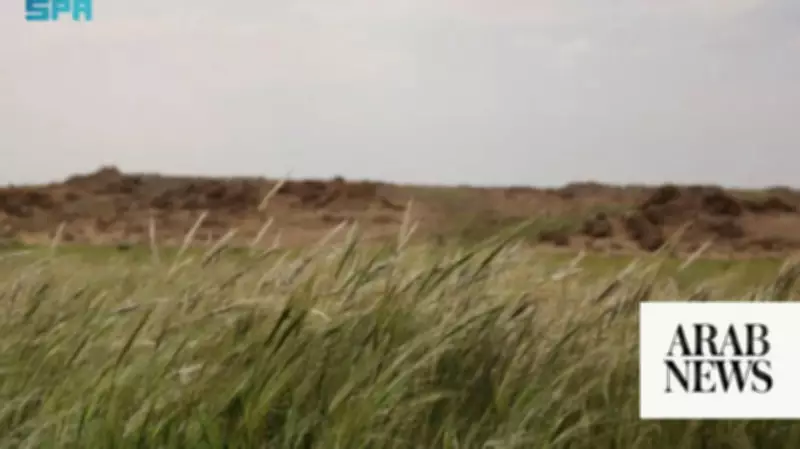
Seasonal Rains Transform Northern Borders into 'Green Gold' with Stipa Capensis Bloom
The Northern Borders region of Saudi Arabia has undergone a remarkable transformation following recent seasonal rainfall, with vast plains and valleys now carpeted in the native grass species Stipa capensis. This spectacular natural phenomenon has turned arid landscapes into vibrant green and golden vistas, creating what local observers describe as "green gold" across the region.
Ecological Transformation West of Rafha
According to reports from the Saudi Press Agency, the seasonal rains have triggered an extensive bloom of Stipa capensis grass across valleys and plains west of Rafha. The plant now forms dense carpets across lowlands south of Tal'at Al-Tumayyat, where alternating golden and green hues create a visually stunning natural tapestry that ripples across the landscape.
Environmental specialists note that this vegetation density directly results from seasonal rainfall patterns, highlighting the resilience and biodiversity of northern Saudi Arabia's ecosystems. The transformed landscapes now closely resemble natural savanna environments, particularly during sunset when warm earth tones blend with the fading sky to create breathtaking seasonal displays.

Vital Ecological Role of Stipa Capensis
Classified under the Poaceae family, Stipa capensis typically grows up to 50 centimeters tall and is distinguished by its fine, hair-covered leaves and delicate, needle-like awns. The grass thrives particularly well in sandy soils and open plains, with significant concentrations found in the prairies surrounding Arar.
The plant serves multiple crucial ecological functions:
- Provides nutrient-rich forage for livestock including camels and sheep
- Supports local wildlife populations through habitat provision
- Contributes significantly to soil stability and erosion prevention
- Reflects the renewal of natural vegetation cycles in desert ecosystems
Broader Environmental and Economic Value
Beyond its ecological importance, Stipa capensis holds practical value for local communities. In addition to serving as essential grazing material for livestock, the grass has traditional applications in various crafts and community practices. This dual utility underscores the plant's broader environmental and economic significance to the region.
Officials and environmental observers emphasize that such seasonal blooms serve as essential indicators of ecosystem health. The spectacular transformation reinforces the critical importance of rainfall patterns in sustaining biodiversity across Saudi Arabia's diverse landscapes.
The current bloom represents more than just visual splendor—it demonstrates the delicate balance of desert ecosystems and their capacity for rapid regeneration when environmental conditions align favorably. As the Stipa capensis continues to flourish across the Northern Borders region, it stands as a living testament to nature's resilience and the intricate connections between climate, vegetation, and ecological sustainability.