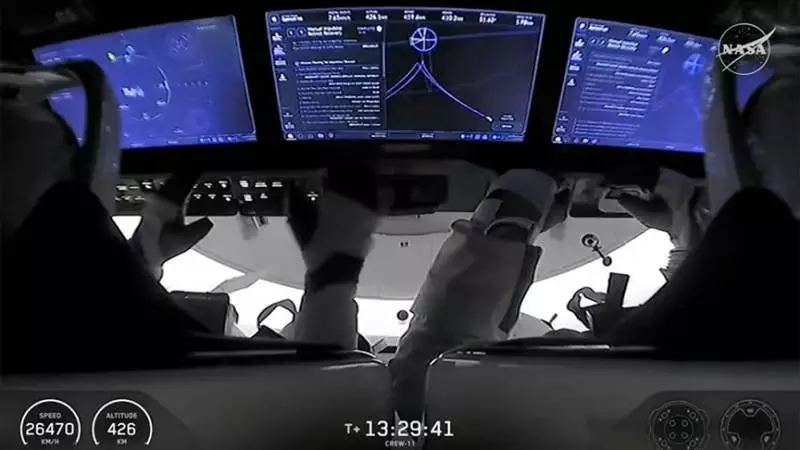
In an unexpected turn of events, the International Crew 11 mission has made its return to Earth ahead of schedule. The crew's early departure from the International Space Station (ISS) was prompted by a serious technical malfunction, culminating in a safe splashdown in the Atlantic Ocean.
Emergency Decision Forces Early Return
The mission, which launched from the Kennedy Space Center in Florida on October 20, 2025, was originally planned for a standard six-month duration aboard the orbiting laboratory. However, mission controllers at NASA and SpaceX were forced to enact contingency plans following the detection of a significant ammonia leak in the station's primary cooling system. This critical issue posed a potential risk to both the station's operations and crew safety, necessitating an immediate evacuation from the affected segment.
After a rapid assessment, joint teams from NASA, Roscosmos, JAXA, and ESA unanimously decided to expedite the crew's return. The astronauts, comprising two American NASA astronauts, one Russian cosmonaut from Roscosmos, and one Japanese astronaut from JAXA, safely boarded their SpaceX Dragon Endeavour spacecraft on January 15, 2026. The capsule undocked from the ISS Harmony module at 11:42 PM GMT, beginning its journey home.

Successful Splashdown Caps Tense Mission
The Dragon spacecraft performed a series of deorbit burns flawlessly, re-entering Earth's atmosphere and deploying its parachutes for a textbook splashdown. The capsule touched down in the Atlantic Ocean off the coast of Florida at 5:17 AM GMT on January 16, 2026. Recovery teams were swiftly on scene to retrieve the capsule and its four crew members, who were reported to be in good health and high spirits despite the abrupt end to their expedition.
This early return marks a significant deviation from standard procedure and underscores the ever-present challenges of human spaceflight. The crew managed to secure and hand over a majority of their scientific work to the remaining ISS crew, but several long-term experiments have been disrupted. Engineers on the ground are now focusing all efforts on diagnosing and repairing the cooling system leak, a process that may require a future dedicated repair mission.
Implications for Future Space Station Operations
The incident raises important questions about the aging infrastructure of the ISS and contingency planning for future commercial and international crews. While the primary objective—the safe return of the astronauts—was achieved, the event highlights the complex interdependence of the station's systems. The successful management of this emergency, however, demonstrates the robustness of international protocols and the reliability of the SpaceX Dragon as a modern crew lifeboat.
Authorities have confirmed that an extensive review of the incident will be conducted. The findings will be crucial for ensuring the safety of the astronauts currently aboard the station and for planning upcoming missions, including those involving the new generation of commercial space stations. The courage and professionalism of Crew-11 in handling this unforeseen situation have been widely praised by the global space community.