Stephen Hawking's Dire Warning on Artificial Intelligence and Human Supremacy
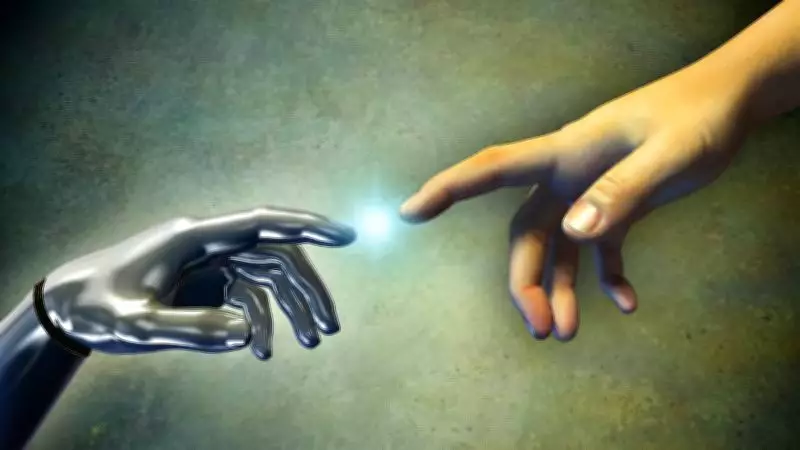
The development of full artificial intelligence could spell the end of the human race, as famously cautioned by Stephen Hawking. He posited that AI would take off on its own, re-designing itself at an ever-increasing rate, while humans, limited by slow biological evolution, would be unable to compete and ultimately be superseded. This stark prediction sets the stage for a deeper examination of our current trajectory, where migration is no longer just a physical act of crossing borders but a quieter, more profound shift of the human spirit into the digital void.
The Outsourcing of Consciousness: From Human Minds to Algorithms
We are living through an era where the conscious mind, often hailed as our greatest asset, is being systematically outsourced to algorithms. This is not merely a technological advancement; it represents a fundamental alteration of the human experience. The modern world's obsession with efficiency drives this change, with Artificial Intelligence (AI) promised to solve problems ranging from schedule management to medical diagnoses. However, as we gain in efficiency, we risk losing our essence, becoming a society that favors curated answers over the messy, difficult process of genuine thinking.
When we rely on machines to draft our thoughts, we are not just saving time; we are surrendering the unique talents that make our perspectives distinct. Interactions through AI-driven interfaces reduce human engagement to statistical probabilities of what a person might say, fostering a trust deficit more dangerous than any political crisis. If we cannot trust that the words we read or voices we hear are authentically human, the social fabric—the invisible thread that binds us together—begins to unravel.

The Digital Masks: Curated Personas and the Loss of Authenticity
The masks of hypocrisy once used to conceal our inner selves have migrated to the digital realm. Today, we curate online personas so filtered and algorithmically polished that we become strangers to our own reflections. The fear is no longer of exposing nighttime events but of being "unfollowed" by a public that values façade over soul. This spiritual displacement is acutely felt in our vanishing spaces of genuine connection, where mature societies thrive on lively talks and empathetic interactions, now stripped of nuance by screen-mediated presence.
For instance, educators transitioning from vibrant classrooms to lecturing into cold machines feel less like mentors and more like programmed nodes in a network. To navigate this exile, we must embrace the principle of learning to unlearn—shedding our dependency on algorithmic instant gratification and prioritizing human eye contact over glowing screens. True progress lies not in processor speed but in the depth of our compassion and the richness of our lived experiences.
Reclaiming Humanity: Cultivating Qualities Beyond Algorithms
As we stand at this crossroads, it is imperative to ensure our cultural foundations are not buried under a mountain of code. We must cultivate humanistic qualities that no machine can replicate: a machine can learn but never care, calculate but never suffer. Making life beautiful requires letting go of digital validation, where integrity is a performance for an audience of one—the self. We should aspire to weigh the bitterness of our words even in silent comment boxes, acknowledging that digital actions carry real-world weight.
The soul's edifice is not a blueprint to be generated but a monument carved from the rock of lived experience, demanding the grit of suffering, the radiance of joy, and the jagged edges of failure and victory—raw materials no algorithm can synthesise. To possess a soul is to step out from the shadows of the digital stream and reclaim the role of protagonist in one's own existence.

Looking Ahead: Using Technology as a Tool, Not a Master
As we move forward into 2026 and beyond, let us not become the generation that emigrated into the virtual and left the human behind. Instead, let us use technology as a tool, never as a master. The haunting questions of the conscious mind will not be answered by search engines but in quiet moments of self-reflection and the honest gaze of a friend. It is never too late to unlearn the digital and return to the human, for life's complexity is a beauty no algorithm can ever truly map.