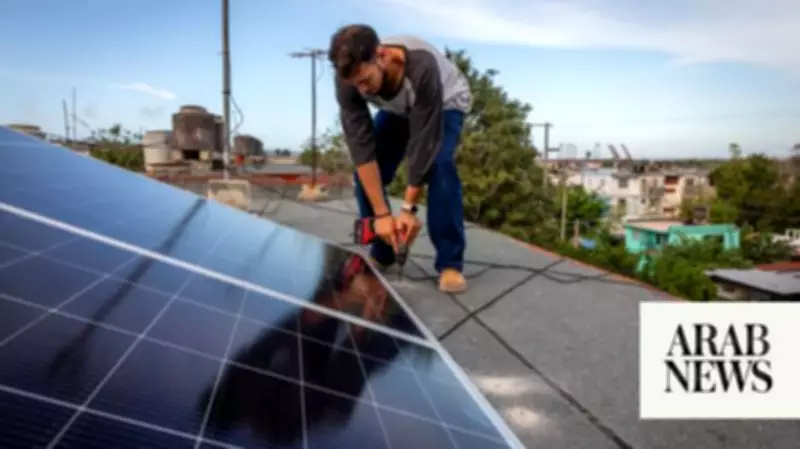
The ongoing war in Iran is supercharging the global transition to renewable energy, as nations scramble to reduce their exposure to volatile oil and gas markets, the UN climate chief said on Thursday.
Impact on energy markets
The US-Israeli conflict with Iran has disrupted oil and gas supplies, leading some countries to ration fuel and others to implement subsidies and tax cuts to protect consumers from soaring prices. Early evidence suggests the war, now in its second month, is accelerating the low-carbon transition in several nations.
Demand for rooftop solar systems across Europe has surged, while countries such as Pakistan have reported a notable increase in electric vehicle sales. Chinese President Xi Jinping recently called for speeding up the construction of a new energy system to enhance energy security, emphasizing hydropower development and nuclear power expansion.

UN climate chief's remarks
“Those who’ve fought to keep the world hooked on fossil fuels are inadvertently supercharging the global renewables boom,” said Simon Stiell, Executive Secretary of the UN’s climate secretariat UNFCCC. “Renewables offer safer, cheaper, cleaner energy that can’t be held captive by narrow shipping straits or global conflicts,” Stiell told a meeting of government officials at the International Energy Agency in Paris.
Challenges and mixed responses
However, the war has also prompted some nations to increase the use of highly polluting coal or furnace oil-based power generation as they struggle to replace gas from the Middle East. Turkiye’s Climate Minister Murat Kurum, who will preside over the UN’s COP31 climate summit this year, noted that fossil fuel dependency now tops the global political agenda.
“The best way to protect citizens from the violent convulsions of global energy markets is to accelerate the clean-energy transition,” he said in a statement after the IEA event.
International cooperation
Around 60 governments, including Brazil, Germany, Canada, and Nigeria, met in Colombia this week for a summit to discuss phasing out fossil fuels. Conference hosts Colombia and the Netherlands announced on Thursday that countries had agreed to continue working over the next year on how to implement this in their trade systems.