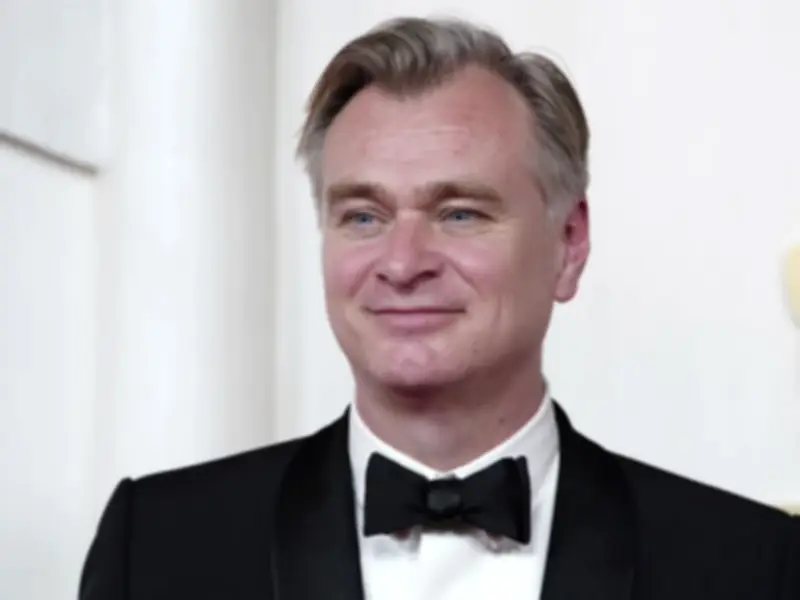
Christopher Nolan has thrown his support behind a new generation of filmmakers while arguing that audiences, particularly younger viewers, are increasingly rejecting what he described as "AI slop" in favour of more authentic and imaginative filmmaking.
Nolan praises breakout indie directors
Speaking to The Telegraph while promoting his upcoming epic The Odyssey, the Academy Award-winning director praised the breakout success of Obsession and Backrooms, describing their creators as proof that cinema continues to evolve through bold new voices. Nolan highlighted Curry Barker, director of Obsession, and Kane Parsons, the filmmaker behind Backrooms, as examples of emerging talent reshaping modern cinema. According to Nolan, the remarkable commercial and critical success of both films shows that originality and creative ambition continue to resonate strongly with audiences.
Record-breaking indie success
Obsession has become one of the biggest independent success stories of recent years. Produced on a reported budget of approximately $750,000, the horror film has earned more than $400 million worldwide after premiering at the Toronto International Film Festival. The film also became the highest-grossing festival acquisition in history and now stands as Focus Features' biggest worldwide release. Meanwhile, Backrooms has generated more than $350 million globally, becoming one of A24's highest-performing international releases. Its director, Kane Parsons, achieved another milestone by becoming the youngest filmmaker to top the domestic box office, further highlighting the growing influence of younger creators within the industry.

Audiences crave authentic storytelling
Reflecting on these achievements, Nolan rejected the idea that younger audiences have shorter attention spans or limited interest in ambitious storytelling. He pointed to the popularity of both films, particularly their slower, mysterious and atmospheric approach, as evidence that audiences remain willing to embrace challenging narratives when they feel genuine. Nolan also used the interview to discuss artificial intelligence and its growing presence across entertainment. While acknowledging that AI may have useful applications, he argued that the technology has arrived at a moment when audiences are increasingly seeking films that feel tangible and human. He observed that younger viewers have been especially quick to identify and reject content they perceive as overly dependent on artificial intelligence.
Younger viewers reject AI-generated content
Referring to his own children, who are in their late teens and early twenties, Nolan said their response to AI-generated material has been immediate because they recognise how such content emerges from online spaces they understand well. According to Nolan, the renewed interest in practical filmmaking reflects a broader cultural shift. After years in which digital technology and virtual environments dominated blockbuster filmmaking, he believes audiences are once again embracing productions that emphasise physical sets, real locations and handcrafted storytelling.
Nolan's own practical approach
That philosophy aligns closely with Nolan's own filmmaking approach. While discussing The Odyssey, he explained that the production involved travelling extensively and assembling large-scale practical sequences to create an authentic cinematic experience. The film, based on Homer's ancient Greek epic, follows Odysseus as he attempts to return home after the Trojan War. Its ensemble cast includes Matt Damon, Anne Hathaway, Tom Holland, Zendaya, Robert Pattinson, Jon Bernthal, Travis Scott, Elliot Page and Lupita Nyong'o.
Spielberg also praises 'Obsession'
Nolan is not alone in recognising the impact of the new wave of filmmakers. Steven Spielberg has also publicly praised Obsession, commending Barker for delivering such an acclaimed production on a modest budget.