Pentagon vs Anthropic: A High-Stakes Battle for AI Control and Ethics
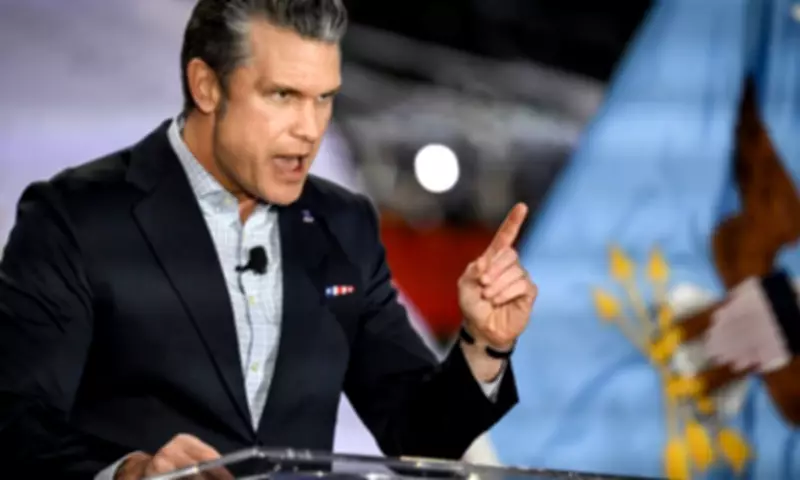
The escalating conflict between the Pentagon and Anthropic represents a pivotal moment in the governance of artificial intelligence, with profound implications for national security and ethical standards. Secretary of Defense Pete Hegseth has set a dramatic deadline, demanding that Anthropic grant the U.S. military unrestricted access to its AI systems by Friday at 5:01 pm, or face severe consequences that could jeopardize the company's operations.
The Core of the Dispute
Anthropic, a leading AI firm valued at $380 billion, currently holds a $200 million contract with the Pentagon to provide advanced AI for national security applications. Its chatbot Claude is notably the first AI model deployable on confidential government networks. However, the Pentagon now insists on a new agreement allowing Claude to be used for "all lawful purposes," which would strip Anthropic of any oversight or veto power over specific military applications.
This demand clashes directly with Anthropic's established ethical boundaries. CEO Dario Amodei has publicly refused, stating the company "cannot in good conscience accede to their request." Anthropic maintains two critical red lines: it prohibits the use of its AI for fully autonomous weapons systems that operate without human intervention and for mass domestic surveillance of American citizens. Amodei emphasized that AI-driven mass surveillance poses novel risks to civil liberties, and current frontier AI systems lack the reliability required for autonomous weaponry.

Historical Context and Escalation
The tension intensified following a January operation that led to the capture of Venezuelan President Nicolas Maduro, where Claude was reportedly utilized via a platform from Palantir, a defense-friendly AI company. After an Anthropic employee inquired about Claude's role in the operation, Palantir alerted the Pentagon, exacerbating existing frustrations. The Pentagon had already excluded Anthropic from its GenAI.mil platform launched in late 2025, with Hegseth asserting in a speech that "we will not employ AI models that won't allow you to fight wars."
This confrontation marks the most significant U.S. government-tech company clash over AI ethics since Google employees protested Pentagon collaborations in 2018. With AI now more advanced and integral to both the economy and defense, the stakes are exponentially higher, raising fundamental questions about who ultimately controls this existential technology.
Potential Repercussions and Legal Battles
If Anthropic remains steadfast, the Pentagon could cancel its $200 million contract, a move within its rights but financially negligible for the wealthy AI giant. More alarmingly, Secretary Hegseth has threatened to invoke the Defense Production Act, a Cold War-era law enabling the president to compel companies to accept defense contracts. Using this act to force Anthropic into compliance over AI safety rules would be unprecedented and likely trigger prolonged legal disputes.
Even more damaging for Anthropic would be designation as a "supply chain risk," a label typically applied to adversarial entities like Huawei. This could bar all defense contractors from using Anthropic's products, crippling its enterprise business and derailing a planned initial public offering. Reports indicate the Pentagon has already asked major contractors like Boeing and Lockheed Martin to evaluate their reliance on Claude, highlighting the contradictory nature of the Pentagon's stance: simultaneously claiming Claude is a security threat while insisting on its necessity for wartime operations.
Broader Implications and Industry Response
The outcome of this showdown could set a precedent for AI governance in the United States. If the Pentagon succeeds in compelling compliance, it may establish that no American AI company can uphold independent safety restrictions against government demands. This has sparked widespread concern within the AI community, with figures like Jeff Dean of Google and former Trump AI adviser Dean Ball criticizing the Pentagon's approach as overly restrictive and hypocritical, given the administration's anti-regulation rhetoric.

Without congressional intervention to legislate constraints on lethal AI use, the future could see diminished corporate autonomy and increased risks from unchecked military applications. As the deadline approaches, the world watches to see whether ethical principles or governmental authority will prevail in shaping the trajectory of artificial intelligence development and deployment.