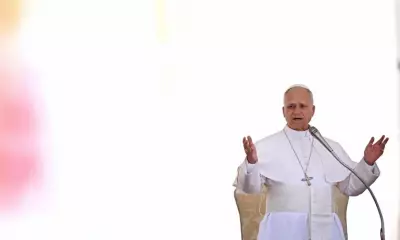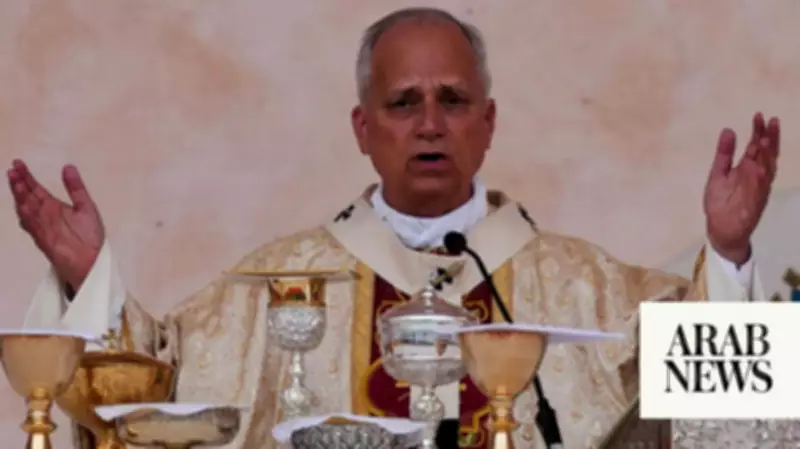
Pope Leo XIV has established a new study group within the Vatican dedicated to artificial intelligence, the Holy See announced on Saturday, as the pontiff prepares to publish his first encyclical. The document is expected to call for an ethics-based approach to AI that prioritizes human dignity and global peace.
Vatican's In-House AI Initiative
The Vatican stated that Pope Leo decided to create the internal study group due to the rapid acceleration of AI adoption and its potential effects on humanity. The church's concern for the dignity of every human being underpins this initiative. The announcement came one day after the pope signed his encyclical, exactly 135 years after Pope Leo XIII dated his landmark encyclical Rerum Novarum, which addressed workers' rights and the limits of capitalism during the Industrial Revolution.
Echoing Historical Social Teaching
The new encyclical is expected to place AI within the framework of Catholic social teaching, covering labor, justice, and peace. Meghan Sullivan, a philosophy professor at the University of Notre Dame, noted that the Catholic Church is poised to be a key voice in debates about integrating AI into society. She stated that the pope will likely be a forceful advocate for human dignity in these discussions.

Shortly after his election in 2025, Pope Leo told cardinals that the church must offer its social teaching to confront AI's challenges to human dignity, justice, and labor. The encyclical's release, expected in coming weeks, may create friction with the Trump administration, which prioritizes rapid AI development for national economic and security reasons. The U.S. has rejected international regulatory efforts and removed domestic bureaucratic hurdles.
Global Context and Vatican Engagement
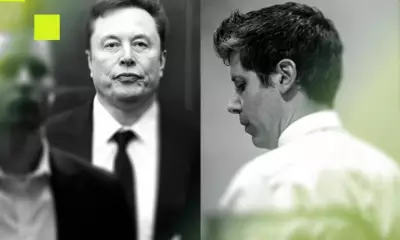
The Vatican's activity coincided with President Donald Trump's visit to China, which included AI business discussions. Accompanying Trump were Elon Musk and Nvidia CEO Jensen Huang, who recently secured approval to sell H200 AI chips to Chinese buyers. Since ChatGPT's debut, AI's capabilities have amazed the world, but experts warn of risks from rogue AIs to algorithmic bias. The UN adopted a new AI governance architecture last year, while the EU passed its Artificial Intelligence Act in 2024.
The Vatican has offered ethical guidelines for AI in warfare, education, and healthcare, emphasizing that technology should complement, not replace, human intelligence. It has also warned about the environmental impact of AI, citing energy and water consumption by data centers. Thomas Harmon, a theology professor at the University of St. Thomas, noted that the Catholic Church's deep tradition of thinking about humanity gives it a significant voice.
Previous Vatican Efforts
In 2020, the Vatican launched the Rome Call for AI Ethics, enlisting tech companies like Microsoft, IBM, and Cisco to commit to principles of inclusiveness, accountability, impartiality, and privacy. Pope Francis had called for an international treaty to regulate AI, addressing the G7 in 2024 and urging a ban on lethal autonomous weapons.
Pope Leo, a math major, has warned priests against using AI to write homilies. He has raised concerns about AI's impact on world peace, labor, and truth, particularly regarding deepfakes. In a June 2025 speech, he acknowledged AI's benefits in healthcare and science but questioned its effects on humanity's openness to truth and beauty. He has also monitored AI use in warfare in Ukraine and the Middle East, decrying the inhuman evolution of war technologies.