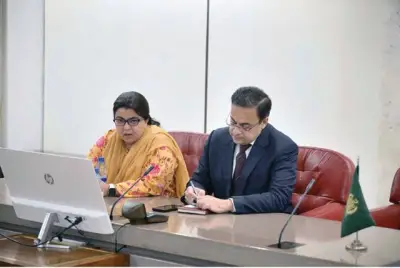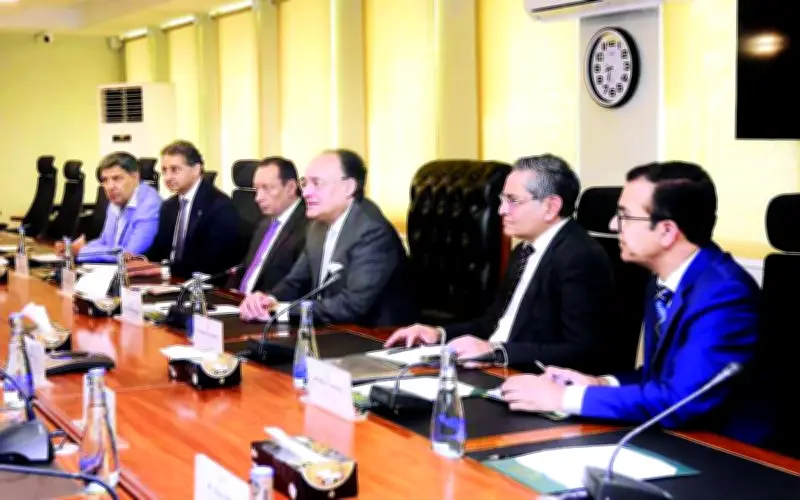
ISLAMABAD – Finance Minister Muhammad Aurangzeb on Thursday held meetings with different delegations and associations to discuss the economic situation and budget proposals. Federal Minister for Finance and Revenue Senator Muhammad Aurangzeb met a delegation of BYD Group and Mega Motor Company (MMC) led by Liu Xueliang, Vice President of BYD Group and General Manager, BYD Asia Pacific Auto Sales Division, and Aly Khan, Chief Executive Officer, Mega Motor Company (Private) Limited, at the Finance Division.
Welcoming the delegation, the finance minister appreciated BYD’s growing footprint in Pakistan and underscored the importance of strengthening business-to-business collaboration as a key pillar of the evolving Pakistan-China economic partnership. He noted that Pakistan attaches high priority to attracting technology-driven investments and expressed confidence that the BYD-MMC joint venture would contribute significantly to industrial development, technology transfer, job creation and export growth.
Liu Xueliang briefed the finance minister on BYD’s operations and future plans in Pakistan, highlighting the company’s progress in introducing new energy vehicle technologies to the local market in partnership with Mega Motor Company. He appreciated the government of Pakistan’s support for the development of the electric vehicle (EV) sector and informed the meeting that construction of the company’s local manufacturing facility was progressing according to schedule. He shared BYD’s plans to expand its product portfolio, accelerate localization, introduce advanced charging technologies and contribute to the development of Pakistan’s EV ecosystem through investment, technology transfer and capacity building.

Aly Khan informed the finance minister that Pakistan occupies a strategic position in BYD’s global expansion plans and reiterated the joint venture’s commitment to long-term investment in the country. He briefed the meeting on the progress of the manufacturing project and outlined a phased localization roadmap aimed at increasing local content through engagement with domestic vendors and suppliers, thereby strengthening Pakistan’s automotive value chain and industrial base.
The finance minister noted that global trends clearly pointed towards an accelerating transition to electric mobility and reiterated the government’s commitment to facilitating investments that support technological advancement, sustainable industrialization and energy efficiency. Reaffirming the government’s support for the EV sector, the finance minister encouraged the delegation to accelerate efforts towards local assembly, manufacturing and charging infrastructure development, noting that the availability of a robust charging network would be critical to expediting the adoption of electric vehicles across the country. He also highlighted the significant contribution of Chinese enterprises to Pakistan’s industrial development and expressed confidence that the BYD-MMC partnership would further deepen economic cooperation between Pakistan and China.
Meanwhile, Muhammad Aurangzeb also met a delegation of the Pakistan Cotton Ginners’ Association (PCGA), led by its Chairman Sham Lal Manglani, to discuss issues concerning the cotton sector and explore measures aimed at enhancing the industry’s contribution to economic growth, exports, and rural employment. The delegation included Senior Vice Chairman PCGA Shaikh Fayaz Ahmed, former Chairmen Suhail Mehmood Hurrul, Chaudhry Waheed Arshad, and Mukhtar Baloch.
During the meeting, participants held a detailed exchange of views on the current state of the cotton value chain, challenges faced by growers and ginners, and policy measures that could help improve productivity, investment, and sustainability across the sector. The finance minister acknowledged the significance of the cotton industry for the national economy and emphasized the government’s commitment to fostering a conducive business environment for productive sectors. He noted that sustainable growth in agriculture and industry remains a key pillar of the government’s economic agenda and reaffirmed the importance of stakeholder consultations in the policymaking process.

He emphasized that the concerns and recommendations put forward by the PCGA would be carefully reviewed by the relevant authorities. The meeting also discussed the need for coordinated efforts to strengthen the cotton ecosystem, improve competitiveness, enhance value addition, and encourage greater investment throughout the supply chain. Participants agreed on the importance of maintaining continuous engagement between the government and industry stakeholders to identify practical solutions that can contribute to the long-term revival and growth of the cotton sector.