Saudi Arabia's hospitality industry demonstrated resilience in the first quarter of 2026, despite regional geopolitical and economic uncertainties. The nationwide hotel occupancy reached 66.3 percent, while average daily rates increased by 3 percent to SR805.5 ($215.37). However, revenue per available room experienced a slight decline of 1.3 percent, according to a report by JLL.
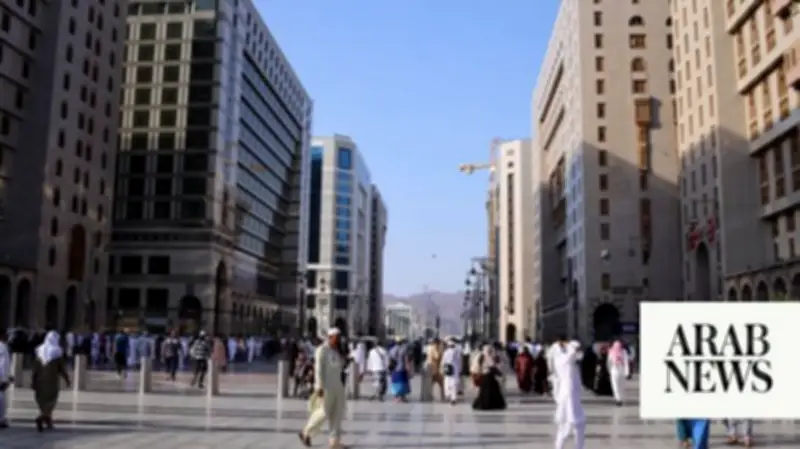
The holy cities of Makkah and Madinah remained pillars of stability, recording occupancy rates of 78.6 percent and 81.3 percent, respectively. This performance was bolstered by demand from Umrah pilgrims and travelers during the Ramadan season. Domestic tourism also played a vital role in supporting the sector during the quarter.
Strengthening the real estate and hospitality sectors is a key objective of Saudi Arabia's Vision 2030, as the Kingdom aims to become a leading tourist and business destination by the end of the decade. The Real Estate General Authority projects the country's property market to reach $101.62 billion by 2029, with an anticipated compound annual growth rate of 8 percent from 2024.

Real Estate Market Performance
Saud Alsulaimani, country CEO and head of capital markets, Saudi Arabia at JLL, stated: "Saudi Arabia's real estate market is evolving with purpose. Industrial and logistics sectors are operating at near-full capacity, reflecting the Kingdom's emergence as a critical node in regional and global supply chains."
In the office sector, prime office vacancy in Riyadh remained exceptionally low at around 3.2 percent across all grades. The King Abdullah Financial District led rental growth in Riyadh, with prime rents rising 5.5 percent year on year. Grade A rents increased by 2.1 percent, while Grade B rents grew by 5.1 percent.
Jeddah recorded a Grade A vacancy rate of 6 percent, with Grade A rents declining by 3.8 percent as tenants migrated to newer assets. The Dammam Metropolitan Area showed improving conditions, with Grade A vacancy at 21.4 percent and Grade B at 17.3 percent, alongside healthy rental growth of 9.2 percent and 8.7 percent, respectively.
Industrial and Logistics Growth
Industrial and logistics sectors emerged as key growth areas, with near-full capacity utilization achieving above 90 percent occupancy in key markets. Strong rental growth was observed across major cities: 5.1 percent in Riyadh, 5.3 percent in Jeddah, and 9.9 percent in the Dammam Metropolitan Area.
Retail Sector Performance
Saudi Arabia's retail sector delivered robust results in the first quarter, particularly in prime formats across Riyadh and Jeddah. This growth was driven by multiple factors, including sustained population growth, increasing tourism arrivals, and rising consumer spending. Riyadh's super-regional malls maintained a very low vacancy rate of 2.1 percent, while regional and community malls stood at 9.7 percent and 10.4 percent, respectively.
JLL added: "Looking ahead, Riyadh's retail real estate sector is positioned for long-term growth, underpinned by destination malls and mixed-use developments, alongside sustained population expansion, though near-term footfall may be affected by temporarily reduced business and leisure travel."
Residential Sector Challenges
In the first quarter, Saudi Arabia's residential sector experienced a sharp contraction in transaction activity across major cities, driven by regional geopolitical tensions, economic uncertainty, and recent regulatory changes. In Riyadh, residential transactions declined by 54.4 percent, followed by Jeddah and Dammam, which experienced declines of 51.8 percent and 18.6 percent, respectively.