In South Korea, where an aging population, climate change, and economic difficulties are straining rural communities, the government is rolling out a program designed to bolster agriculture and accelerate the shift to renewable energy. President Lee Jae Myung's administration aims to establish over 500 so-called Sunshine Income Villages by the end of this year and 2,500 by 2030.
How the scheme works
Under the initiative, farmers receive loans covering up to 90 percent of the cost to install solar panels on their land. For the first five years after installation, they only need to repay the interest on the loan, with the principal added to repayments thereafter. Any revenue from selling surplus energy goes directly to the residents.
Early success stories
The villages of Guyang-ri in Gyeonggi province and Songam-ri in Gangwon province are highlighted by the government as early examples of the project's success. In Guyang-ri, six solar panel sites have a total capacity of 1 megawatt, with plans to expand to 5 MW, generating over 100 million won ($66,000) annually for the village's 130 residents, most of whom are elderly.

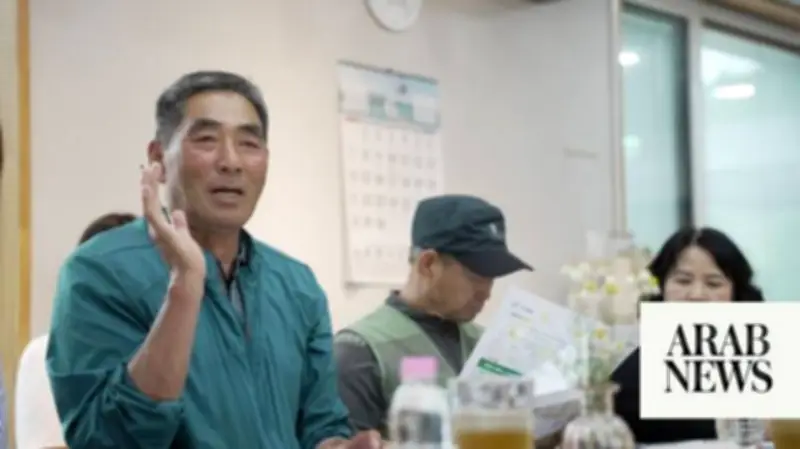
"I think the future for this village is very bright," said local resident Kim Choonok. "It's only been just a year and a half since we have been able to acquire income from the solar energy, but we're actually feeling this first hand. We have had so many people wanting to see how this project is being carried out and a lot of interest, not just from Korea but also abroad."
Despite the loan repayment burden, village chief Ju Young Jeon expressed confidence that the generators would be profitable and could even create new jobs for young people, many of whom have left for cities. "Our village, of course, with declining job opportunities elsewhere, would be able to actually provide opportunities for the younger people," he said.
Community benefits in Guyang-ri
Residents of Guyang-ri, located two hours southeast of Seoul, gather daily for lunch prepared by two chefs and three helpers, all paid from the solar panel income. The scheme has also funded a minibus and driver for free trips and visits to health clinics, as well as a golf course and a table tennis table.
Songam-ri's transformation
In Songam-ri, about two hours northeast of Seoul, solar power generation has become a main income source alongside the village's rice mill, which produces about 15 tonnes daily. The generator, built on converted farmland, produces 657 megawatt-hours and over 100 million won per year. The money helps pay for free meals and milk deliveries for residents and neighbors, support for vulnerable people, and donations to senior welfare foundations.
Village chief Seong-su Hong noted that the village had faced hardships as farmers' product prices stagnated for a decade while costs soared. The solar project brought much-needed extra income and created 21 jobs. "For the three years that I have been operating on this project, we have been able to grow as a community together," Hong said. "If any other village in South Korea wants to initiate this project, I highly recommend them to do so, and I will do my best to support them and help them as much as possible."