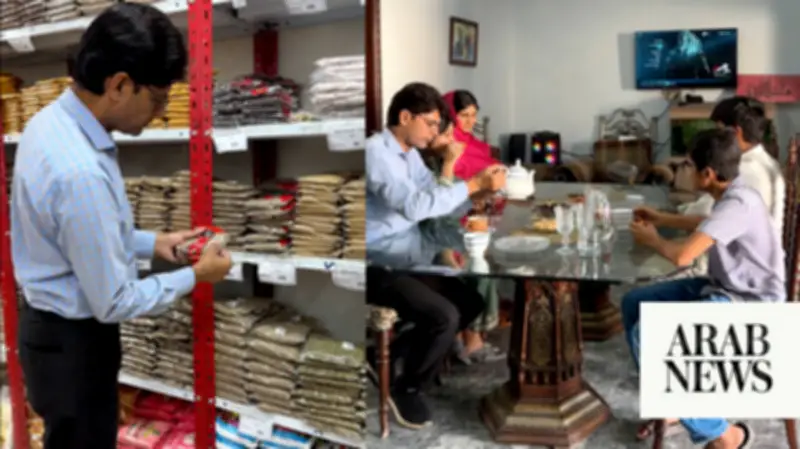
As Pakistan gears up to present its federal annual budget on June 12, the middle-class math no longer works for many. At a busy store in Rawalpindi's Wah Cantonment, 51-year-old Amjad Mahmood Awan carefully watches which items go into his shopping cart and which stay on the shelf. A decade ago, he paid no mind when his children added extra snacks. Today, it is a different story.
Rising Inflation Squeezes Households
Pakistan's headline inflation reached 11.7 percent year-on-year in May 2026, up from 10.9 percent in April, marking the highest reading in nearly two years. Driven by rising global energy import costs due to the Middle East conflict, inflation has forced Awan to shop less and manage rising utility bills. “We have to take those items out of the cart just to manage our budget,” he told Arab News.
Many middle-class Pakistanis have been forced to cut spending, abandon discretionary purchases, and seek additional income sources. Inflation averaged less than 5 percent in fiscal year 2014-15 but surged dramatically over the following decade, peaking above 30 percent in 2023 before easing. However, prices remain far above levels a decade ago.

Income Growth Fails to Keep Pace
Awan's monthly income has grown fivefold over the past decade, from about Rs40,000 ($144) to more than Rs200,000 ($719). Yet, the increase has failed to keep pace with the rising cost of living. “For example, the groceries I used to buy for Rs10,000 ($35.97) are now costing me up to Rs90,000 ($323),” he said. Transportation expenses have shot up from Rs5,000-10,000 ($18-36) ten years ago to Rs80,000-100,000 ($288-360). Surging power tariffs have also eaten into his monthly budget.
To make ends meet, Awan's family runs a home-based beauty parlor that supplements his income. “Today, my income is Rs200,000 plus. However, ten years ago, my lifestyle was very different, it was very good. But today, even with 200,000 rupees, my expenses have become so high that I am living hand-to-mouth,” he said.
Everyday Budgeting Becomes a Struggle
Grocery shopping has taken a hit. Sehar Zeeshan, Awan's sister-in-law who helps run the beauty parlor, said the family has replaced expensive products with cheaper ones. “We used to use olive oil before, and now we have shifted to local oil. Previously, if we used to use around 20 different types of spices, that has now been reduced to about 10.” The family has also curtailed its budget for recreational activities. “We used to go on three to four trips a year. Now, we can barely manage one,” she said.
For Awan, ever-increasing utility bills are a constant headache. “The budget is usually presented once a year in June by the government, but we have to face the budget daily,” he said. “In April 2026, my gas bill was Rs3,960 ($14.25) whereas in May 2026, my bill is Rs7,750 ($27.88). My consumption is exactly the same but my bill has increased.”
Call for Policymakers to Understand Ground Realities
As lawmakers prepare to debate the national budget, Awan says policymakers should spend time experiencing the pressures faced by ordinary households. “I believe that the people who make the budget should come and stay in a house like ours. They should spend a month or two here and show us how to run this budget within our income,” he concluded.