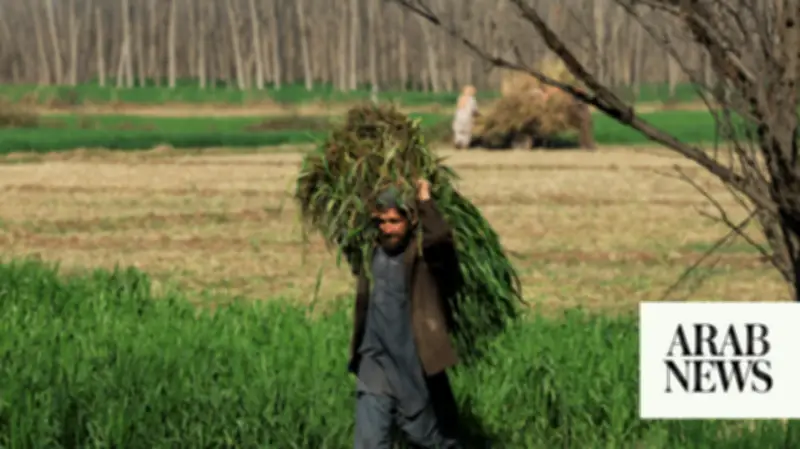
Pakistani farmers have called on the government to announce subsidies on fertilizers, electricity, and diesel in the upcoming federal budget, warning that soaring input costs are making agriculture unprofitable for millions of farmers across the country.
Impact of Iran Conflict on Input Costs
Pakistan has sharply increased the prices of petroleum products and fertilizers since the US and Israel launched joint strikes against Iran in February. The ongoing regional war has led Iran to effectively shut down the Strait of Hormuz, a critical global waterway through which nearly 20 percent of the world's oil and gas supplies, along with a large portion of fertilizers, transit. These tensions have pushed up petrol and fertilizer prices worldwide, with Pakistan being significantly affected.
Khalid Mehmood Khokhar, president of the Pakistan Kissan Ittehad (PKI) pressure group, which represents farmers' rights and the agricultural sector, stated that prices have risen so much that cultivating crops has become extremely challenging. “Our production costs have inflated,” Khokhar told Arab News. “It is very difficult for farmers to cultivate currently. In fact, agriculture is not a profitable business currently.”

Khokhar highlighted that a 50-kilogram bag of Diammonium Phosphate (DAP) is currently selling for Rs17,500 ($63), and Nitrogen-Phosphorus is priced at Rs11,000 ($40). He also noted that power tariffs have surged to as high as Rs50 ($0.2) per unit, compared to Rs5.35 ($0.02) five years ago. In neighboring India, fertilizer and electricity prices are about five times lower than those paid by Pakistani farmers. “In our enemy country (India), the rate of urea is Rs884 ($3.2) in Pakistani rupees,” he said. “We are getting Rs4,500 ($16.2).” He added that Indian farmers buy DAP for Rs4,000 ($14.4), while Pakistani farmers pay Rs17,500 ($63). Khokhar urged the government to “immediately subsidize” agricultural inputs in Pakistan. “I request the government to give us a chance to balance the use of fertilizer and increase the country’s (agriculture) productivity,” he said.
Agriculture's Contribution and Farmer Struggles
Agriculture is one of Pakistan's most vital sectors, contributing 23 percent to the GDP and employing a large share of the national workforce. However, many farmers report that the sharp increase in production costs has worsened conditions for small landholders who operate on thin margins and have limited access to formal financing. Noman Shaikh, a 41-year-old farmer who cultivates about two acres of agricultural land in Islamabad's Chak Shehzad area, said farmers have been suffering since the government reduced wheat support prices from Rs4,800 ($17.2) per 40-kilogram to Rs2,200 ($7.9) a couple of years ago. This change followed Pakistan's discontinuation of administered wheat pricing under conditions linked to International Monetary Fund (IMF) reforms, which require the government to step back from setting commodity market rates.
“The fertilizer is expensive. Labor is expensive. After that, the expenses of diesel are very high,” Shaikh told Arab News. He said prices of urea and DAP should not exceed Rs8,000 ($29) and Rs4,000 ($14.5), respectively. “We appeal that the farmers should get some relief in the fertilizers and diesel, so that their expenses are met,” he added.

Government's Budget Plans and Short-Term Fixes
Adviser to the Finance Minister Khurram Schehzad stated on Tuesday that the government's priority in the new budget is not to increase taxes or the existing burden on taxpayers. Speaking at a local news channel, Schehzad said the budget would reflect Islamabad's intent to ensure an economic model driven by exports. Muhammad Waqas Ghani, head of research at the Karachi-based brokerage firm JS Global Capital Limited, said policymakers are likely to offer targeted incentives in the new budget, especially for small farmers. “Like every year, the government has planned a lot of incentives for the agriculture sector in the coming budget, specifically benefiting the small farmers.” He said the budget is likely to allocate Rs15-20 billion ($53.96-71.94 million) for fertilizer subsidies to curb food inflation. He added that the Digital Kissan Card initiative, which provides easy access to loans from the government, is also likely to be expanded. However, Ghani warned that these are “short-term fixes.” “To achieve long-term growth, the government will have to fix the pain point this sector faces, particularly the heavy input taxation,” he concluded.