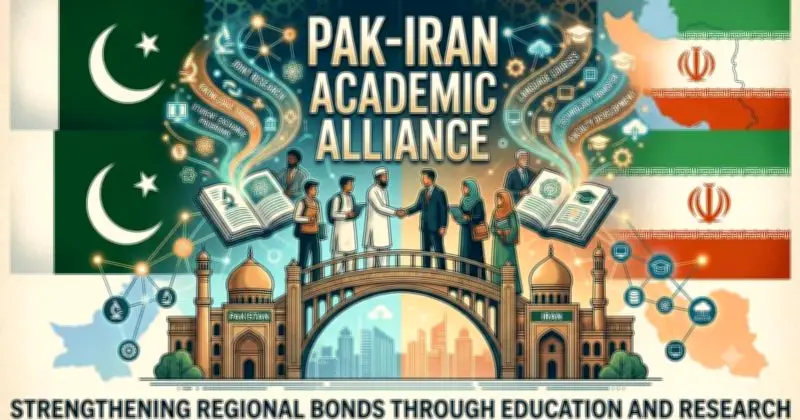
The strongest bridge between neighboring nations will not be built by diplomats alone—it will be built by universities. Every time relations between Iran and Pakistan make headlines, the discussion usually revolves around border security, trade corridors, regional stability, or geopolitical competition. Government officials meet, agreements are signed, and new commitments are announced. Yet, once the political spotlight fades, much of that momentum disappears with it. There is, however, one form of cooperation that has the power to outlive governments, survive political fluctuations, and quietly reshape the future of both nations. It is not another trade agreement. It is not another security dialogue. It is higher education.
Universities as Diplomatic Architects
Universities have always played a unique role in international relations. They educate future leaders, create scientific knowledge, develop technologies, and build relationships that often prove stronger than formal diplomatic ties. While governments negotiate interests, universities cultivate trust. For Iran and Pakistan, this represents one of the most overlooked opportunities in bilateral relations.
More Than Neighbors
Iran and Pakistan share far more than a 900-kilometre border. Their histories, cultures, and intellectual traditions have influenced one another for centuries. The Persian language shaped the intellectual life of the Indian subcontinent for hundreds of years. Urdu literature carries a profound Persian legacy. The philosophical ideas of Allama Muhammad Iqbal continue to inspire scholars in both countries, while generations of Iranian academics have explored South Asia's cultural and intellectual heritage. These historical connections should not remain subjects for historians alone. They should become the foundation for future cooperation.

Unfortunately, academic relations between the two countries have yet to match the depth of their shared history. Joint research projects remain limited, student mobility is modest, faculty exchanges are still relatively uncommon, and many institutional agreements remain symbolic rather than transformational. In an era driven by knowledge economies, this gap deserves serious attention.
Knowledge Is Becoming the New Strategic Resource
The twenty-first century is no longer defined solely by military strength or natural resources. Nations increasingly compete through innovation, research capacity, and human capital. Artificial intelligence is transforming industries, while climate change demands scientific cooperation. Food security, water management, digital governance, and healthcare require interdisciplinary solutions that no single country can develop in isolation.
Iran and Pakistan face many of these challenges simultaneously. Both countries are confronting water scarcity, seeking industrial modernisation, investing in digital transformation, and requiring governance models capable of responding to rapid technological change. Rather than addressing these issues separately, why shouldn't they address them together? Imagine engineers from Tehran and Islamabad developing smart water technologies for arid regions. Imagine economists designing new models for regional connectivity. Imagine legal scholars jointly exploring governance frameworks for artificial intelligence. Imagine industrial engineering departments collaborating on resilient supply chains connecting South Asia and the Middle East. Scientific cooperation would not simply produce research papers; it would produce mutual confidence.
Learning From the World
Successful regions have already demonstrated what academic diplomacy can achieve. The Erasmus Programme transformed Europe by allowing millions of students to study across borders, creating generations of Europeans whose understanding of neighbouring societies extended far beyond politics. The ASEAN University Network has strengthened cooperation across Southeast Asia by encouraging collaborative research and faculty mobility. Even France and Germany—once bitter enemies—invested heavily in academic partnerships after the Second World War, recognising that sustainable peace begins with education as much as diplomacy. Iran and Pakistan possess every prerequisite to pursue a similar path. What they require is vision.

Chabahar: More Than a Strategic Port
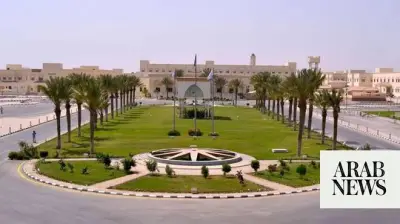
Whenever Chabahar is mentioned, discussions almost immediately focus on maritime trade, logistics, and regional connectivity. Perhaps that conversation has become too narrow. It is time to think of Chabahar not only as a strategic port but also as a strategic university city. Located on Iran's southeastern coast and only a short distance from Pakistan, Chabahar International University occupies one of the most important academic locations in the region. Its geography naturally connects South Asia, Central Asia, and the Middle East. Rather than serving only local educational needs, the university could evolve into a regional platform for academic diplomacy by hosting joint Iran–Pakistan research centres, executive education programmes, policy dialogues, summer schools, and innovation forums involving scholars from both countries. Ports move goods, but universities move ideas—and in the long run, ideas build the strongest bridges between nations.
From Memoranda to Meaningful Partnerships
Academic cooperation should no longer be measured by the number of Memoranda of Understanding signed each year. Success should instead be measured by the number of joint publications, shared doctoral programs, visiting professors, collaborative laboratories, and innovative solutions produced together. Governments can facilitate this transformation by simplifying academic visa procedures, funding bilateral research grants, and supporting faculty exchanges. Universities themselves should become more proactive in creating long-term research networks focused on issues that directly affect both societies. Digital technology makes such collaboration easier than ever. Joint online courses, virtual conferences, and collaborative research platforms can connect scholars regardless of distance. The infrastructure already exists. The opportunity already exists. The missing element is collective determination.
Investing in the Future
Political agreements often reflect the priorities of a particular moment. Academic partnerships shape generations. Every student who studies across the border becomes an informal ambassador. Every joint publication strengthens intellectual trust. Every collaborative laboratory becomes a small investment in regional stability. Iran and Pakistan have spent decades discussing geography. Perhaps the time has come to discuss knowledge with the same seriousness. Because the strongest bridge between neighbouring countries will never be built from concrete or steel. It will be built inside classrooms, laboratories, and libraries—where future scientists, engineers, entrepreneurs, and policymakers learn not merely to cooperate, but to understand one another. In an increasingly uncertain world, knowledge may prove to be the most durable form of diplomacy that either country can invest in.