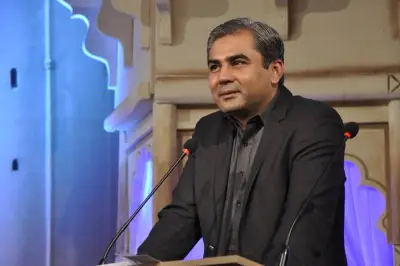
ISLAMABAD – Adviser to National Command Authority Lt. Gen. (retd) Mazhar Jamil has warned that India, through what he described as an increasingly aggressive strategic weapons program, could emerge as a threat to Western countries besides its regional rivals.
He was speaking at a seminar hosted by the Center for International Strategic Studies (CISS) Islamabad to commemorate Youm-e-Takbeer 2026.
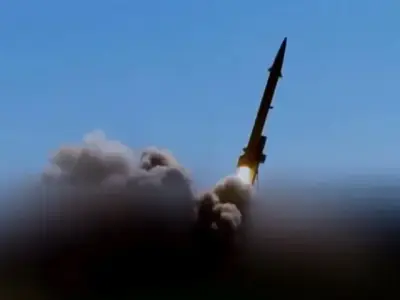
Gen. Jamil, a former director general of the Strategic Plans Division and current adviser to the National Command Authority, said India’s long range missile development reflected ambitions extending beyond South Asia. “The trajectory of India’s strategic forces program, including its intercontinental range missile systems, is not oriented solely toward Pakistan or China. It is oriented toward establishing India as a global nuclear power capable of threatening major Western capitals,” Gen. Jamil said.

He urged Western governments to take notice of India’s military modernization. “The United States and its European partners should realise that the strategic challenge that India will pose to them in the coming decade is one they have chosen to ignore at their own peril,” he said.
The seminar, titled “Pakistan’s Nuclear Weapon Program — Guarantor of Peace and Stability in South Asia,” was attended by scholars, academics and strategic affairs experts.
Addressing regional security issues, Gen. Jamil said Pakistan’s restraint during the May 2025 conflict with India was “a deliberate and considered choice,” warning that any future Indian military action would draw a “decisive and comprehensive” response. “The cost India would bear for such aggression would be far higher than any political or military objective it could hope to achieve.”
Gen. Jamil also argued that India’s strategic outlook was increasingly shaped by Hindutva ideology and said understanding Indian strategic culture had become “an analytical imperative.” He contended that the so called Doval Doctrine and elements of Kautilyan statecraft shared the objective of keeping neighboring states “weak, fragmented, and dependent.”
In his opening remarks, CISS Executive Director Amb. Ali Sarwar Naqvi said Pakistan’s nuclear capability had helped maintain deterrence stability in South Asia and prevented large scale war. “Pakistan’s nuclear capability has fundamentally shaped the strategic landscape of South Asia,” Naqvi said. “It has contributed to deterrence stability, prevented large scale war, and created conditions in which crises can be managed without escalating into full scale conflict.”
Former Pakistan Atomic Energy Commission Chairman Dr. Ansar Parvez discussed the role of Pakistani scientists in the country’s nuclear weapons program, saying Pakistan conducted its nuclear tests under intense international pressure and scrutiny.
Brig. (retired) Dr. Zahir ul Haider Kazmi, adviser on arms control at Pakistan’s Strategic Plans Division, said Pakistan’s military response during Operation Bunyan-un-Marsoos demonstrated the credibility of its deterrence posture and ability to manage escalation below the nuclear threshold.
Meanwhile, Quaid-i-Azam University Vice Chancellor Prof. Dr. Zafar Nawaz Jaspal said India had become increasingly diplomatically isolated following the Pahalgam episode and said New Delhi was pursuing a strategy of “defensive offense” through covert and hybrid means.
CISS Director Research Dr. Bilal Zubair said Pakistan’s decision to develop nuclear weapons was driven by security concerns arising from India’s nuclear program. He said Pakistan’s nuclear capability was ultimately developed to safeguard the country’s sovereignty and national security.