Iran Reviews US Proposals Conveyed Through Pakistani Military Leadership
Iran announced on Saturday that it is currently reviewing new proposals from the United States that were communicated through Pakistan's military leadership, while simultaneously signaling a firm stance against compromise. The development occurred during a diplomatic visit by Pakistan's army chief, Field Marshal Asim Munir, to Tehran, where he emphasized the critical need for de-escalation and sustained dialogue between the two nations.
Pakistan's Diplomatic Push Amid Stalled Negotiations
The proposals were delivered as part of Munir's three-day trip to Iran, which represents Pakistan's intensified diplomatic efforts to revive US-Iran negotiations. These talks had previously stalled after an initial round held in Islamabad failed to yield any significant breakthrough. Iran's Supreme National Security Council confirmed that the new US proposals were presented through Pakistan's military leadership and are now under active consideration in Tehran.
"Recently, with the Pakistani army commander in Tehran acting as mediator, new proposals have been put forward by the Americans," stated an official declaration shared by Iran's Mehr News Agency. "The Islamic Republic of Iran is reviewing them and has not yet provided a response." The statement further reinforced Tehran's hardened position, asserting that Iran "will not make even the slightest compromise" despite ongoing diplomatic initiatives.

Uncertainty Surrounds Next Round of Talks
Uncertainty continues to cloud the prospects for a subsequent round of negotiations. Iran's Deputy Foreign Minister, Saeed Khatibzadeh, indicated that no specific date has been established for further talks, noting that both sides are still working to finalize a framework before resuming discussions. The earlier round of negotiations, which Pakistan mediated, took place during a temporary truce between the US and Iran on April 11 and extended over 21 hours.
Pakistan has since ramped up its efforts to restart the negotiation process as the ceasefire deadline between the two sides approaches expiration next week. According to the military's media wing, Munir advocated for continued dialogue and diplomacy during his interactions with top Iranian officials, as Islamabad aims to transform the fragile peace into a lasting and sustainable settlement.
High-Level Meetings Focus on Regional Stability
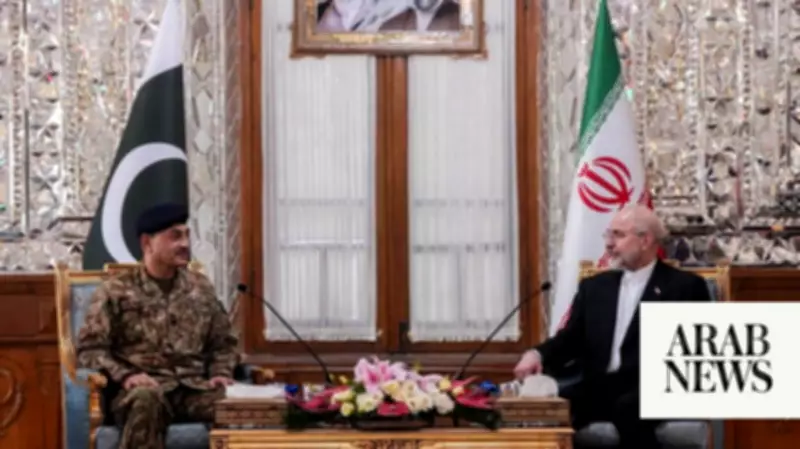
During his visit, Pakistan's army chief held a series of high-level meetings with key Iranian figures. He called on Iranian President Dr. Masoud Pezeshkian and conducted separate discussions with Speaker of the National Assembly Mohammad Bagher Ghalibaf, Foreign Minister Abbas Araghchi, and Commander of Khatam ul Anbiya Headquarters Major General Ali Abdollahi.
"The discussions were centered on achieving sustainable peace in the region, with particular emphasis on the evolving regional security environment, ongoing diplomatic engagements, and collaborative measures aimed at promoting enduring peace and stability," the Inter-Services Public Relations (ISPR) stated in a concluding visit statement. "The Field Marshal underscored the necessity for dialogue, de-escalation, and peaceful resolution of outstanding issues through sustained diplomatic engagements."
Regional Tensions Escalate in Strategic Waterway
Meanwhile, tensions have escalated in the Strait of Hormuz, a vital maritime passage through which approximately one-fifth of the world's oil and gas supplies transit. Iranian authorities have once again shut down the strait amid reports of gunboats firing at international vessels, highlighting the volatile security situation in the region. This action underscores the urgent need for diplomatic solutions to prevent further instability and conflict.
The ongoing review of US proposals by Iran, coupled with Pakistan's proactive diplomatic role, reflects a complex geopolitical landscape where military and diplomatic channels intersect. As Pakistan continues to mediate, the international community watches closely to see if these efforts can pave the way for renewed negotiations and a reduction in hostilities between the United States and Iran.