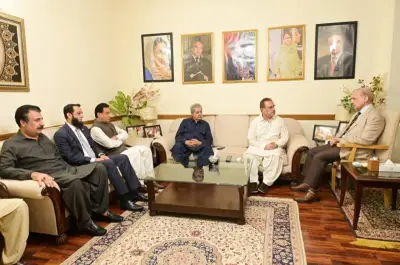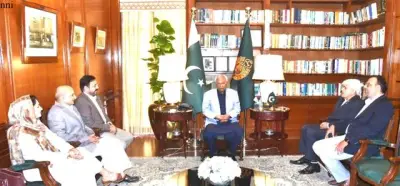
The Institute of Strategic Studies Islamabad (ISSI) hosted a seminar titled “Decoding the Future Trajectory of Pakistan-India Relations” on Tuesday, as the two countries navigate one of the most challenging phases in their bilateral relationship. The event aimed to explore emerging challenges, strategic opportunities, and pathways towards regional peace and stability. It brought together prominent diplomats, scholars, and policymakers for a candid assessment of the future of South Asia’s most consequential relationship.
Key Speakers and Their Insights
Former Foreign Minister of Pakistan Engineer Khurram Dastgir Khan served as the chief guest. The speakers included Ambassador Khalid Mahmood, Chairman ISSI; Ambassador Abdul Basit, Pakistan’s Former High Commissioner to India; Dr Manzoor Ahmed, Former Ambassador to the WTO; Dr Mujeeb Afzal, Assistant Professor, School of Politics and IR, Quaid-e-Azam University; and Dr Khurram Abbas, Director ISC at ISSI.
Ambassador Khalid Mahmood's Remarks
In his welcome remarks, Ambassador Khalid Mahmood noted that the history of Pakistan-India relations has remained a mix of conciliatory and confrontational approaches. Citing several key figures from among the Indian policy elite, he observed that New Delhi’s ambition to globally ‘isolate’ Pakistan had actually backfired and voices are emerging to revisit their Pakistan-strategy. He, however, warned that India’s military leadership still maintains a threatening and rhetorical tone towards Pakistan. He suggested that Islamabad must remain cautious and tread carefully without reading too much into the recent calls for engagement. He recommended that Pakistan should go for a structured dialogue instead of hasty engagements.

Chief Guest Engr Khurram Dastgir Khan's Address
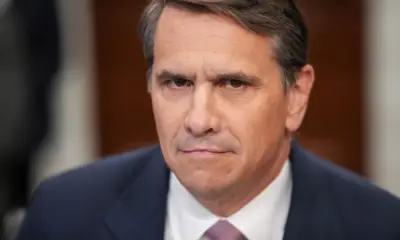
The chief guest, Engr Khurram Dastgir Khan (HI), indicated three strengths that Pakistan has carved out of the recent US-Iran conflict in recent months, including goodwill from the United States, international legitimacy, and the ability to conduct complex diplomacy at international fronts. He emphasized the need to use these as leverage in ties with India. He expressed concern that several key obstacles such as the unresolved Jammu and Kashmir dispute, reciprocal allegations of cross-border terrorism, deep-seated domestic nationalism in India, the nuclear dilemma, and friction over the Indus Water Treaty could again lock the two neighbours in a military confrontation. He specifically pointed towards mounting tensions over water-sharing mechanisms as a potential source of conflict.
Dr Khurram Abbas's Opening Remarks
Earlier, in his opening remarks, Dr Khurram Abbas labelled India-Pakistan ties as the most-observed bilateral ties globally, the trajectory of which impacts the course of security and stability in South Asia and beyond. He argued that while marred with historic tensions and occasional confrontations, the recent period is the worst era of bilateral ties given that decades-old settled issues such as water-sharing are now prone to mutual hostilities. Dr Abbas emphasized that academics, policy-practitioners, and civil society were duty-bound to build on the natural appetite for peace and guide the two countries to exit the existing stalemate.
Ambassador Abdul Basit's Perspective
Ambassador Abdul Basit, in his address, indicated that unlike history, the two countries seemed short of ideas to break the stalemate and initiate constructive engagement. Expressing suspicion over the recent calls for engagement from India, Ambassador Basit pointed out that, from an Indian perspective, this was not a suitable time for a breakthrough with Pakistan. He stressed that Pakistan must prioritize its interests and long-term objectives instead of an open-ended structured dialogue. He argued that Confidence Building Measures (CBMs) were only useful when a proper mechanism is drawn to discuss the central issues including Jammu and Kashmir.

Dr Manzoor Ahmed on Trade
Dr Manzoor Ahmed was of the view that the most haunting casualty of the ongoing crisis between the two countries was that of trade. After banning direct trade with India, Pakistan is forced to rely on indirect routes for Indian products, which consequently exponentially affects Pakistan’s import bill. Citing a World Bank study, Dr Manzoor Ahmed argued that Pakistan could earn US$38 billion from its exports to India, after which its overall exports would rise by 80 percent. He called for decoupling trade relations from longstanding contentious issues with New Delhi.
Dr Mujeeb Afzal on Kashmir
Dr Mujeeb Afzal presented a historical overview of competing narratives and claims of India and Pakistan over the Jammu and Kashmir dispute. He was of the opinion that the standoff between the two countries over the territory was structurally engrained in their respective national identities, which makes it very costly for anyone to back off. India’s unilateral step to put the Indus Waters Treaty ‘in abeyance’ adds a further layer to the complex web of India-Pakistan relations. Dr Mujeeb opined that the two countries are trapped in a situation where constructive engagement and long-term peace seem very unlikely.