Pakistan's Diplomatic Masterstroke Averts Major Gulf Escalation
At precisely 8:00 PM Eastern Time on April 8, the United States stood poised for significant military escalation against Iran. President Donald Trump had issued a stark ultimatum demanding Iran reopen the strategically vital Strait of Hormuz or face expanded strikes targeting Iranian energy infrastructure. This tense situation followed five weeks of sustained military operations that had degraded Iranian capabilities but failed to alter Tehran's strategic posture.
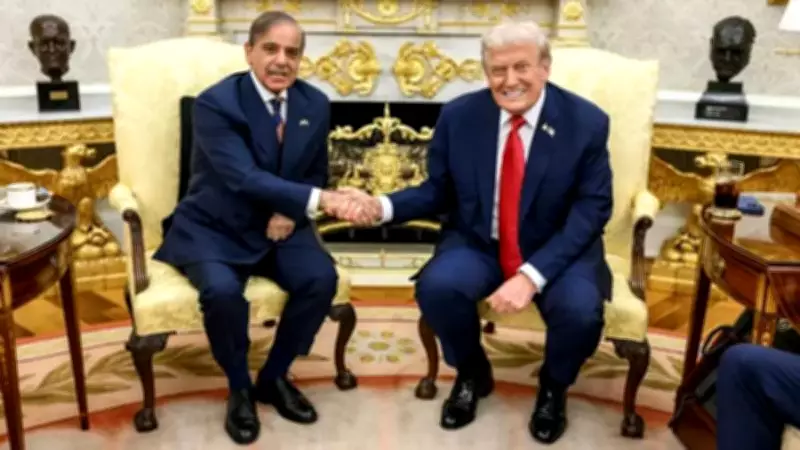
The political decision for further escalation appeared imminent. However, in the critical final hours, the entire trajectory of the crisis shifted dramatically. This pivotal change was publicly triggered by Pakistani Prime Minister Shehbaz Sharif, who posted on X proposing a two-week ceasefire directly linked to reopening the Strait of Hormuz.
Immediate International Response and Coordinated Diplomacy
Washington's response was remarkably swift. President Trump immediately accepted the proposal. The rapidity of this acceptance, coupled with the framing of a "double-sided ceasefire," strongly indicated that the proposal had already circulated through backchannels before appearing publicly. This was not reactive diplomacy but rather a carefully coordinated move timed to influence the critical decision point.

Tehran's response followed with equal speed. Within hours, Iran's ambassador in Islamabad signaled that Pakistan's diplomatic efforts had progressed beyond a "critical, sensitive stage." This was followed by formal confirmation from Iran's Supreme National Security Council, which accepted the two-week ceasefire proposal provided attacks ceased and the Strait of Hormuz reopened under controlled conditions.
The precise sequencing—Pakistan's proposal, Iranian signaling, and formal acceptance—demonstrated that alignment had already been achieved through established diplomatic channels. Direct negotiations between the United States and Iran are now expected to occur in Islamabad, marking a crucial transition from indirect engagement to structured dialogue and confirming Pakistan's role not merely as intermediary but as the official venue for this critical diplomatic process.
Regional Reactions and Divergent Positions
The ceasefire agreement revealed significant regional divisions. Israel continued military operations even as the ceasefire framework took shape, while influential voices like Senator Lindsey Graham publicly expressed preference for escalation over interim arrangements. The acceptance of a diplomatic pause effectively undercut these positions.
The United Arab Emirates, which had absorbed a disproportionate share of Iranian retaliatory strikes in the Gulf—exceeding those targeting Israel—had moved closer to escalation dynamics, influenced partly by its post-Abraham Accords alignment. The ceasefire disrupted this trajectory. Meanwhile, Bahrain saw its initiative for a UN Security Council resolution on Hormuz under Chapter VII weakened when Pakistan abstained and Russia and China exercised their veto power. Pakistan's abstention preserved the diplomatic channel at this critical juncture.
The Critical Turning Point: Jubail Attacks
The diplomatic breakthrough followed a dangerous escalation on April 7, when Iranian-linked strikes targeted Saudi Arabia's petrochemical facilities at Jubail. This marked the first direct attack on major Saudi industrial infrastructure during the conflict and risked drawing Riyadh into full-scale escalation. Saudi Arabia had previously exercised restraint, rerouting oil exports through the East-West pipeline to Yanbu and avoiding retaliation.
Pakistan's response was both calibrated and immediate. The Corps Commanders' Conference, chaired by Field Marshal Asim Munir, issued a rare public condemnation. This message was directed not only at Iran's political leadership but specifically at IRGC elements driving escalation. The implication was clear: further targeting of Saudi infrastructure would carry consequences beyond the existing conflict framework.

Simultaneously, Pakistan ensured this pressure did not close diplomatic avenues. Foreign Minister Ishaq Dar publicly criticized Israel, shifting part of the escalation narrative and allowing Tehran's political leadership to continue engagement without appearing to concede. Pakistan's abstention on the Bahrain-sponsored UN resolution avoided alignment with coercive action while maintaining its established position on Gulf security.
Multi-Layered Diplomatic Architecture
Parallel coordination reinforced this sophisticated approach. China engaged Russia, which in turn engaged Tehran, creating aligned messaging across Islamabad, Beijing, and Moscow. Less than five hours before the U.S. deadline, Prime Minister Sharif issued his public appeal, with both Washington and Tehran responding positively within hours.
This diplomatic success rested on positioning built over the preceding year. Pakistan restored access across all relevant actors—Washington, Tehran, Riyadh, and Beijing. The handover of a key ISKP figure in early 2025 reset ties with the United States, while the May 2025 conflict with India altered perceptions of Pakistan's military credibility. The September 2025 Strategic Mutual Defence Agreement with Saudi Arabia formalized Pakistan's role in Gulf security, while maintaining working ties with Iran and alignment with China.
Operationalizing Diplomatic Access
Few states possess Pakistan's range of diplomatic access, which was operationalized through coordinated engagement across multiple channels. Political leadership, diplomatic channels, intelligence links, and military contacts operated in parallel rather than separate tracks. The Prime Minister's messaging, Foreign Office coordination, and Field Marshal Munir's direct engagement with U.S. and Iranian counterparts formed a unified framework.
This civil-military alignment allowed Pakistan to sustain credibility with all sides while managing complex sequencing in real time. The diplomatic channel itself took shape in late March, with messages between Washington and Tehran moving through Pakistan alongside Türkiye and Egypt. This structure allowed both sides to engage without prematurely formalizing negotiations.
By March 27-28, this evolved into a structured platform in Islamabad. Foreign ministers from Pakistan, Saudi Arabia, Türkiye, and Egypt aligned their efforts, preventing fragmentation and ensuring consistent messaging. Shortly thereafter, Pakistan brought China into the framework, aligning on a comprehensive five-point approach covering ceasefire arrangements, maritime access, negotiations, sanctions relief, and longer-term security arrangements.
Resilient Diplomatic Framework
This multi-layered structure proved remarkably resilient. Communication did not depend on any single channel—if one slowed, others remained active. The process progressed from messaging to substantive negotiation once frameworks were exchanged. The United States transmitted a detailed proposal covering nuclear dismantlement, missile limits, and regional constraints. While Iran rejected this proposal, it responded with its own framework, dropping earlier maximalist demands while retaining core positions on security guarantees and deterrence.
All exchanges passed through Pakistan, giving Islamabad crucial control over sequencing and framing. Limited confidence-building measures followed, including Iran allowing controlled passage of vessels through Hormuz. These were not concessions but rather signals that negotiation could produce tangible outcomes.
Internal dynamics within Iran presented ongoing constraints. While the political leadership engaged constructively, the IRGC maintained a harder line, viewing ceasefires as tactical pauses rather than diplomatic breakthroughs. The Jubail strikes reflected this internal divergence. Pakistan's sophisticated approach—applying pressure on escalation while maintaining continuity with political leadership—ensured the diplomatic channel remained intact.
Historic Diplomatic Achievement
By early April, the diplomatic process had reached its critical phase. Core issues including Hormuz access, nuclear constraints, sanctions relief, and security guarantees remained unresolved—complex matters requiring sustained negotiation rather than immediate resolution. What Pakistan achieved was not final settlement but crucial re-sequencing of the diplomatic process.
This shift is now concrete and operational. Both the United States and Iran have accepted the two-week ceasefire framework under Pakistan's proposal, with direct talks scheduled in Islamabad. It is within this next phase that maximalist positions on both sides will be tested and potentially narrowed. At the moment when direct U.S.-Iran communication was absent, the only functioning channel ran through Islamabad—a channel now evolving into a formal negotiation platform.
Pakistan thus did not merely enter the diplomatic process at its conclusion. Rather, Pakistan built the diplomatic architecture, sustained it under immense pressure, and deployed it at the decisive moment. If the current trajectory holds, the conflict will not simply have been paused through Pakistani mediation—it will have been brought to the point of potential resolution through Islamabad's diplomatic leadership, representing what could become a historic diplomatic outcome with far-reaching regional implications.