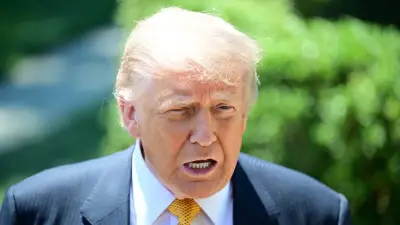
MATEEN HAIDER/NEWS WIRE/MONITORING DESK ISLAMABAD/ DUBAI/WASHINGTON - US President Donald Trump and top mediator Pakistan said on Saturday that an initial deal to end the war in the Middle East would be signed on Sunday (today), although Iran denied the signing would take place so soon.
Prime Minister Shehbaz Sharif said the two sides had agreed on a framework for a peace deal and that Islamabad was preparing for an electronic signing on Sunday, to be followed by technical-level talks next week. According to PM Shehbaz Sharif, Pakistan is preparing for the electronic signing of a peace deal between Iran and the United States which is likely to be finalised in the next 24 hours.
“We are closer to a peace deal than ever before,” the premier said in a post on X on Saturday. He said this will be followed by technical level talks next week. The prime minister said Pakistan is confident that this historic deal will form a strong foundation for lasting peace. He thanked the United States and Iran for their ongoing commitment during the negotiations. Shehbaz Sharif also extended Pakistan’s sincere appreciation to the brotherly countries in the region for their support.

Trump also said in a social media post that the deal with Iran was scheduled to be signed on Sunday and that the Strait of Hormuz, a vital artery for global oil supplies which Iran has blocked, would be immediately “open to all” after it was signed.
Iran’s military force, the Islamic Revolutionary Guard Corps (IRGC), denied that Iran would sign an agreement with the United States on Sunday and criticised President Donald Trump’s “unusual insistence” on signing the agreement that day. The IRGC described the timeline as a “test for Iran’s negotiating team” and that Trump’s announcement comes “despite Iranian negotiators explicitly stating that the memorandum has not yet been finalized and that signing on Sunday is definitely not happening.” In a post on Telegram, the group suggested that Trump intended to schedule the signing to coincide with his birthday on June 14. “Some observers believe his insistence may be driven by a desire to use the occasion symbolically and turn it into a personal publicity event,” the statement read.
Earlier on Saturday, Iranian Foreign Ministry spokesperson Esmaeil Baghaei cautioned against commenting on the timing of the signing. “We will have to wait and see about the exact date of the signing of the memorandum of understanding, although it will not be tomorrow,” state media quoted Baghaei as saying. “The possibility of this happening in the coming days cannot be ruled out. However, due to the hesitation of the other side, we must be cautious in making any comments about this process.”
A U.S. official who spoke to reporters later declined to be drawn on the timing but said: “It’s a great deal and a very strong deal.” It is not the first time the two sides have appeared close to an initial agreement on ending the war that began on February 28 with joint U.S.-Israeli strikes on Iran, but Sharif said on X: “We are closer to a peace deal than ever before.” The war has sent global energy prices sharply higher and killed thousands of people, mostly in Iran and Lebanon, where the war has revived a conflict between Israel and Iran-aligned Hezbollah militants.
The proposed memorandum of understanding calls for reopening the strait and lifting the US naval blockade, sources on all sides of the talks said. Negotiations over Iran’s nuclear program - Trump’s stated rationale for starting the war - would take place afterwards. “Iran is going to open up the Strait of Hormuz, that’s a requirement. It could be open with no tolls. As they do that, we will lift our blockade,” said the U.S. official who spoke on Saturday. “It’s going to happen in conjunction, and part of the next step, the phase after that, is going to be the demining of the straits,” the official said, indicating countries in the Group of Seven major powers could have a role in this.

Draft terms described to Reuters by multiple sources indicate the U.S. would begin releasing billions of dollars in frozen Iranian assets and waive sanctions on its oil exports, in return for Iran opening the strait. Iran’s Fars news agency quoted Baghaei as saying the release of Iran’s frozen assets was an integral part of the agreement and also that Iran would have to charge for services in the Strait of Hormuz. Fars also quoted him as saying foreign military bases in the region must end without providing details.
Iran’s nuclear program would be addressed during a 60-day period of talks. A U.S. official said the agreement would ultimately lead to the dismantling of Iran’s nuclear program, with its stockpile of highly enriched uranium to be destroyed and removed. But Araqchi said that Iran, which sources said has not accepted the dismantling of its nuclear program, wanted to retain the uranium in diluted form. The proposals also include discussion of possible war reparations for Tehran and dropping longstanding U.S. demands for limits on Iran’s missile program, the sources said. The U.S. official disputed that account.
Israeli Prime Minister Benjamin Netanyahu said his country would not be party to the agreement. He has clashed with Trump over U.S. demands that Israel curb military action in Lebanon to allow Washington to reach a deal with Tehran. Araqchi said the agreement would end the war in Lebanon, implying an Israeli withdrawal from occupied areas. Israel’s defence minister said it would not withdraw. A senior Israeli official said Israel expects to retain its freedom to act against threats.