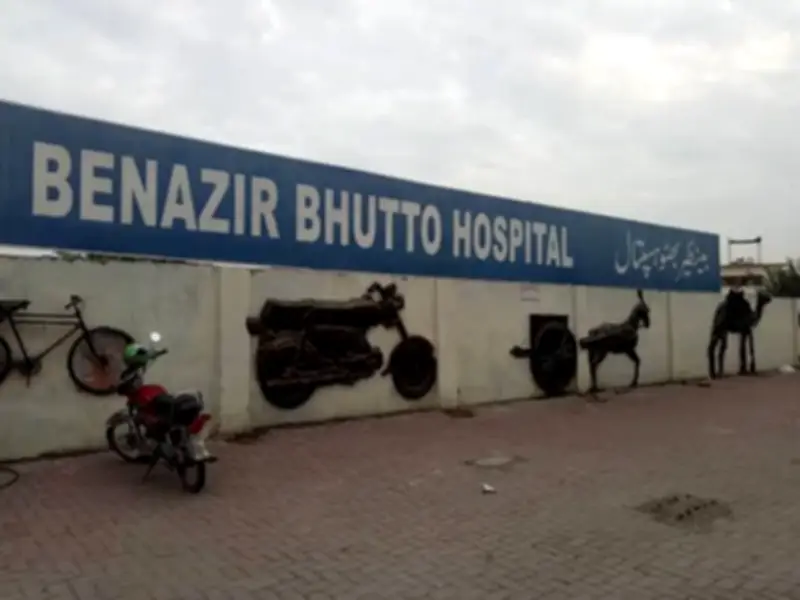
The Punjab government has announced plans for the phased reconstruction of the deteriorating building of Rawalpindi General Hospital, now known as Benazir Bhutto General Hospital, which was established nearly seven decades ago. The government will also undertake the revamping of structures that remain in better condition. This initiative follows the completion of a Rs3.6 billion revamping project at Holy Family Hospital, the city's largest healthcare facility.
Hospital Background and Current Condition
Rawalpindi General Hospital was established in 1957 and renamed Benazir Bhutto General Hospital in 2008 after the former prime minister. It currently has a capacity of 968 beds. Although the hospital building has undergone repairs and renovations on several occasions, concerns have intensified after a large accumulation of water developed in the basement of the Outpatient Department (OPD) building, causing structural damage.
Minister's Directives
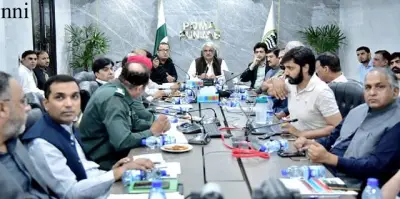
During a video-link meeting, Punjab Health Minister Khawaja Salman Rafique directed officials to begin planning for the demolition of old and dilapidated sections of the hospital, excluding newer structures, and replace them with modern facilities under a comprehensive redevelopment plan. He also instructed that the remaining buildings be revamped. The minister was informed that constructing a Surgical Tower at the site of the existing administration block and a Medical Tower at the OPD block could help reduce the burden on the hospital.

Proposed Plans
Officials said the proposed plan could also accommodate a spacious parking area and a trauma centre. With proper expansion and planning, the hospital's existing bed capacity of 968 could also be increased. The redevelopment aims to provide state-of-the-art healthcare services to the growing population of Rawalpindi.
Budget Shortfall and Financial Challenges
Benazir Bhutto General Hospital is facing a budget shortfall of Rs1.601 billion against its demand for the fiscal year 2025-26. Hospital records show that for the fiscal year 2025-26, the institution sought a budget of Rs2.493 billion. However, by the final stage of the fiscal year, only Rs892.12 million had been released, leaving a shortfall of Rs1.601 billion. Despite these financial constraints, the hospital continues to provide free medicines and laboratory tests in the emergency department, OPD, wards, and operation theatres.
Outstanding Dues
The hospital currently owes Rs1.112 billion under the heads of medicines, gases, and disposable items. It is also facing a budget shortfall of Rs1.601 billion compared to its requested allocation for medical and laboratory equipment and other operational requirements. The government is expected to address these financial issues as part of the redevelopment plan.